Indie Author’s Barriers

This post, by M. Keep, originally appeared on her Femmedia blog on 2/24/12. 

I wrote before about barriers and piracy, but this time I want to narrow in on a single barrier.

The biggest barrier for indie publishers (of all media) is not being known. No one is going to buy your book, or game, or movie, or anything else if they don’t know you or it even exists. 

Anyone who has become well-known in their market has had an enormous amount of luck on their side, be it a good review on a popular site (or many popular sites), or if they just got a small group of fans that kept growing as they kept putting out more and more media.

The barrier here is obvious – people can’t buy your stuff if they don’t know it exists. Piracy, then, has been stated to have had a very positive effect on people who aren’t well known. There was a group of indie musicians that came out in support of Napster back in the 90s. These relative-unknown’s were building a fan-base. People were looking for sounds similar to what they already enjoyed, and Napster provided an easy way to browse similar users collections and be exposed to a band they never would have heard of otherwise.

The same applies to books.

Even once you do stick your head above the crowd, you have to make it count. I don’t read as many books as I’d like because I’m not familiar with many authors that have impressed me, and $10 (the typical paperbook price) is daunting to figure out if I like an author. My location isn’t very library friendly either, so it’s a 40 minute walk to and from a library and there are just some points of the year I’m not up for that hike (say, in the winter or rain).
 

Read the rest of the post on Femmedia.

Latest Ebook Alliance

It was inevitable. Smaller e-book enablers are striking deals with major companies in order to see their content distributed and sold. E-books are no different from any other valuable commodities; they need economy of scale to be able to succeed and survive. The latest is last week’s deal struck between Smashwords and Blio.

Mark Coker, founder and CEO of Smashwords, announced the deal and explained it in an email to all the authors who have e-books on the Smashwords site that they would now also be carried by Blio, a major e-book distributor that provides content from the major publishers.

Baker and Taylor, the second largest book distributor in the world, uses Blio to sell its e-books to indie bookstores and libraries. My bookstore, The Book Barn, has its own landing page on Baker and Taylor’s data base. If you go to that page, you can see the Blio connections. You can even download their free AP to turn your computer into a book reader. Blio also connects with Google Books where over 1,000 e-books that have outlived their copyright protection can be had for free.

This is a win/win for everybody. It also levels the playing field with Amazon and Barnes and Noble. All this makes good business sense.

[Here’s a link to the Smashwords blog post about the new alliance.]


This is a cross-posting from Bob Spear‘s Book Trends blog.

The 7 Worst Mistakes Of Indie Authors And How To Fix Them

To be an independent author means taking your book project seriously. But most of us haven’t been in publishing for our whole careers, so it’s inevitable that we make mistakes along the way.

Mistakes aren’t bad either. They are the human way to improve and learn. But it helps if we can help each other!

I’m not perfect and I continue to learn along the writer’s journey but here are the worst mistakes I have made and seen others doing too. I’d love to hear from you in the comments about your mistakes as by sharing, we can all improve together.

(1) Not spending enough time learning about you, your book and your audience

You need to get to know yourself, as well as understand the goals for your book and the needs and expectations of your audience. If you don’t understand your goals, how will you know what path to follow and whether you are successful or not?

For example,

* Know yourself. If your dream is to have your book in every physical bookstore and airport, then you should be looking at traditional publishing. If you just want to reach readers, go ebook only with a low price or free. If you want to make income, make sure you have other products behind the book.

* Know your book and your genre. If you are writing historical romance, you should be reading that type of book and understanding what the audience look for and then making sure your book fits the niche – or look for another niche

* Know yourself. Are you in this for the long haul or is this one book everything to you?

There are lots more questions to ask yourself. The key is to spend time reflecting and writing around these topics which will really help shape your publishing decisions.

(2) Not getting a professional editor

The #1 criticism of self-published books is that they are not professional enough and I believe quality is in direct proportion to the amount of editing you have. Seriously.

I really think that every writer needs an editor.

If you get a pro editor, and take their advice, your book will improve beyond anything you could imagine. I’ll go further and say you need 2 editors – a developmental one for the structure of the book, and a copy-editor for the line detail and cleanup. Pentecost went through 3 editors in the end and I have just engaged a fourth to help me improve my writing further.

More on editors here.

(3) Not getting professional design

As above, we want our books to stand alongside traditionally published books and have the same level of quality. Unless you are already a designer specializing in books, then I recommend you hire someone. Check out Joel at The Book Designer or Derek Murphy’s CreativIndie book covers here.

If you really want to DIY, then read everything on TheBookDesigner.com including the Ebook Cover Design Awards so you can understand what works. You can also check out Ant Puttee at BookCoverCafe.com.

After evaluating my sales numbers and deciding that I don’t want an amateur product, I have decided to pursue ebook only for my books going forward. Your book publishing choice is up to you, but just make sure it is professional.

(4) Doing a print run without having a distribution deal

This was one of my big mistakes and I still hear of people doing it. Consider carefully whether you really want to publish a print book. If you do, brilliant. For the best result, hire a book designer and go with print on demand as the first option. You can order a few copies at cost to give to people.

<— Me in 2008 with way too many print books


But do you need to do a print run locally and have thousands of books delivered to your door?

This is important as you will have to pay in advance for the printing. You’ll also have to store them and ship them if you sell from your website.

Yes, it works out cheaper per book if you sell them all but are you going to sell them all? Do you have a distribution channel in place? e.g. a speaking platform or a guaranteed bookstore?

See the picture on the right? That’s me in 2008 with way too many books that I didn’t sell, before I discovered print on demand. They mostly ended up the landfill. Don’t make this mistake.

Also, check out this infographic for some great comparisons of offset vs print on demand.

(5) Paying way too much for services you can do yourself with a little education

I still get emails from people who have paid $10,000 for an author services package and received 100 books as well as losing the rights. Or people who have paid $5000 for their author website without knowing how to update it themselves.

I know most authors aren’t that interested in technology, but it is worth a little short term pain to empower yourself with some knowledge and save yourself a lot of money in the process. For example, if you just have a plain text novel, pay $49 for Scrivener and do it yourself. Then you can change the files whenever you like.

It’s fine to pay professionals for a service but make sure you know:
a) why you need it
b) how things will work in the future e.g. changing things, which is 100% likely to happen
c) what your alternatives are

(Obviously I don’t mean you should scrimp on editing or cover design but shop around and get the best deal for you and the right person for the job!)

(6) Doing no marketing at all, or getting shiny object syndrome
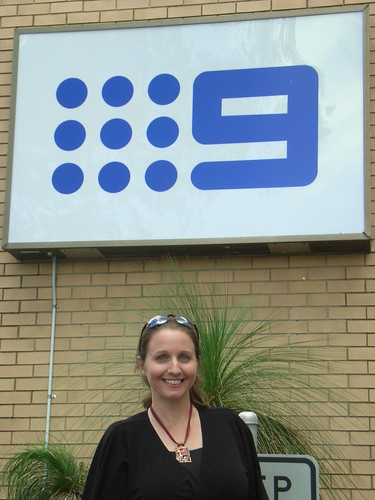
When I launched my first book, I only knew about offline marketing and mainstream media. I made it onto Australian national TV and radio and still sold no books. That’s when I decided to learn about online marketing. Life has been a lot better since!

Many authors think marketing involves bookmarks or book signings but these are probably the least effective forms of marketing.

Other people get into blogging, then Twitter, then Pinterest, Facebook, podcasting, video etc all in the same week and then burn out with exhaustion and decide that marketing doesn’t work. This is shiny object syndrome – jumping onto the newest, latest thing without giving the last thing a chance to work.

My advice here is to give something a try for 6 months of concerted effort before you expand. I started with a year of blogging, then moved into Twitter and podcasting, later I went with Facebook and video. These are my core marketing and platform building activities but they all took time to build.

Find what you enjoy and stick at it.


Me at Channel 9, Australia———————————->


(7) Focusing everything into one book

This is something I have only learned recently, and perhaps we can’t learn this except through our own experience.

When Pentecost came out, I was entirely focused on marketing it and making my new fiction career work. I heard the pros say you need more than one book but I was sure I could make it successful. It has now sold over 30,000 copies which is a modest success but more importantly, the sales figures have increased again with the launch of Prophecy. I can expect the same pattern on the release of future books too as new readers find me through the increased “shelf space”.

I am also understanding the long haul career of a pro-writer involves always working on the next book. Celebrating the last, but getting on with the next. This is our passion, but also our job. Obsessing over one book isn’t as important as getting on with the next.

I’d love to hear your comments. Do you agree with these mistakes and what else can you add?


This is a reprint from Joanna Penn‘s The Creative Penn.
15 Twitter Hashtags That Every Writer Should Know About

This post, by Joel Lee, originally appeared on makeuseof on 3/16/12.

Are you late to the social networking party? No worries. It took me a long time to get into the whole social networking thing, but I’m glad I did. It’s definitely been a beneficial experience.

Although Facebook continues to defend its position as the most popular social networking platform, you shouldn’t focus all of your attention there. As they say, don’t keep all your eggs in one basket. Where else can you go? Twitter! Twitter is a great resource for social networking, but especially so for writers. By taking advantage of hashtags, you can separate the useless and boring tweets from the ones that are interesting and pertinent.


What Are Hashtags?

Have you ever seen a tweet include a word or phrase preceded by a pound sign? For example, a few months ago, Charlie Sheen’s #winning hashtag went viral. It’s called a hashtag because the ‘#’ is sometimes called a ‘hash,’ and using hashtags is a way for you to insert searchable tags and keywords into your tweets.

There are thousands of different hashtags floating around the Twitterverse. Many of them are important and useful, and many more of them are absolutely meaningless. Why? Because anyone can make up a hashtag. A hashtag only becomes meaningful when a large number of Twitter users give it meaning.

If you ever encounter a hashtag that you’ve never seen before, use TagDef to look it up. You’ll likely find a definition posted there unless the hashtag is obscure. In that case, you probably won’t even want to know what it means.

Twitter Hashtags For Writers

#amwriting / #amediting – Of all the Twitter hashtags that could possibly be relevant for writers, these two blow every other out of the water. Both #amwriting and #amediting are Twitter “chat” hashtags and you’re welcome to join in at any time. These two tags have grown so popular that there is even a web community over at AmWriting.org.


Read the rest of the post, which includes descriptions of 8 more writer-relevant hashtags, on makeuseof.

Pinterest: The Hottest New Social Site – Should Authors Join?

Everyone’s buzzing about Pinterest, a rapidly growing social site that’s all about creating and sharing collections of images (photos or illustrations) that you find around the Web or create yourself.

Pinterest calls itself a “Virtual Pin Board’ and members can use it to share their favorite artwork and books, organize recipes, plan weddings, post travel photos, and more.

The site is basically a giant online bulletin board that people pin images to. As a user, you create "boards" geared to different topics or interests.

As you’re cruising around the Web, you see an image that you’d like to share with others and you "pin" it to one of your "boards."  When someone clicks on the image, they can be directed back to the website that the image came from. You can also upload images from your computer.

You can post images related to your personal interests or hobbies, as well as images related to your book. You can also "follow" other people or boards, "like" or comment on images, and "re-pin" other images on the site to your own boards.

To the left is an example of a book cover that someone posted on a board called "Must Reads". You can see that it has attracted 218 likes and 113 comments, and it’s been re-pinned 5,393 times.

Pinterest can be integrated into your Facebook timeline, and you can add a “Follow Me on Pinterest” button on your website and cross promote the site through your other social networks.

After an incredible growth spurt in late 2011, Pinterest is now attracting nearly 12 million monthly unique visitors and generating a lot of buzz. Shareaholic recently reported that Pinterest is driving more referral traffic to websites than Google Plus, LinkedIn and YouTube combined. (Referral traffic is defined as visitors who land on a website through a link from another website.)

Naturally, many businesses are taking advantage of this new way to promote their brand and their products visually. But it’s easy for authors and other entrepreneurs to get caught up in "shiny object syndrome," chasing after each new thing that comes along and losing focus on what’s most important in their business.

Should you join Pinterest? Here are some things to consider:

    * How well does your book topic lend itself to sharing relevant images? Travel guides, cookbooks, and gardening books would be a natural, but authors in many other topics can probably find relevant images to share. Novelists could share images related to the storyline or setting of their book. Children’s authors can share images from their books. All authors can share their book covers and images from their blog posts.

    * Is Pinterest a good use of your time? The good news is that Pinterest doesn’t require as much time as other social sites like Facebook.

    * Is Pinterest something that you would enjoy doing for fun, to share images with friends and family or others you meet on the site? I have found that people pin a lot of beautiful artwork and photos and it’s fun to browse the site.

If you think you may want to use Pinterest, I recommend signing up right away so that you can secure the user name of your choice.

Right now, you have to be "invited" to join Pinterest. You can ask someone who’s already a member to send you an invitation, or click the red "Request an Invite" button at www.Pinterest.com.

To help you get up to speed fast, I have created the Pinterest Guide for Authors. This 35-page ebook contains numerous screenshots, so it’s a quick and easy read. 


This is a reprint from Dana Lynn Smith‘s The Savvy Book Marketer.

Two Questions That Loom Over The Trade Publishing Business

This post, by Mike Shatzkin, originally appeared on The Shatzkin Files blog on the Idea Logical Company site on 2/28/12.

A lot of people in publishing would pay a lot of money to get a reliable answer to these two questions:

When will the growth in Amazon’s share of the consumer book business stop?

Who will be left standing when it does?

I won’t attempt to answer those two questions in this post. In fact, the purpose here is to begin to generate agreement that those are, indeed, the way the industry’s existential strategic questions should be framed going forward. In my consulting work, it is often my role to provide “synthesis and articulation.” This post will begin to document the synthesis that led to articulating the questions, which are actually implicit statements, above. The catalyst for these ruminations was the news last week about Amazon’s dust-up with Independent Publishers Group (IPG), a demonstration of its power and willingness to exercise it that recalls an incident almost exactly two years ago when they were unsuccessful at bullying Macmillan (or the other big publishers) into giving up their notion of implementing agency pricing.

Amazon was not the first online bookseller. But they appear to have had several distinctions from all others from the beginning. One is that they always saw bookselling as a springboard to a much larger business. That meant that bookselling was, perhaps primarily, a customer acquisition tool, not an end in itself. A second is that they saw, long before it was accepted general wisdom, that perfecting the “customer experience” online was the core requirement for success. And the combination of those two things, in concert with the ubiquitious availability of capital for promising Internet propositions that characterized the late 1990s, fueled growth powered by aggressive pricing that has had their trading partners and competitors agape for nearly two decades.

Any discussion of Amazon’s success must acknowledge that the other key component, aside from the strategic components of long-term vision, smart use of capitalization, and customer-centricity, has been the quality of their execution. This has been true from the beginning and it is still true today. Some of this is subjective, but it still looks to me like they offer a better print searching-and-buying experience than BN.com and a better overall ebook ecosystem than Nook or Kobo. I read on an iPhone and use all the ebook purchasing systems from time to time, but I use Kindle the most because it is the best. I am close to somebody who prefers to buy from BN.com because (she says; I don’t do this research…) they give money to Democrats and Amazon gives money to Republicans, but she still does her searching at Amazon because it works better before she hops over to BN.com to make her purchase.

[An update on that last point since the original posting of this piece. I was challenged on the "Amazon is red" statement by a couple of people whose opinions I trust, so I asked my favorite Democrat for citations and I got two. You’ll see (if you care and if you look) that both of the analyses that delivered this characterization are squarely within the Bush presidency, so they could constitute a company hedging bets rather than expressing political conviction. On the other hand, B&N was blue throughout the Bush Administration. And the point about the search engines, which was the one germane to this piece, remains true.]

Read the rest of the post on The Shatzkin Files.

Thirteen O’Clock Australian Dark Fiction News and Reviews – Launched

I’m very happy to be able to officially announce this new venture. Myself and writers Andrew McKiernan and Felicity Dowker have put together a new website, to fill a void in the Australian dark and weird fiction scene. Since the untimely demise of Horrorscope, there’s been a gap where good dark and weird fiction can be reviewed and reported. We’re hoping to fill that gap with Thirteen O’Clock. And, after all, you can’t have too many sources of news and reviews in this game. Here are the relevant links:

Thirteen O’Clock website.

Thirteen O’Clock on Facebook.

Thirteen O’Clock on Twitter.

All the details are in the official press release, here.


This is a reprint from Alan Baxter‘s The Word.

22 Top Book Designer Tasks for Getting Your Self-Published Book Into Print

I frequently get asked what exactly a book designer does. Just the other day I spoke with a client whose book is in copyediting. I’ll be getting ready to start work on his interior next week.

“Well, do you need to do anything,” he asked. “I mean, there’s just a couple of formats, right?”

I couldn’t help but laugh. “I guess we must be doing our job pretty well,” I replied, “if you can’t even tell the difference from one book to the next.”

But I got to thinking about it later. We talk frequently about the need to hire publishing professionals, to get your book properly edited and designed to compete in the marketplace, or, if you’re going to do it yourself, to make sure you understand the conventions and best practices of book production.


When a Designer Is Not Just a Designer

But there are book designers and book designers. Many cover designers do only covers, that’s their specialty. Some designers do only interiors. There are designers that do covers, websites and marketing collateral. Then there are designers who provide a complete resource for self-publishing authors.

When I meet with prospective clients the first time, it’s really the beginning of a relationship. In this relationship we share responsibility for the embodiment of their manuscript in the form of a consumer product. By the time the books roll off the press, I may have been involved in many aspects of the book’s development.

Recently I sat down and made a list of 22 tasks that fall to the book designer in the course of a project:

  1. Determine whether the prospective self-publisher can articulate a clear goal for her book and, if not, to help her achieve that.
  2. Help the client determine the category, niche, or target market for the book.
  3. Assist client in obtaining ISBN, LCCN, SAN and publisher listings if needed.
  4. Decide the best printing process to meet the goal and help client select provider.
  5. Analyze the formats that will be needed in the finished book.
  6. Arrange for copyediting, if the author has not done so already.
  7. Set up a production schedule.
  8. Hire an illustrator if needed.
  9. Clean up text files submitted by author.
  10. Create sample interior designs, using a representative chapter and most if not all of the formats needed for the final book.
  11. Create sample cover designs demonstrating the different ways the book can be positioned within its category.
  12. Work with client to adjust designs to fit their needs and aesthetics.
  13. Layout all the pages of the book, correct formatting where needed and adjust the length to the right number of pages.
  14. Remind client to finish the copy for the copyright page.
  15. Obtain a spine width calculation, cover template and technical specs from client’s book printer.
  16. Layout and proof complete flat cover including barcode.
  17. Scan photographs if necessary, and adjust photographs for selected printing method, if any are used.
  18. Prepare Advance Review Copies (ARC) for marketing and review purposes.
  19. Arrange for proofreading and indexing if needed.
  20. Advise publisher about her packing, shipping and storage options for offset books.
  21. Create reproduction files conforming to printer’s specifications, and coordinate proofing and production with printer.
  22. Celebrate every milestone as one step closer to the client’s goal.

If It’s a Real Production, Doesn’t That Make Me a Producer?

When I looked at this list, I realized why my favorite term for what I do is Book Producer. However, no one has ever called me up saying, “I need a book producer,” so I don’t use it. But that’s what it is, gathering the resources and talent needed to produce the book at hand, and making sure the project runs smoothly, and on budget, to a satisfying conclusion.

Keep in mind that nothing in the list of 22 Tasks above describes the biggest part of the designer’s work: creating the typographic container for the author’s work, and doing the actual fitting, pushing, nudging, aligning, sizing and organizing of the content into something that looks the way a “book” should look, that actually enhances the experience of reading.

And that, in the end, is really the most satisfying part of what I do. Most of the books we create, even if they are influenced by the fashion of the day, will be around far longer than we will. As a designer sometimes I feel as if I stand between the 500-year traditions of bookmaking on one hand, and the potential hundreds of years some of these books may last on the other.

Not a bad place to be at all.


This is a reprint from Joel Friedlander‘s The Book Designer.

Can We Stop Calling Amazon a Bully?

This post, by LJ Sellers, originally appeared on the Crime Fiction Collective site and is reprinted here in its entirety with that site’s permission.

Amazon is a company. Granted, a retailer with aggressive tactics meant to support long-term growth. But it is not an oversized kid (or childish adult) with personality problems who deliberately picks on weaker people for sport. And when people call Amazon a bully, they dilute the term’s meaning and diminish the experience of human beings who have been personally victimized, bruised, and emotionally scarred by such human behavior.

Amazon functions much like other companies, only more successfully than its competitors. Its tactics, as far as I know, are legal. (The tax issues are still being debated but that’s another subject.) Some people would argue that its tactics are not fair, but what does that mean? Does the word fair apply in business? Again, we’re not dealing with children. The concept of one for me and one for you is not how capitalism works.

Some businesses are content to coast along, partner with others, and not worry about the future. Other businesses are more ambitious. They have long-term goals, and they work aggressively to meet those goals, even if it means putting competitors out of business. Barnes & Noble was once that kind of business. It bought up competitors, closed many retail outlets, and forced hundreds of indie bookstores to fold. People called it a bully too. But it was just business, capitalism in action.

Now the same people who denounced B&N (small bookstore owners, small publishers, and writers clinging to the old model) are crying foul on Amazon and worrying that B&N, now the underdog, will not survive the competition for customers.

I too worry a little that Amazon will dominate the publishing industry, at least for a while, and that customer choice will begin to be limited. But Amazon won’t get to that point by being a bully, just a savvy, fast-growing company with an eye on the long-term future.

And yes, this blog was inspired in response to the struggle between Amazon and Independent Publishers Group, which I blogged about yesterday in more detail. A struggle in which Amazon held firm on its terms and lost the right to publish all of IPG’s ebooks. I saw Amazon called a bully over and over yesterday, but I think the word is misused.

I don’t mean to imply that the human owners of indie publishers and bookstores aren’t feeling emotional about what’s happening in the publishing industry as a result of Amazon’s success. I’m sure they are and rightfully so. But Amazon’s success is not a vendetta, and there’s no point in taking it personally. Those emotions will just keep people from making rational business decisions.

What do you think?


2012: Best of Times for Writers, or the Worst?

One thing that happens when you go to a writing conference is you end up spending a lot of time with writers. Many kinds of writers. And that can be very instructive.

There were several hundred writers in attendance at the San Francisco Writers Conference, which ended yesterday. Throughout the four days there were writing workshops, keynote addresses, “ask the pro” sessions and a lot of panels and presentations about options in self-publishing.

Although most of the sessions were on writing topics, the incredible popularity and explosive growth of self-publishing, both with new and already-established writers is the obvious rationale for presenting this material. And there were some people who were clearly interested in pursuing the self-publishing option.

Slogan of the Day

In almost every presentation, somewhere along the line I heard, “It’s the best time to be a writer.”

And why not? Armed with only a laptop and an imagination, a writer today can create her own publishing story, gather fans, learn to market her books, and start to make real money though book sales if she keeps at it and has good skills.

In many of these self-publishing presentations there were stories told of authors who had followed this same path and arrived at the promised land, where agents and editors are calling you with six- and seven-figure offers.

Just before the big panel I was part of on Saturday morning, I read in Publishers Weekly about the latest, Brittany Geragotelis, who used the reader community Wattpad to accumulate over 16 million reads of her work, attracting a six-figure contract from Simon & Schuster.

The Dark Side: Still There

It was also interesting that many writers had never considered self-publishing. On the last day of the conference there was a big, two-hour panel discussion on “The Great Adventure: Joining the Self-Publishing Revolution,” moderated by Carla King (Self-Publishing Bootcamp) and including Mark Coker (Smashwords), Brian Felsen (Bookbaby), Jan Johnson, (Turning Stone) and Jesse Potash, (PubSlush). And me. Pretty good panel, wouldn’t you say?

The room was reduced to half its usual size by dividers, and it was still only about half-full.

Where were all the writers?

They were upstairs, standing in a long, long line that snaked from a room at one end of the hotel, through the lobby and in front of the front desk. Each grasped a sheaf of papers and many looked nervous.

This was the core of their visit to the conference, and maybe the reason a lot of them paid to come to San Francisco: “Speed Dating With Agents.” A chance to sit down and talk face to face to a literary agent is a powerful draw for an unpublished writer.

I thought about some of the writers I know. Many are quite technophobic. Just learning Word is a major accomplishment. I know people who can write prose that will melt your heart, but they never figured out how to attach something to an email.

These writers will never join my training course. They might read the blog because you can get it in your email. The whole thought of “formatting” makes them nervous. They just want to write, and let other people take care of the rest.

I’m not so sure it’s the best of times for these writers. It could be coming into the worst of times. As popular fiction moves to ebooks, publishers try to find an economic model that will survive digitization, and marketing becomes a necessity for the average author, what are non-technical writers to do?

Most of the new self-publishers who are in the news get there through using social media for marketing. Many are bloggers or do blog tours. This is a community in which uploading to Kindle Direct Publishing is about as easy as booking a flight online.

But even in 2012, many writers aren’t there yet, and the dream of landing that contract lives on.

Do you think there will be writers who are pushed aside by the technical requirements of the new era in publishing? Or will there always be publishers to take care of the business end of things for writers who want no part of it?


This is a reprint from Joel Friedlander‘s The Book Designer.

Marketing Direct To Kindle Readers. On Advertising And KDP Select.


If you want to sell books, you need to find readers. Although there are a lot of ebook vendors out there, Amazon is currently the dominant player and there are a lot of readers who own Amazon Kindles/Fires and who shop on the Amazon store. I am one of them.

There are a few things you can do to market direct to these people, and you don’t need an existing platform to do it. You don’t need a blog or a twitter presence and you can still get thousands of sales or downloads of your book.

Direct Advertising

I believe you need a budget for your business as an independent author.

You need to use some of this budget for professional editing and cover design, and some of it can be used for promotional activity. There are a number of sites that specialize in promoting books to avid Kindle readers. These sites have lists with tens of thousands of readers on them so they can be a powerful way to boost sales and get your book moving on the Amazon charts.

In 2010, I used Kindle Nation Daily to promote Pentecost and it shot me up the charts. Pentecost reached #1 on Movers & Shakers, #4 in Religious Fiction and #93 in Thrillers. This year I decided to use PixelofInk.com as KND had increased in price and also had little availability for the time period I wanted.

Direct Advertising Results

The promo is a 1 day event with lots of other books also promoted that day. I paid US$250 for the promo of Pentecost, again counting on the first in the series dragging Prophecy up with it.

Copies of Pentecost sold: 800 @35c = US$280

Copies of Prophecy sold: 57 @$2 = US$114

Total income: US$394.

Given the cost was US$250, financially, this was worth the promotion.

But the impact on the Rankings was also fantastic. Pentecost reached #5 in the Action Adventure charts and Prophecy reached #88, so both books were ranking together, and Prophecy debuted in the charts above Lee Child. Awesome! Pentecost also reached #82 in the entire Amazon.com Kindle store. We still don’t know how the Amazon algorithm works but rankings, sales and reviews definitely play a part.

Will I do it again? Absolutely. (But remember, every book is different so don’t assume that what works for me will also work for your book. It’s all experimentation!)

My tips for getting the most out of the experience:

  • Have a great cover and back blurb
  • Have 10+ reviews of 4 stars or more on the sales page already – this social proof will help people to buy
  • Use great pricing. 99c will get you into the bargain area which will elicit more sales, although clearly higher pricing will result in more revenue for less sales.
  • You can find out more in the Author’s Corner on PixelofInk

KDP Select

If you’re not aware yet, KDP Select is an Amazon Kindle opportunity that allows you to put your book into the Amazon Prime lending program and receive a percentage of lending income from a fixed monthly pot. It also allows authors 5 days in a 3 month period where they can price the book for free. Previously, the only way to do this was to ‘game’ Amazon by setting the price to zero on Smashwords and waiting for their algorithm to pick it up. But now there is control over the period of time so you can coordinate your promotional period.

Free is basically a marketing activity. The aim is to get eyeballs on your book and to pick up data from the Amazon algorithm that may help your book when it goes back to paid. Most authors have experimented with some form of free but it works best when you have multiple books. Here’s NY Times bestselling author CJ Lyons on how free worked for her, and this was before KDP Select.

In order to be in the program, you have to put your book exclusively with Amazon for that 3 month period. You can then choose to renew or opt out again.

There have been some prominent indies in both the For and Against camps for KDP Select but I wanted to try it for myself in order to give a more informed opinion. Obviously the results will be different for every book so this is hardly the last word on the subject, but it is my experience.

How I used KDP Select

As part of the launch for Prophecy which is $2.99, I included Pentecost in KDP Select, hoping that people would get the first in the series for free and then buy the 2nd since the price is also pretty good for that. Given that Pentecost had already sold over 17,000 copies prior to this promotion, I figured I would get new readers.

I initially set the promo for 3 days but increased it to 5 once I got to the top of the Action Adventure charts in order to maximize the impact and downloads. I shared the fact it was free on Twitter and Facebook but that was about it. I know there are a number of sites that promote books as being free and also people who watch the lists, so no extra promo was really needed.

I did have to remove Pentecost from Smashwords in order to do this which meant the book wasn’t available on the other ebook stores.

Results from KDP Select

I started the promo on Sat 5 Feb and very quickly I was on the top free listing for Action Adventure. On Mon 6th Feb Pentecost reached #1 on Free for Action Adventure on Amazon.com and #2 in the UK. It stayed there until the promo finished.

Total downloads of Pentecost over the 5 days: 10,836

Total sales of Prophecy over the 5 days: 294

Was it worth it?

For me, I don’t think so. The uptick in Prophecy sales was quite small and I think a lot of people who get free books just get a lot of free books. They don’t necessarily need to buy books anymore as so many are free. How many of those 10,000 new readers will convert to fans of my fiction? It will certainly be a small percentage but perhaps the same number who would have bought the book over that period anyway, as I have quite consistent sales every month.

On the lending aspect, only 20 copies of my books have been lent in the last month. That’s not significant data at all but it does show that lending doesn’t work for all books as an income or promotional activity.

I also had to remove my books from the other platforms. I now have to republish them so I may have missed out on sales during that period as well. As much as I personally love Amazon as a reader and an author, I actually don’t like being exclusive to their store. Even though I buy there exclusively, it doesn’t mean other people do and I want to be available everywhere.

Will I do it again? Probably not, for fiction anyway. I might experiment with non-fiction. That doesn’t mean it’s not good for your book/s, but it’s my own experience. I have a guest post coming soon from an author who totally loves KDP Select, so we all have different experiences.

Have you tried direct advertising or KDP Select? How has it worked for you?

Want more tips on how to sell more fiction?

I have now been selling my fiction for over a year and I’ve experimented with a lot of different strategies and tactics. I have also changed my mind on a lot of things and believe that selling fiction is quite different to selling non-fiction.

I share my findings in this recent webinar recording: How to promote your novel: 21 ways to sell more books online. It’s just US$21 and has some rave reviews. Click here to read more about it.


This is a reprint from Joanna Penn‘s The Creative Penn.

Pimping Your Book, Indie or Traditional

This post, by Holly Robinson, originally appeared on The Huffington Post on 2/28/12.

Now that I’ve got feet in both camps, I have a unique perspective on the good, the bad and the mysterious truths about book marketing. My memoir, The Gerbil Farmer’s Daughter, was published by Random House. I leaped into the indie world when I self-published my first novel, Sleeping Tigers, a couple of months ago. My second novel, The Wishing Hill, will be published by Penguin in spring 2013.

These experiences have taught me a lot about book publicity, but I’m still learning new things every day. There are some differences in how traditional and indie books are publicized, but those differences are shrinking by the nanosecond. The truest thing I can tell you is that, no matter how your book makes it into the world, you’ll need to take an active part in the publicity. Here are a few tips to get you started.

Mine the Free Resources

The Internet is a wonderful tutor. There are more free resources out there about marketing your book than you’ll ever have time to read. Google anything from "picking a book cover" to "social media for authors," and you’ll get enough hits to last through a few thermoses of coffee each time you do it. Make good use of these resources. One of my favorites is Novel Publicity’s "Free Advice Blog."

Prepare Your Platform

No matter who you talk to in publishing — agent, editor, publicist, or sales team — they’ll tell you that their ideal is a good book written by an author with a "solid platform." Basically, that means that they want you to be famous before you even give them a manuscript — or they want some hook, like you chewed off your arm during a battle with a grizzly bear. (Even then, they hope you’ve been blogging about it.) One easy way to start building your platform is by crafting a virtual identity. Social media tools are free and easy to use. Start a blog, create an author Facebook page, get a Twitter account, and set up a Goodreads page. Give people useful information — don’t just pimp your book. If you know how to do something — anything from fly fishing to quilting — blog about that, guest post on other people’s blogs, and people will start following you. Yes, it’s time-consuming, but it’s also incredibly fun to connect with people. If you’re trying traditional publishing avenues, it will help your editor sell your book to the publisher if she can prove that you have an active presence online. Indie or traditional, you’re cultivating a loyal readership.

A Publicist Is Just Part of the Picture


Read the rest of the post on The Huffington Post.

Print Is Dead! Long Live Print?

This article, by Jordan Kurzweil, originally appeared on TechCrunch on 2/25/12.

[TechCrunch] Editor’s note: Jordan Kurzweil is Co-CEO of Independent Content, an agency that helps media companies launch new digital products and businesses. Prior to starting Independent Content Jordan worked at AOL running original programming, and News Corp bringing its traditional brands to digital. You can follow him on Twitter @jordankurzweil.

It’s been said before, but it needs saying again (and again and again): PRINT IS DEAD. Across the publishing industry, year-over-year declines in revenue, subscriptions and circulation, are well documented. Yes, there have been a few quarters of blood-stanching flatness (yay!), but – you heard it here first (or few weeks ago from The Annenberg School, or over the summer from Clay Shirky) – print periodicals are going to go away – forced out of this world by the march of technology and changing tastes, and replaced by new powerhouse brands – TMZ, Buzzfeed and HuffPo to name a few — which are poised to own the future, because they know how to adapt to (and even anticipate!) evolving user behavior. As John Paton, CEO of one of the largest newspaper companies in the U.S., put it recently “‘You’re gonna miss us when we’re gone’ is not much of a business model.”

Just this week, Gannett gave us a stunning reminder of just how little it understands the world it lives (and dies) in, and how myopically it views its business when it announced its $100M bet on establishing paywalls in all 80 of its local newspaper markets. A gambit predicated on “the public’s strong desire for local news and in readers’ longtime trust in Gannett’s papers,” according to Gannett’s CEO Gracia Martore. Oh my. The paywall, whether for Gannett or other publishers, is a finger in the dyke, a cover-up for tectonic shifts in their businesses. For Gannett, local paper audiences are old (that’s what “longtime trust” means), and may well age out of relevance before Gannett’s gosh-darned paywall gets erected. And where’s the proof that the public wants local news? Readership is declining, local news website traffic is infinitesimal, and even pure digital plays like Patch can’t seem to find readers or revenue. The fact is, the thirst for local news can be sated by a single hometown blog, run pretty much by a single entrepreneurial blogger (granted they’d be very busy – and underpaid).

What can Old Print do to survive?

To use a trite metaphor (or two) – stop rearranging the deck chairs on the Titanic, grow a pair, and change your businesses. Pivot out of the corner and reclaim your heavyweight title. RUMBLE, Old Man, RUMBLE:

1. Face reality:

– The audiences of traditional print brands on paper and pixel are aging.

– Digital upstarts are capturing the new audiences, and stealing your least loyal current readers.

– The cost structures of Old Print companies are out of whack with the times.

– New technology is further commoditizing content, and fragmenting audience.

– In-house digital innovation at Old Print companies is largely non-existent, stymied by outmoded, editorial-first ego at the top, and fearful protectionism of current revenue sources: print subscriptions, ad pages and banner impressions.

2. Start thinking like startups.

Read the rest of the article, which includes 7 more pieces of advice for publishers, on TechCrunch.

My Latest Op-Ed Up At The Punch, In Which I Rant About DRM

My latest opinion piece has been published today at The Punch, “Australia’s Best Conversation”. The title was the work of the editor, and is deliberately sensationalist, but the piece should clarify my position. It begins thusly:

Digital Rights Management doesn’t work. DRM is a method of locking digital media so it can’t be shared. Except it fails. For every form of DRM employed, pirates instantly break it.

DRM only inconveniences honest, paying customers. For example, in the case of eBooks, a person might justifiably want to have their book on their PC and their tablet, but DRM can prevent that.

I regularly get Google Alerts about my books being mentioned online and many times it’s when they appear illegally on filesharing sites. For every download like that, it’s a drop of cash not going to keeping food on my table, right? Actually, probably not.

Read the rest here.


This is a cross-posting from Alan Baxter‘s The Word.

Global Publishing For All

This Beyond The Book podcast and transcript are provided in their entirety by the Copyright Clearance Center.

In this interview, Ingram Chief Content Officer Phil Ollila discusses what book publishers should consider when setting out for new markets, specifically international markets. He explains how the advent of the digital file has changed the barriers to distribution of content, opening up opportunities abroad that previously may not have existed. He also discusses how publishers can go about sharing their work with audiences worldwide.

In the publishing world, regime change is underway. It’s not happening in Tahrir Square or even in Times Square. The old is giving way to the new in the virtual square, and players like Ingram Content Group have declared themselves on the side of the new regime.

In his role as Ingram’s Chief Content Officer, Phil Ollila leads a number of Ingram business units including wholesale merchandising, Lightning Source, Ingram Publisher Services, and digital distribution through CoreSource. Last fall, Ingram launched Global Connect, a program to allow publishers in any country to print and distribute titles in countries where Ingram has its own operations as well as in countries of one of its partners. Ollila tells CCC’s Chris Kenneally what book publishers should think about in 2012 when setting out for new markets.

“Today, when we think about the delivery of books and the distribution books, one thing we should think about is the consumer, and not necessarily the traditional supply chains of bookstores,” he explains. “For publishers, their content can now be available on a worldwide basis with a single entry point. In the past, they had to think about selling rights in a foreign rights market, or the physical delivery of that book on a ship or a train or an airplane.”