How Does a Designer Choose Typography for a Book Cover Design?

This article is provided in its entirety by author Jonny Rowntree, a freelance writer with litho printing partner, Elanders UK. He has worked with various technology and design outlets in the past, including The Next Web and Creative Bloq.


Every day, millions of people across the globe engage in a highly pleasurable activity: perusing the aisles of their favourite bookshop. Sometimes they are seeking that sought-after classic for a friend, or are simply curious about what next literary endeavour they can embark on themselves. But despite how product savvy or detached from the corporate world we believe ourselves to be, we always judge a book by its cover. And this is why leading publishers place high stakes in not only staying true to producing good content that will sell, but by a careful composition of design elements comprise a cover that will catch our eye and entice us to look between the pages.

According to designers, there are a few components which draw a viewer to a book and are also reflective of the content within. This boils down to basic features like cover texture, style of artwork, the images projected, and the text which represents the work within. This is easily the most influential aspect in the bundle – words are the most effective communicator, and achieves instant results as well as long subconscious reflection. They must immediately appeal to the viewer while delivering the required message. Ranging from title, author, publisher, to a few choice quotes – a relatively new innovation signifying the further commercialization of the book aesthetic – the letters that adorn the front cover say everything.


Catering to the Classics

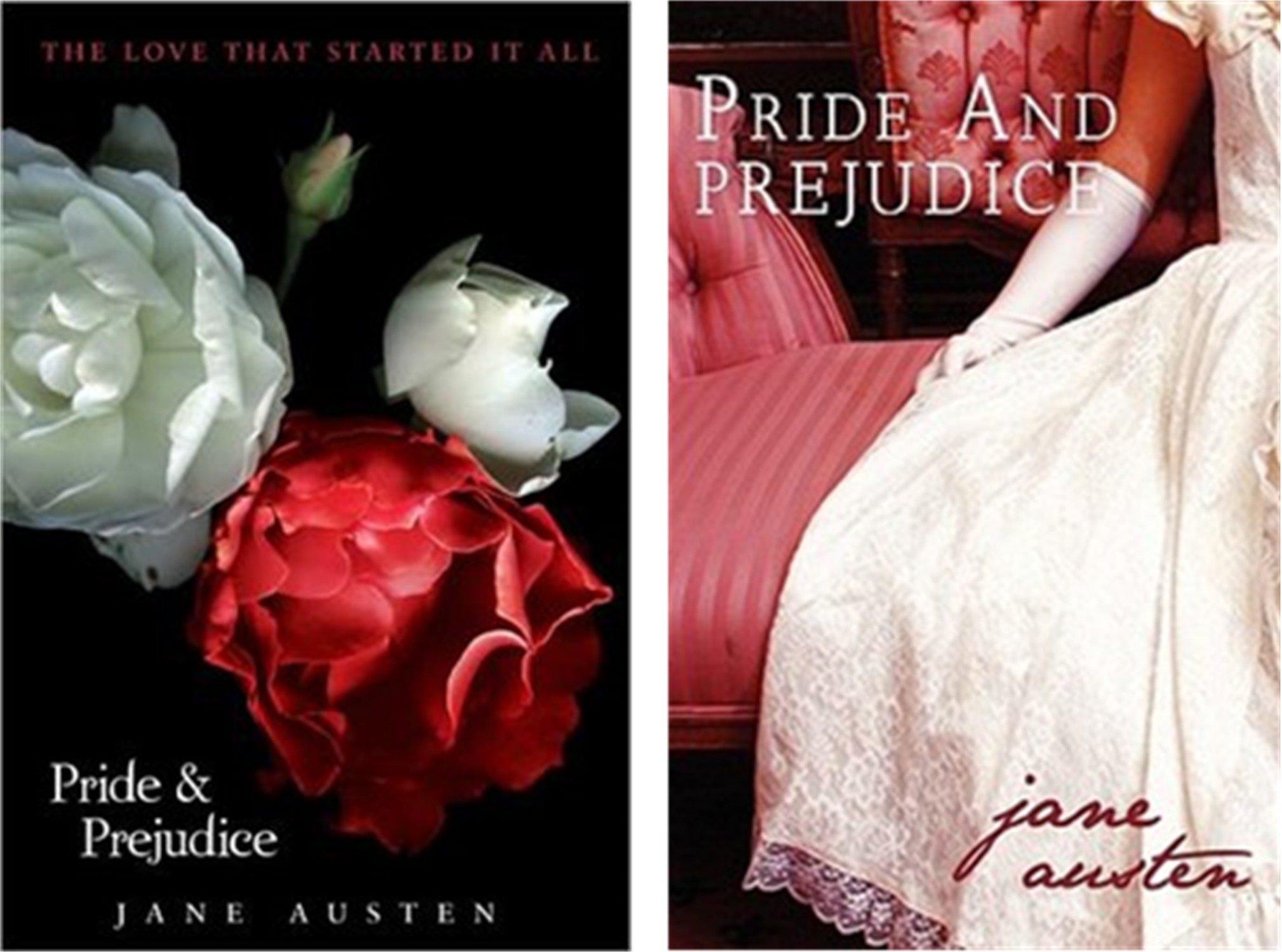
Just take the classic Pride and Prejudice, for example. What this title indicates isn’t merely the name but it also connotes images of passionate period drama, of riveting wit and sentiment, of bold heroines and disgruntled yet endearing bachelors. It’s an established piece recognised by both academics and avid readers, and a good designer will understand how to utilize typography to justifiably give this title dignity and produce eye-catching effects. This can range from a times new roman font set against negative space, or within an elaborate floral pattern which works its way around the cover, popular with hardcover books that are striving for that “vintage” look.
ClassicLookCovers

For appealing to a more contemporary audience, Pride and Prejudice also works in cursive for lighter-toned paperbacks in budget and higher-end sections. This suggested genderification appeals to the aspect of the novel which enjoys a large female readership revealing a key market audience. Copyright licenses permit several companies to produce and reproduce various editions of the classics, so to make it a viable competitor there needs to be a degree of reinvention, a feat which publishers like Penguin have mastered. This is where arranging style and text come in handy, as well as the overall quality of the edition itself. Recent years have seen a surge of books in the bargain section improve their cover aesthetic considerably, reviving some stifled old works by simply using a contemporary font – like Calibri or Century Gothic – against a fresh stock imaged background. It works wonders for those who are passing through, or for classics enthusiasts who care about their bookshelves’ presentation.


Choose the Target, then Shoot

What Pride and Prejudice teaches us is that there is still a passion for beloved works that have their eternal place etched into the literary canon, but for newcomers the task at hand can be a little more challenging, which is why typography is an essential part of the marketing package. Striking the balance between established tropes and standing out is a delicate issue – certain genres have their forms by which they are recognised and have a certain etiquette associated with them. While thrillers, mysteries, sci-fi, and more mature content tend to fall into upper case titles, comedy, some works of fantasy, historical fiction, and young fiction – as well as popular travel guides and cookery – use lower case for a lighter tone.

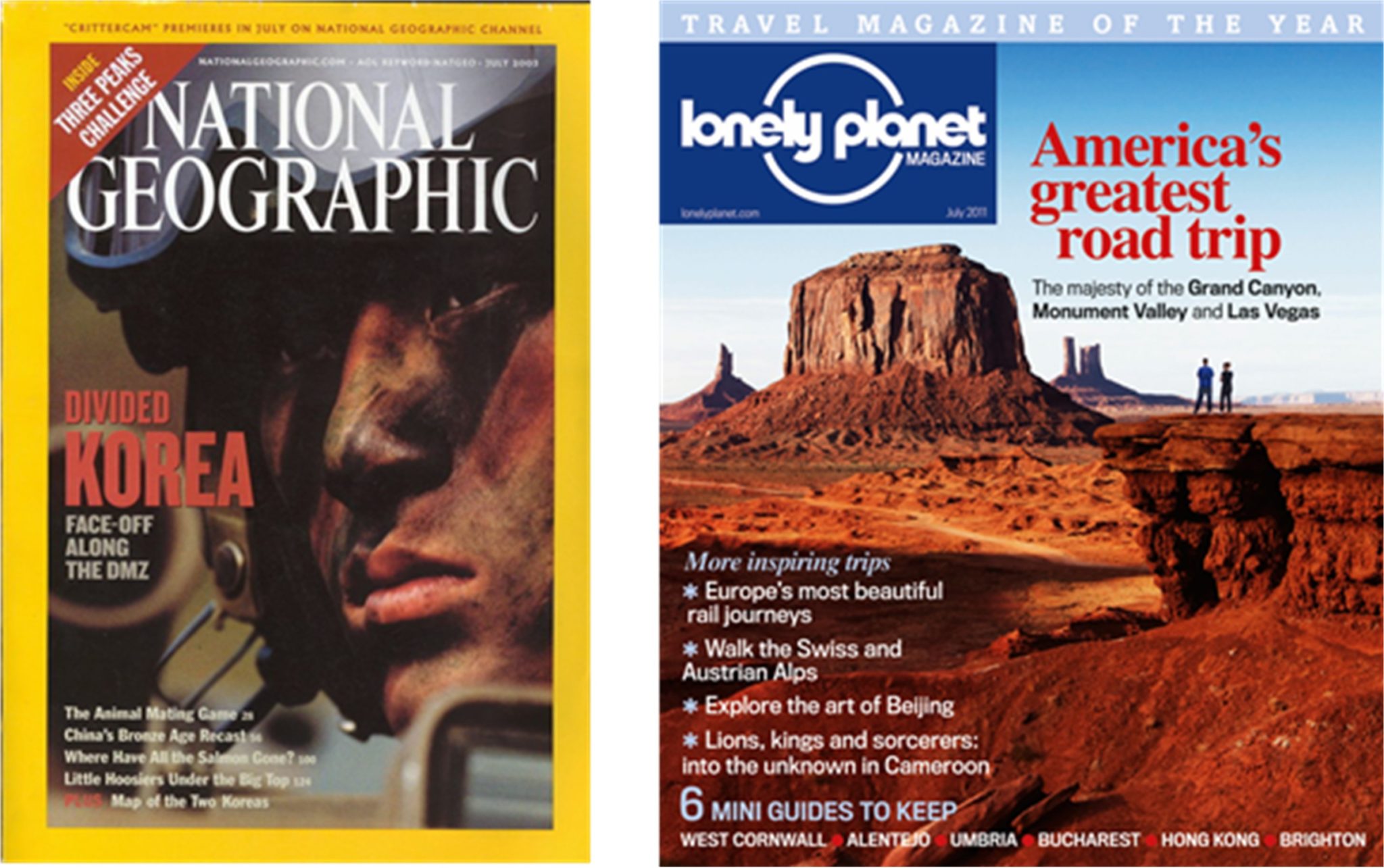
Art, music, and travel is fairly flexible, and the designer decides what level of seriousness or casualness to exude – comparing leading publishers like National Geographic and Lonely Planet can disclose different tones upon second glance, with National Geographic taking on a more intensive, institutionalized tone while Lonely Planet is casual and entertaining, geared towards a broader scope of travelers. This why using particular design tropes is vital for subliminally calling out to the right audiences who will be able to gravitate towards the sections of the bookstore that meet their needs at first glance.
TravelCovers

There is a fascinating hierarchy associated with typography too, following a rapid circulation and reprint of bestsellers in particular. Comparing a first edition with a second or third edition of a successful book may see the author’s name overshadow the title itself, because it is the writer who is the focal selling point at this stage. This will happen less frequently in a series where the franchise itself is being advertised, especially where there is a huge merchandise following like Star Wars or Harry Potter.


Creating Appeal Beyond the Bookshelf

With massive increase of resources made available online, it’s not simply about the tactile and visual experience of the bookstore. What marketing on the web indicates is that books must be easily viewed from a thumbnail perspective and capture enough interest to result in a click, especially in the world where devices are getting smaller. Today’s popular designs tend to be minimalistic in nature with a select use of colours and strategically manipulated negative space which helps the words present themselves, and other works may actually integrate the text into the actual design itself which can grab a reader by its artistry enough to draw them into close viewing. Size does matter, and sometimes a small and minimal amount of language set against a poignant focal image is mysterious enough to begin that readerly relationship. At the same time, an instructional book in conventional nature will be basic enough to simply let the reader know what it’s about.

Most importantly, designers need to grasp the integrity of the content they are representing, and make the decision whether or not to wear the book’s substance on its sleeve or leave more to the imagination. An astute understanding of the text and the typography used will ensure that the work is effectively represented as well as marketed. This may involve direct collaboration with the author, illustrator, publisher, and a subconscious dialogue with the public who can tell a serious work from a frivolous one simply by its font. In the best circumstances, engineering the front cover skillfully can produce a brand which will become as unforgettable in the public eye as the core of the work itself.


Facebook Fan Page Reach: No, It's Not All Over For Free Promo On Facebook

This post by Publetariat Founder and Editor in Chief April L. Hamilton originally appeared on her Indie Author Blog on 4/3/14.

If you’ve been promoting your brand and books on Facebook via a Fan Page*, then stories like The Free-Marketing Gravy Train Is Over on Facebook (from Time Magazine’s site) may have you in a tizzy. Don’t be.

Those articles are either intimating, or stating outright, that this is some kind of plot on Facebook’s part to force Fan Page owners to either pay to “boost” their posts or pay for ads in order to maintain the same level of exposure, or “Reach”, as they’ve enjoyed in the past. I don’t doubt Facebook is very much interested in selling “boosts” and ads, but the truth is that you don’t have to invest in either of those things to increase your Fan page posts’ Facebook Reach.

*Note that this post only applies to Fan pages, not individual Facebook Profiles (aka “Timelines”). This is because there are no tools for measuring engagement or boosting posts on Profile/Timeline pages: those pages are supposed to be for private individuals to engage socially with their private networks, they’re not intended to be used for marketing purposes. So if you want to deal in Reach on Facebook, you need a Fan page.


How Do I Know This?

I manage a few FB fan pages for my day job and I’ve been observing the ‘Reach’ trends on both ‘boosted’ (promoted for a fee) posts and non-boosted posts. The ones with the greatest Reach are ALWAYS the ones with the most “engagement”: Likes, clicks, Shares, comments. This is regardless of whether or not a given post has been ‘boosted’, and in fact I frequently see non-boosted posts far exceed the reach of boosted posts.

It’s kind of a chicken-or-the-egg loop once the post is out there, because you have to get initial Likes, clicks, Shares and comments to improve the post’s visibility in your Fans’ newsfeeds. Higher visibility leads to more Likes, clicks, Shares and comments, and so on and so on.

FB is keeping the details of their Reach algorithm secret, but based on what I’ve observed it goes kind of like this:

You post something to your fan page. Facebook says, “Okay, we’ll show this post in the newsfeed of a very small test group of your Fans, and see if it gets any engagement. If it does, we’ll show it a larger group. If it gets more engagement from that new group, we’ll show it to an even larger group.” And so on, and so on. So Facebook isn’t just blowing smoke when their reps say the new algorithm is intended to ensure that only the most ‘engaging’ stuff gets pushed to users’ newsfeeds.


Context, and Specifics: How Many People Get To See A Post Immediately, and Ultimately?


Click here to read the full post on the Indie Author Blog.


Finding Your Author Voice

This post by Susan Spann originally appeared on her blog on 4/2/14.

Today’s #PubLaw examines a mission-critical, but often overlooked, facet of author “marketing.”

I use quotes with “marketing” here because, for authors, many aspects of marketing have more to do with who you are than what you do. This makes knowing yourself, and your voice, critically important.

Authors are not products, or “brands,” though marketing your books involves aspects of each. Authors are people (like Soylent Green!) and being a person–instead of just a “brand”–is an advantage. It can also be an enormous pitfall, if you handle yourself improperly.

Knowing who you are – your author voice – can help you decide which marketing avenues are best for you and your books.

As an author, you need to find unique and effective ways to communicate, beyond the written page. The days when authors could “just write books” and expect someone else to do all of the publishing, marketing, distribution, & sales are over. The good news, however, is that marketing doesn’t have to be miserable – done properly, a lot of it can even be fun.

Effective “marketing” involves a multi-faceted approach–but authors, like diamonds, sparkle more when the facets are properly cut. Knowing your author voice will help you realize which marketing efforts to focus on, and which ones to avoid.


Click here to read the rest of the post on Susan Spann’s blog.


Europe Says No To Proprietary eBook Formats

This post by Mike Cane originally appeared on his Mike Cane’s xBlog on 4/1/14.

L’Europe va mettre fin aux formats propriétaires pour les livres numériques

Europe will put an end to proprietary formats for digital books

While the European Parliament will be renewed in May, the European Commission, which will also be fully reconstructed by the end of the year, embarks on a surprising activism: she finally grabs the file interoperability digital books, with the aim of forcing retailers using proprietary formats to end these systems.

Amazon and Apple, the two market leaders, are directly targeted. Currently, a digital book bought on Amazon.fr can only be read on the Kindle, the e-tailer reading lamp, or one of its applications. Reading lamp which does not accept the open format ePub. It is the same with the iBook Store, Apple’s digital library, which does not allow the reading on the terminals of the Apple brand.

Assuming this isn’t an April Fool’s item, what will happen?


After Amazon and Apple fail with their bribes lobbying, I think:


Click here to read the rest of the post on Mike Cane’s xBlog.


Not Drowning But Waving

This post by Jonny Geller originally appeared on The Bookseller on 5/22/12, but its content is still surprisingly on-point.

I recently read a good début novel entitled The Lifeboat by Charlotte Rogan (not my client, so relax, I’m not pitching). A ship has sunk and the survivors are packed in a lifeboat, vying for control. Without a clear idea that they will see land again, they are jostling for a good spot on the boat. You can see where I’m going with this.

It feels like a gust of wind has come along and shoved everyone in the publishing industry into one spot on the lifeboat. The storm has abated and the seas seem calm, but we are all sitting in the wrong place, next to people we didn’t think we would be, or should be, nudging against. We have to work out who we are now. The morning after the disaster, we have woken up on the lifeboat with new objectives:

» The publisher. Now seeking “a direct relationship with the consumer”—a euphemism for “they are going to sell books directly”.

» The bookseller. Now seeking “a localised, niche, customer-driven service”—a euphemism for “they are sick of the huge returns and so [are] now going to stock lots of titles but not many of each of them”.

» The agent. Now seeking to “create a 360˚ vision for his/her clients”—a euphemism for “they now do everything: publicise, edit, organise talks and even publish”.

» The author. Now seeking “a more equal partnership with all elements of the chain”—a euphemism for “they are sick of being treated like a disposable commodity”.


Click here to read the full post on The Bookseller.


How To Sell Your Book To Hollywood

This interview of Walt Morton, conducted by JJ Marsh, originally appeared on Words With Jam on 3/31/14.

Walt Morton, Novelist & Screenwriter, shares tips with JJ Marsh

Tell us a bit about yourself, Walt. How did you get involved in the movie business?

In 1988, I had just moved across the country to Los Angeles. I knew nothing about Hollywood but I thought I could probably write and sell an original screenplay because many screenplays I paged through seemed dumb, wooden, or the work of a chimpanzee. How hard could it be? Over the next eight years I wrote seven screenplays. I even earned some money and had one script bought outright. I worked for a producer as a writer-for-hire like in the old Hollywood days.

Movies based on original screenplays have become rarer and rarer. To make this clear, an “original” screenplay is a screenplay that is not based on a novel or TV show or toy or comic book or anything else. It just starts as a writer’s idea for a movie.

Starting in the 1990s the average cost of making a Hollywood studio film skyrocketed with the associated costs of marketing and global distribution. Today, any big studio movie with star actors represents an investment by the studio of over $100 million dollars.

Scared studio executives almost never have the guts to make original material anymore, so seek ideas already vetted in the consumer marketplace. They’d rather bet on something already popular as a book, novel, TV show, comic, etc. This is not rocket science.

The realization almost nobody was buying original screenplays put me on the slow road to being a novelist. That, and a conversation I had with Michael Crichton, back in 1997. Crichton said:


Click here to read the full interview on Words With Jam.


Pamela Wray and WordWorks Publishing Consultants: The Amazing Case of the Serial Plagiarizer

This post by Victoria Strauss originally appeared on Writer Beware® on 3/31/14.

Every time I consider purging Writer Beware’s files to get rid of documentation on agents and others we haven’t heard anything about in years and years, I’m reminded of why I hold onto that old paper.

Last Friday, I received an email from successful independent editor Jodie Renner. Apparently, client testimonials from her website had been plagiarized by an outfit called WordWorks Publishing Consultants.

I hopped on over to WordWorks’ website, expecting to discover something on the order of faux publicist Mike Albee, who decorated his site with fake testimonials from known authors.

What I found was way more bizarre: plagiarism, plagiarism, and yet more plagiarism, plus a blast from Writer Beware’s past. (Bear with me; this is a long post with lots of images, but I wanted to capture them in case WordWorks attempts to hide the evidence.)

Based in Alabama, WordWorks is owned by Pamela Wray Biron, who provides “Expert and Innovative Content Solutions,” including editing, ghostwriting, graphic design, illustration, marketing, and web services. A veritable Renaissance woman. And, gosh, just look at Pamela’s clients! The US Justice Department! 20th Century Fox! The President of the United States! Check out the impressive names on Pamela’s Testimonials page! Steve Jobs! Bill Gates! Michael Eisner! Editorial and marketing staff from all the Big Five publishers!

There’s just one problem: most of the testimonials are plagiarized, and not just from Jodie Renner.


Click here to read the full post, which includes proof of the reported plagiarism in the form of many screenshots, on Writer Beware®.


Book Editors Really Do Edit Books. Really! They’ll Tell You So Themselves!

This post by Chris Meadows originally appeared on Teleread on 3/30/14.

What does it say about what people think of you if you have to write a lengthy editorial insisting that, no, really, you actually do do your job?

That’s how a piece by book editor Barry Harbaugh in The New Yorker comes off. Entitled, “Yes, Book Editors Edit,” it insists that, despite Amazon claiming otherwise, book editors at major publishers actually do edit books. The fact that this piece had to be written in the first place possibly says more than does the entire piece itself.

Especially since there are just a few problems with it.

First of all, it’s hard to imagine where Mr. Harbaugh got the impression Amazon was claiming that editors don’t edit. The people who’ve been complaining about editors not editing have by and large been the authors of the works that were supposed to be coming in for editing—but weren’t. For example, look at some of the discussion from when the head of Kensington Publishing responded to writers’ complaints about their experience with the press. Many of those complaints involved the failure to receive any actual editing.


Click here to read the full post on Teleread.


Publishing: Why You Should Care About Ebook vs Print Formatting

This post by Dean Fetzer originally appeared as a guest post on Joanna Penn‘s The Creative Penn blog on 3/25/14.

Introductory note from Joanna Penn: One of the fantastic rewards of writing a book is being able to hold a physical copy in our hands. Regardless of other definitions of success, the thrill never goes away.

I’m a huge fan of print-on-demand, and one of the most popular posts on the blog is Top 10 tips on self-publishing print books on Createspace by Dean Fetzer. Today, Dean is back to share a common question about formatting ebooks vs print.

– – – –

I get asked this question a lot: “Can I use my CreateSpace PDF for the ebook version?”

The simple answer is ‘no’. Well, you could, but I doubt you’d be very happy with the finished results — and more importantly, neither would your readers. Frankly, a PDF is the last format you should use to create an ebook from as it does so many things that you just don’t want an ebook to do.


Flow vs rigid formatting

With a printed book, you want to control as much as you possibly can, from how the text aligns to the headers at the tops of the pages to where the page numbers sit on the page: that all needs to be exact to provide the best printed reading experience you can for your readers.

Ebooks, on the other hand, need to flow. You’ve no idea what the person reading your book is reading it on, much less whether they use really small text or enlarge it so they can read it easily. Even if all you format your book for is the Kindle platform, each model varies in the way it displays the written word.

If your book doesn’t adjust to that, they’re not going to enjoy reading it.


Click here to read the full post on The Creative Penn.


Go Midwest, Young Writer: Why the Middle of the Country (Not Brooklyn) Is the Future of American Literature

This post by Jason Diamond originally appeared on Flavorwire on 3/24/14.

For those who only look at the bigger picture, yes, New York is the publishing epicenter of the country, and a lot of people who write do live in Brooklyn. As someone who writes for a living and calls Brooklyn home, I can totally back up everything you’ve heard about thriving independent bookstores, nightly literary events, and writers crowding every coffee shop. Going out means routinely bumping into editors, agents, publicists, and other people who help get new books out into the world, and that gives you every reason to think that New York City is the only place to be if you’re a writer.

But it isn’t, and I don’t necessarily think there is one specific place that is responsible for creating literary culture, just as I don’t think there’s one where you should go to be a writer. Yet a closer look at the literary map of the 50 states reveals that even if the publishing industry writ large is situated in New York and Los Angeles, some of the most exciting things going on in American literature are taking place in the middle of the country.

“I have spent my whole life watching people leave,” writes David Giffels in his collection of essays, The Hard Way on Purpose. “This is a defining characteristic of the generation of postindustrial Midwesterners who have stayed in their hometowns.”


Click here to read the full post on Flavorwire.


Declarations and Forecasts of Great Change in the Book Business Need Specificity to be Useful and Often Do Not Provide It

This post by Mike Shatzkin originally appeared on his The Shatzkin Files blog on 3/4/14.

A recent post here that incited a long comment string and another on FutureBook that was quite unrelated from the estimable Brian O’Leary have helped me formulate some thinking which I hope can be helpful in evaluating any “Great Change” post that arises about publishing. And they do, indeed, arise often.

O’Leary’s post builds on a theme he is persistent about pursuing, which is that communication, which in his writing seems to conflate with publishing, is moving to a linked-and-continuous conversation rather than a set-content-package (like a book or a magazine). The post suggests that the “books”, such as they are, will emerge from the conversations.

This recalls for me a comment I heard a few years ago from the father of digital publishing, David Worlock. David told me, “surely, in time, the number of books created within the network must exceed the number of books created outside the network”. By “network”, David meant “Internet”.

I don’t know how long “in time” was intended to be in David’s mind, but I figured “decades”. And in that time frame, I agree.

The other long-ago wisdom I keep recalling as I read predictions about our digital reading future is what was always said by Mark Bide when we began our “Publishing in the 21st Century” conferences for VISTA (now Publishing Technology) in the 1990s. Mark always reminded the audience that “book publishing is many different businesses” so that everybody would keep in mind that what we said about trade might not apply to sci-tech and what we said about books for lawyers and accountants doesn’t apply to publishers of college textbooks. What brought everybody together was the form of the “book”, which was already then a weak unifying principle for what were really many very different businesses.


Click here to read the full post on The Shatzkin Files.


Conferences and Conventions – What's A Writer To Do?

This post by Gayle Carline originally appeared on her blog on 3/14/14.

I’m going to Left Coast Crime next week. Their website defines it as “an annual mystery convention sponsored by mystery fans for mystery fans. It is held during the first quarter of the calendar year in Western North America, as defined by the Mountain Time Zone and all time zones westward to Hawaii.”

Notice anything missing in the title or definition? Writers. Authors. This is not a convention for writers. And yet, it is. It is a place for authors and their readers to meet and mingle.

Writers conferences are for writers, period. They are for anyone who is even thinking they might want to write. You-The-Writer are there to learn something about writing, selling your writing, or marketing your writing. You will most likely meet people who talk and think a lot like you. They will be your tribe members and you will be able to discuss your writing with them because they get it. They get you.

At a convention, You-The-Writer are there to meet readers. There aren’t a lot of writing workshops. There are few, if any, panels discussing the business aspects of being an author. It’s all geared toward giving fans a behind-the-scenes look at your novels. You will meet mystery lovers who want to read more mysteries, like yours. With any luck, they will become your fans and you will be able to share your stories with them because they enjoy mysteries.


Click here to read the full post on Gayle Carline’s site.


The Self-Publishing Debate: A Social Scientist Separates Fact from Fiction (Part 2 of 3)

This post by Dana Beth Weinberg originally appeared on Digital Book World on 12/4/13. Click here to begin with Part 1 in the same series, by the same author, also on Digital Book World (post will open in a new window or tab).

In the writers’ groups I attend, self-publishing is a touchy issue. I know a number of writers who served their time in the trenches, writing and submitting and rewriting and resubmitting their work over and over again to agents and publishers before that one magical “yes.” It’s not unusual to meet a writer who tried to get published for ten years or more before winning a publishing contract. These writers have overcome significant odds, and they are rightly proud of their achievements. In the same group, there are a number of writers who haven’t yet broken into traditional publishing or haven’t even tried but who have decided to self-publish. Some don’t have the war stories and battle scars from trying to break in, while others do. Despite not having the traditional publisher’s stamp of approval, all of them are also proud of their achievements and expect equal consideration as published authors. It might be easy for the traditionally published authors to maintain their sense of superiority over self-published authors (and, thus, their sense of comfort that they had done the right thing all those years that they waited and tried) were it not also for the token members of the group who have self-published and made a lot of money at it.

Is self-publishing an amateurish endeavor, a means of sharing stories, a strategic move in a writing career, or an entrepreneurial activity? In Part 1 of this blog, I examined the top priorities of the nearly 5,000 authors who responded to the 2013 Digital Book World and Writer’s Digest Author Survey in relation to whether and how they have published their work. Now I turn my attention to the differences in writing productivity for the four different types of authors identified in the survey: aspiring authors, self-published authors, traditionally published authors, and hybrid authors with a combination of self-published and traditionally published works.

The necessary ingredient to success in a writing career is actually writing. So how do our various types of authors stack up in terms of manuscripts completed, whether published or unpublished?


Click here to read the full post on Digital Book World.

Click here to read part 3 in the same series, by the same author, also on Digital Book World. (post will open in a new window or tab).


Are You Publishable or Not? Reading the Tea Leaves.

This post by Dave King originally appeared on Writer Unboxed on 3/18/14. Since it’s addressed primarily to those seeking mainstream, traditional publication it may not seem like a fit for Publetariat, but now that many are making the wise decision to adopt a hybrid publication model, it will likely be of interest to many Publetariat readers.

Writing never feels more lonely than after you’ve sent your manuscript out to every agent and publisher you can think of and gotten nowhere. Of course, you can always take comfort in the long list of massively successful books that were initially rejected by nearly everyone who saw them. But for every brilliant book that gets rejected out of blindness or stupidity, there are thousands that get rejected because they’re just not very good. How can you tell which camp you fall into?

The quality of your rejections are a good sign. Granted, form rejections don’t tell you much, but if all of your rejections are form letters, it’s probably time to either start a major rewrite or put this manuscript in a drawer and start the next one. (If your manuscript is getting repeatedly turned down on the query alone, you might want to take a second look at your query letter.) If you’re getting glowing rejections (“I love the book, but it’s not right for our list.”) then you’re probably doing something right and should keep sending the manuscript out — though you might want to refine your agent search to make it more likely it will hit the right desk. And it’s still a good sign even if you’re getting, “I love the book, but . . . “ If a publishing professional has taken time to give you free advice, then your manuscript is probably worth the effort.


Click here to read the full post on Writer Unboxed.


How To Write A Book Review For Amazon.com

This post by Kristen J. Tsetsi originally appeared on her site on 3/12/14.

The integrity of The Book Review has been demolished by too many reviewers who use the book review space as a personal venting venue, whether it’s to beat an author with one-star reviews because s/he said something in public that annoyed people, or to slap an author with a once-star review because the F word appeared on too many pages.

Unfortunately, there’s really no way to stop the bad-review assaults written by people with personal vendettas, but it is possible to improve the quality of book reviews – making them truly helpful to other potential readers – by answering a short, simple set of questions while writing the review.

First, some examples of what not to do. Consider the following reviews pulled directly from Amazon:

“Don’t waste your money. Justin Bieber needs a more supportive family not so self absorbed, he seems like a nice person to bad he does not have a solid support system.” – One-star review of Nowhere but Up: The Story of Justin Bieber’s Mom

“She is putting her story out there and being vulnerable to the people who love her and follow her that is a very personable thing to do . I love her more for it” – Five-star review of Nowhere but Up: The Story of Justin Bieber’s Mom

I have no idea whether I want to read Pattie Mallette’s book based on these reviews. What I do know is that one person feels bad for Justin Bieber and his apparently lacking support system, and another really likes Justin Bieber’s mom. These are valid emotions, but they’re not book reviews. Neither does anything to help a person make a purchasing decision.


Click here to read the full post on Kristen J. Tsetsi’s site.