How It Feels to Have Your Book Out There

Warning: Honest post!

I feel I owe it to you guys to get a bit personal about my feelings now [that my novel] Pentecost is out in the world. I’ve blogged the whole first novel  journey so far so I thought I should post this while I am still mired in launch week! I will be doing a breakdown of how the marketing went in the next few weeks.

In the video, you will learn:

  • How Pentecost made #17 in religious fiction on the US Kindle Store, #96 on UK Thriller Fiction in paperback and #9 in Christian fiction UK. i.e. I made Amazon bestseller lists! It’s great to have the book out there and selling and it’s all happening! I’ve done loads of guest posts so my name is out there. Crazy times! [Update 13 Feb: Pentecost made #4 in Religion & Spirituality -> Fiction and #5 in Kindle -> Religious Fiction and #67 in Genre Fiction as well as #2 in Movers & Shakers]
     
  • BUT I’m also tired and emotional about it all. I did work very hard on the launch and I guess I’m burnt out and the adrenalin high is wearing off.
     
  • Writers have some issues with self-esteem of course, but there is a fear of judgment and criticism. We all worry about this. I have written genre fiction, not literary fiction after all! We just have to carry on writing. It’s to be expected.
  • I feel weird about the fact people are reading my thoughts across space and time. Parts of me are in the book (not the violent parts!) You can hear which parts are autobiographical in this interview with Tom Evans.

  • The cycle of creativity. There are peaks and troughs and I’m down at the moment. I know it will return again as I have ideas for the next few books but right now, I need to rest and not pressure myself too much.
  • On the pressure of needing to get the next book out there! Pentecost is a short book, a fast-paced read and people are finishing it and wanting the next one which I haven’t started writing yet! But writing is a long term experience and I’m aiming to continue writing over time.
     
  • I hope these honest thoughts help you!


This is a reprint from Joanna Penn‘s The Creative Penn.

A Virtual World, A Writer’s Mind, And Serious Business That’s Always Fun!

I just got back from Book Island in Second Life.

Yep, a virtual world I visit for play and work. I wrote about virtual worlds in a previous post. Here’s a bit of what I said:

“All virtual worlds have virtues that make them valuable whether we’re talking about your mind, a book you read or wrote, or a computer-created world.”

Yes, I called our minds and books “virtual worlds”. Check out that post for more about what I’ve done as a writer in Second Life.

This post is for talking about what I’m doing as a promoter (of my writing) in that virtual world.

Just like a book’s virtuality can become quite real to us, walking around in a computer virtuality can make you wonder why this “real”, consensual, physical reality puts so many demands on we weak humans 🙂

My latest book will be coming out in May and I’m doing all the necessary promotional tasks I can squeeze into my day–writing this blog, visiting the blogs on my Blogroll and commenting there, planning a BlogTour for the book launch, making final revisions, preparing for online reviews of the book, using Twitter and Facebook, etc…

Most of those activities are me relating to other people and that’s what I consider Promotion to be–Relationships.

Would you rather be bombarded with TV or online ads for books, movies, or your favorite things, or would you like to have a friend recommend one to you?

Relationships have always been the most effective form of promotion, in spite of the mega-budgets of the marketing firms. Sure, you may have seen a movie that got mega-hyped and liked it but, imho, most of what’s sold through the traditional channels of promotion is either quite useless or actually harmful.

So, I take a break from the sometimes sweet, often harsh, conditions of Real reality and move my relationship-forming brand of promotion into Second Life.

I’m the events manager on Book Island, I help host the weekly Open Mic on Sundays, I take part in the Wednesday Writer’s Chat Support Group, I’m organizing the new Happy Hours at the Writer’s Block Cafe, and I read chapters from my forthcoming book on Thursdays.

Apart from the live reading of book chapters, most of the “work” is hanging out with people and forming relationships. I’m not running around shouting out my agenda. I talk with folks from all over the world. I bond with them. They often wonder what I do in Real Life. I tell them about my book…

What I do in real life takes many hours of every day. I make time for virtual relationship-building, carve it out of my diurnal allocation, find it often more satisfying then this war-torn, global crisis-ridden, greedy and dangerous “real” world…

Like yesterday: I sat with five people from various parts of the United States, one man from Finland, and two others from the UK. Some were writers, some artists, and one was a pole dancer. We all had a great time. We shared information, experiences, laughter, and good will

I think it’s time to wrap this post up. I’ll do it with some questions from that previous post:

Have you ever wondered if your mind is truly registering our physical world with fidelity?

How lost can you get in a good book?

Has a book you’ve read ever made you want to abandon our consensual reality?

Have you ever visited a virtual world?
~~~~~~~~~~~~~~~~~~~~~~~~~~~~~~~~~~~~~~~~~~~~~~~~~~~~~~~~~
Follow the “co-author” of Notes from An Alien, Sena Quaren:
On Facebook
On Twitter
AND, Get A Free Copy of Our Book

For Ebooks, An ISBN Dilemma

This article, podcast and transcript, by Chris Kenneally, originally appeared on the Copyright Clearance Center’s Beyond the Book site on 2/14/11 and are provided here with that site’s permission.

Not so long ago, a book was an unmistakable object. Then someone came along and started digitizing content, and very soon, books were something else, something much more than ink on dead trees. That transformation, indeed the redefinition of books, matters enormously to readers and publishers, as well as retailers and librarians. Without a way to identify “books” as they are published, information and creativity could be orphaned.

To discuss this challenge, CCC’s Chris Kenneally recently spoke with publishing consultant Michael Cairns who had just completed a report for the Book Industry Study Group examining practices in the identification of e-books in all their vast variety. The research turned up several surprising findings, as well as revealed a tension between US publishers and their counterparts around the world.

“We’re in this transition between the sale of a physical book to one that’s a digital book, and in that transition, some aspects of the ISBN number are not being upheld as they were in the physical world,” notes Cairns, who is a highly-regarded blogger at PersonaNonData. “And when there’s a breakdown, that starts to increase the likelihood that the supply chain does not operate as efficiently as perhaps it should or could. And so that’s a real issue.”

Open Letter to JK Rowling

This letter, by Chris Meadows, originally appeared on Teleread on 1/23/10.

This letter is also being sent by snailmail to J.K. Rowling’s agents, the Christopher Little Literary Agency.

Dear Ms. Rowling:

For several years, you have adamantly refused to make e-book editions of your Harry Potter series available, citing concerns over promoting piracy. In May, The Bookseller reported that you were considering releasing the Harry Potter novels in e-book form. However, it is now October, and we have heard no further word as to when or if these e-books will be coming out.

I am writing to ask that you release these official e-books, as soon as you possibly can.

To begin with, your prior reluctance to license Harry Potter e-books has not resulted in any reduction in piracy of these books. Indeed, each time a new book in the series was published, a fully scanned e-book edition of it was on BitTorrent within hours.

Indeed, at the moment, if I enter “‘Harry Potter’ e-book torrent” into Google, it returns 690,000 results, in a variety of e-book reader formats. I have little doubt that by now that if I were to download one of these at random, I would find it had been proofed and polished sufficiently to compare favorably to professional quality. One of these in particular claims to be “reference quality”, with “exact layout and page sizes” and “every word on every line”.


Try as you might, you will never eradicate these illegitimate e-books from the Internet. What you should be thinking about doing is supplementing them with authorized versions that would earn you some money, and divert at least some of these e-books’ popularity to legitimate ends.

Read the rest of the letter on Teleread, and also see New Harry Potter piracy reported: Time for J.K. to allow legal Potter e-books, an earlier article on the same site.

Fun With Fonts: Identifont

If you like typefaces, if you like to play around with your fonts while other kids are off doing piano lessons, if you keep noticing the typefaces on the restaurant menu, you need to know about Identifont.

Identifont is the coolest font site on the web. You might not expect that when you first go there, because it has none of the luscious typography of sites like I Love Typography, Typographica or Typophile. But it’s got something no other typopgraphy site has.

Identifont - Find Out The Name Of That Font!

Identifont, the brainchild of David Johnson-Davies was built around Artificial Intelligence (AI) software developed at the Massachusetts Institute of Technology, and launched in 2000. The site says it is the largest independent directory of typefaces on the internet. You can see by the updates that new type foundries are being added all the time.

Here’s what you’ll find at Identifont:

  1. Fonts by appearance—This is the heart and soul of Identifont. Through a series of simple, illustrated questions, the AI behind Identifont will help you figure out exactly what typeface is used on that book cover you really like. It takes an average of 15 questions to come to a conclusion, but I’ve found Identifont to be right most of the time I’ve used it. There’s really nothing else like it. Here’s a typical screen from the identifier, where I’m up to question #4:
    Identifont

    Click to enlarge

  2. Fonts by name—Maybe you remember that the font you want has “park” in it, but that’s all you remember. No problem, because Identifont will call up every font it has that gives even a partial match. This is a lifesaver also.


  3. Fonts by similarity—Another terrific utility. Perhaps you want something like the stylish Park Avenue, but not quite. This is a task that could take time to visit font websites and look through pages of samples. Not with Identifont. In a few seconds I had located this lovely Tiamaria, a typeface I had never heard of. Perfect.
    Identifont

    Click to enlarge

  4. Picture fonts—This will amaze you. Try entering anything here, like “dog” or “beach” and see what Identifont comes up with. It has such an enormous database of fonts it’s hard to stump it. Here’s one of the 18 fonts I got with a search on “balloon”:
    Identifont

    Click to enlarge

  5. Designers—Want info on a typeface designer, including links to all their fonts? Just enter a full or partial name, and you have it.


  6. Publishers—A huge collection of type foundries, with links to all their typefaces on Identifont.

There’s also a small collection of free type fonts, with links to download locations, and listings of the most popular fonts on the site in the past week. In addition, there are links to two associated websites:

  • Fontifier where you can turn your handwriting into a font
  • Fontscape, an independent directory of typefaces organized into unusual and useful categories.

If you like fonts, set a timer before you surf over to Identifont, because it’s easy to spend way too much time running searches through their database and marvelling at the sheer variety of the fonts it will return.

Identifont, a great tool and a heck of a lot of fun for type lovers. Try it.


This is a reprint from Joel Friedlander‘s The Book Designer.

4 Steps To A Less Frustrating DIY Book

I finally ordered my proof copy of Simply Prayer, formerly Prayerfully Yours. While I’m happy with the file I uploaded to CreateSpace, I’m left wondering if I was my own worst enemy in getting the entire project done to begin with.

I had originally planned on having the book out before the season of Advent, but missed that deadline by a good two months. I reset my deadline to have it ready for Lent 2011 and I’ve just made it. Why all the deadline problems? I tried to cut too many corners. Instead of going the normal route of writing, editing, designing and fixing the details of the design I tried to write and design simultaneously.

Bad idea. Very bad idea.

What I had hoped would shorten the amount of time from the planning stage to the finished product bred headaches and nightmares too numerous to mention. Suffice it to say I won’t be trying that again. And so I want to leave you all with a bit of advice. Follow these four steps and you’ll reduce the irritations and frustrations of the DIY Independent Author.

  1. Write until the story is completely told, or for non-fiction until you begin repeating yourself. Don’t worry about page count and design elements like fonts, pictures or pulled quotes.


  2. Edit your manuscript completely before you even begin to think about what it should look like on the page. Once the design process begins it’ll make it more difficult to add new material, move passages around or delete entire sections.


  3. Design your book with an eye toward more than one media. Ebooks are growing in popularity and soon will become the majority when it comes to purchases, but that doesn’t mean no one will want a well-designed print edition. Yours may become a collector’s edition. If you’re not already proficient in designing print and/or ebooks, then either hire someone to do it for you or find some really good resources like The Book Designer or Elizabeth Castro’s book EPUB Straight to the Point.


  4. Fix the little details of your design, like making sure chapters begin on the right of a print book and new sections/chapters are new pages in ebooks.

What short-cuts have you tried that didn’t end up as you had planned?


This is a reprint from Virginia Ripple‘s The Road to Writing.

Marketing Or Selling: What’s The Difference And Why Do I Like To Do One And Not The Other?

To sell: “to influence or induce to make a purchase” Merriam-webster.com

To market: “to expose for sale in a market.” Merriam-webster.com

People commenting on the new trends in publishing frequently say that for self-published authors to be successful they need to be entrepreneurs. In fact they often say any author who wants to be successful needs to participate fully in the selling of their own books. I heard stories for years from my traditionally published friends about going to conventions to network with book sellers, arranging book tours, book signings, and speaking engagements at local libraries, and how much they dreaded this aspect of being a published author.

Author Forums and groups like Murder Must Advertise are still dominated by similar discussions of the ins and outs of selling books, including these traditional methods. As I prepared my historical mystery, Maids of Misfortune, for publication, I found myself dreading having to actually sell it. When, miracles of miracles, I found that marketing my book on the internet was much less painful than I feared. What I also discovered was how difficult I find it to “sell” my book or “my self” through the traditional routes.

I have only approached two local books stores, asking them to sell my book on consignment, and while they both said yes, I haven’t followed up with other books stores in town, nor have I even used those two venues to schedule book signings, or ask if I should restock when the books I left were sold. I haven’t approached any libraries, and except for a talk I gave on self-publishing in general at the college where I taught, I haven’t scheduled any public appearances. I did go to the Bouchercon, and talked to two booksellers, but haven’t followed up on those two contacts. Yet every day I get on my computer, and read and comment on different blogs, forums, reader sites, and Kindle boards. I blog about once or twice a month, and I constantly work on different strategies to make my book visible to the reading public. So, the question I have asked myself is: why is it so difficult for me to sell my book through traditional means, but so easy to “market” on the internet?

I think that the answer to that question lies in the difference between the two definitions above. When I ask a bookstore owner to carry my book, or think about scheduling a book signing, or write to a library asking them to carry my book, I feel like I am trying to persuade them to sell my book. I feel that if I gave a talk, or book signing, I would be saying “Buy my Book,” thereby making them feel uncomfortable if they don’t want to do that. And I have felt uncomfortable with the idea of persuading or influencing someone to buy something that they don’t want to buy since I was a child selling girl scout cookies. Not because I think selling is bad, or sales people are bad, but because I personally feel uncomfortable doing it.

When I went to the Bouchercon, I felt like I had fallen through a time warp thirty years to when I was a graduate student going to history conventions, where I was supposed to sell myself to senior historians. You were supposed to court them, strike up conversations where you could flatter them about their work, thereby giving you the opportunity to mention your own work, in other words, “sell yourself.” All of this was in the hope that someday in the future, when you submitted an article or book to an institution where they were an editor or a reviewer, or, even better, if they were on a hiring committee for a job for which you were applying, that they would remember you and accept that article, or book, or hire you. I was terrible at this. Thank goodness I had a good friend who was better at it, so I would trail along in her wake, getting introduced to all the big names, but I doubt very much if any of them remembered me for more than a second. At Bouchercon, I had no friend to trail along behind, so I did very little selling of myself, beyond leaving some sell sheets on some tables, and handing out business cards to the few people-usually fans sitting next to me at a talk-who expressed any interest in my own work.
And this isn’t because I am a particularly shy person. I have taught for 30 years, standing up semester after semester in front of hundreds of students, speaking extemporaneously and with ease. I have run academic senate meetings, stood in front of Board of Trustees arguing vehemently to present the faculty’s point of view, and I have been the master of ceremonies at scholarship banquets with hundreds of people present. But in all of these cases, I didn’t feel like I was selling something of mine. I might have been selling an idea, or even trying to get people to fork over money to improve the educational opportunities for students, but it didn’t feel like I was selling myself, or something of mine, and I didn’t feel uncomfortable doing it.

My discomfort isn’t because I am not proud of my book, either, because I am, just as I was proud of my scholarship, or my abilities as a teacher when I did submit work for publication or applied for jobs. But I want readers and booksellers, (as I did editors or hiring committees) to make their own independent judgment on the quality of the work, not on my ability to sell it or myself.

However, when I engage in conversations on the internet, or blog about self-publishing, and mention my book, or have the title of my book as part of my signature, or have a link back to my product page, it feels different. I feel like I am marketing not selling. I am not trying to persuade them to buy my book, I am exposing my book out there to the reading public. I don’t go out and buy books from most of the people whose blogs I read or comment on, unless they happen to have written a book I would normally be interested in, and I assume the same goes for the people who are reading my comments or blogs. If they decide to take a look at my book, I then feel that the cover, and the description, and the reviews, and the excerpt will demonstrate the quality of the book (not me saying-buy this book, trust me it is good,) and I don’t have to worry that they are feeling bad because they decided not to buy it, so I don’t feel uncomfortable.

And, I don’t have to sell myself or the quality of my book to Amazon.com or Smashwords to get them to sell my book. They just do, and again, if I have done my job right, and gotten the book into the right category, and have a good cover, good blurb, good review, and good excerpt, (in other words, if I have marketed it well) the book will sell itself. And that doesn’t make me feel the least bit uncomfortable.

I am not making any judgments here, (in fact I am in awe of people who go out to those conventions, and books stores, and libraries, and book clubs, and book signings—particularly when I know for many of them they are as uncomfortable about doing it as I am.)  And, I am probably making a distinction that won’t hold up to very much scrutiny, but the distinction between selling and marketing, and why I feel like I am doing the latter when I use the internet, does at least explain my own odd behavior. In addition, the fact that whatever I have been doing to market on the internet has actually resulted in over eight thousand sales, doesn’t hurt. But, what I am wondering is, are any of the rest of you out there finding yourselves making a similar distinction or facing a similar reluctance use the traditional methods, while enthusiastically embracing the new methods offered by the internet and ebookstores? Or is this just one of my own idiosyncracies?

This is a reprint from M. Louisa Locke‘s The Front Parlor.
The Grand Conversation on Ebooks: Elfwreck (Part 1)

This post, by "Elfwreck", originally appeared as a guest post on the blog of author Shane Jiraiya Cummings on 2/12/11.

[Introduction from Shane Jiraiya Cummings:] Elfwreck is the nom de net of an avid (some would say fanatic) ebook reader with over 10 years professional experience with digital imaging and over 25 years with document conversion and editing. She manages the [community profile] ebooks community at Dreamwidth and is active at the Mobileread forums. She lives in the SF Bay Area in California, and is also involved in tabletop RPG gaming, copyright activism, filking, and slash fandom.


“Turning Pirates Into Customers”

Part 1: Customers in Potentia

Everyone knows the title of this post is an attention hook, not an offer, right? Presumably, readers understand that if I actually had any magic button that would turn digital pirates into paying customers, I’d either use it out of the goodness of my heart and make the world a more honest, more profitable place, or sell it to Disney for ten billion dollars and retire to my own island while they completed their takeover of world culture.

I do have some ideas on why it’s important to consider pirates as potential customers and how to convert them (or rather, how to convert the leeches; the uploading pirates are often already good customers).

When I’m being technically accurate, I call it “unauthorized file sharing” because it might not be illegal.[1] Most of the time, I just call it “piracy” because that term has been embraced by several sides. Authors and publishers use it to imply they’re being raided and stolen from by people outside of the reach of normal laws; uploaders and downloaders use it to imply they’re creative rebels fighting against oppressive corporations (who did you root for — Captain Jack or the East India Trading Company?).

While the legal and moral issues of “piracy” aren’t certain, the practical truth is that it’s both frustrating and scary for authors who look at those downloads and think, “why aren’t they buying my book, if so many of them like it?” Which comes to the heart of the problem:

What authors need (and publishers, if those are involved) is not “an end to digital piracy.” What they need is more sales. They need more customers, and more of the current customers buying more ebooks. It doesn’t matter if they stop pirates; book contracts aren’t renewed based on the number of pirates stopped.

DMCA takedown notices to Megaupload and Rapidshare don’t result in more sales. Shutting down ThePirateBay doesn’t sell books. Even if takedown efforts resulted in removal of content, instead of pushing it laterally to somewhere else on the web, there’s no evidence that those people would turn around and buy the legit versions of the content they formerly pirated instead of turning to other legitimate free content online.

I’m focusing on ebooks and not including print as an acceptable substitute. The solution to “the ebook isn’t available at a price I can accept” will not be “just buy the paper version instead.” First, because some of us don’t read print, either as a matter of preference (like me) or ability (people whose hands are too weak or shaky for pbooks, or who need large text); second, because the most affordable print version is often second-hand … which still leaves the author out of royalties. Third … let’s just allow there is a third, and fourth, and more possible reasons why print is not always a reasonable substitute. Telling people they should be reading more pbooks isn’t going to work.

Might as well say, “if my book isn’t available at a price you like, read something else.” That’s a shoot-yourself-in-the-foot approach to potential customers when you stop and think about it.

Read the rest of the post on the blog of author Shane Jiraiya Cummings.

Why Createspace Is Better Than Lightning Source

This post, by Robin Sullivan, originally appeared on her Write to Publish blog on 2/13/11.

I promised this would be my next blog post and since I have others I want to get to it’s time to do this one. Let me start by saying that I was Lightning Source’s biggest cheerleader. When they came onto the scene they literally changed overnight the ability for an author to get a printed book at a reasonable price and for that I’ll be forever grateful. But…business is business and CreateSpace has one up’ed Lightning Source…I’m sorry my friend but I have to align with what will make the most money for my business.

For those that don’t know these are the two big players in the POD (print on demand business). They work similarly in that they are not publishers they are printers/distributors. They take your book and put it in dead tree formats. Both offer extensive services such as editing, layout, and cover design but you should NEVER purchase these services from either organization (You can get it better and cheaper elsewhere – sigh…another topic for another day). So for the sake of this post we’re going to talk about what you SHOULD use them for.
 

  • Producing high quality printed books
  • Distributing printing books.

QUALITY
Let’s first talk about the quality. They are nearly indistinguishable. (I suspect they are using the same equipment). The covers and interiors come out as good as any book you’ll find in a bookstore. Yes the covers are done with laser “toner” rather than “cymk” ink but unless you have a printer’s loop you’ll not notice. If none of my previous sentence made any sense to you, don’t worry – it just says that the quality is very good for both and you should not be concerned.

One difference….CS (CreateSpace from here on) uses a slightly thicker paper which I like marginally better. It’s not that big of a deal but gives a “slight” nod to CS on a point that is not very important in the grand scheme of things.

Another point that should be made…especially by people who publish through the likes of iUniverse and Xlibris etc. These companies use CS and LS for their printing. In the past I believe most of the big publishers used LS but I’m sure they “shop this around” frequently and I can’t say for sure who they use now but I’d lay dollars to donuts that it is one or the other of these two companies.

DISTRIBUTION – Lighting Source
The one very attractive thing that LS (Lightning Source from here on) has over CS is they are associated with Ingram. For those that don’t know this is the elephant in the publishing industry supplying the majority of the books to major bookstore chains. (Bookstores don’t want to write 10,000 checks to 10,000 publishers – the publishers all use Ingram and the bookstores write one check to one source). The whole reason I went with them is by being in the Ingram channel your books can be in any bookstore. A great “theory” but doesn’t really translate in practice. Being distributed through Ingram doesn’t mean store shelf space it means the “ability” to buy the book (How distributors work with book stores is again a whole new subject too big to get into today – another topic on the TBW (to be written) pile.)

Since I can’t get into the nitty-gritty details of distribution let’s just say that being in Ingram means that if someone walks into a store…doesn’t find the book on the shelf…they can go to the information desk and order it. That’s how it should work but it doesn’t always. Being POD has some issues in that the “payment” needs to be made at time of purchase and in general most bookstores pay after the fact – (or in the case of Borders not at all – but again a topic for another day — sigh) sometimes 60 – 120 days later. Again…in theory…if the person at the information desk is wiling to pay now and pickup later then they MIGHT be able to get the book this way but in my experience most stores say “we can’t order POD books”.

All this is a long way of saying being in Ingram should make it easy for your books to be purchased with bookstores but my testing has shown that this is not really true.

DISTRIBUTION – Create Space

Read the rest of the post on Robin Sullivan‘s Write to Publish blog, and for an opposing viewpoint, see this rebuttal from Zoe Winters.

With All The Hype, Is Self-Publishing Really For You? Five Questions to Ask Yourself

The dust is settling on 2010 self-publishing industry and the results seem promising. But are they promising for you?

You may have read some of the more compelling industry data published about e-books recently.

• The sale of e-book readers continues to grow. Gartner, a leading information technology analyst firm, predicts the global sale of electronic e-book readers will have reached up to 6.6 million units by the end of 2010. This will represent a 79.3% rise from 2009 sales figures of 3.6 million units worldwide. Further, if this rate continues, the global e-book reader sales is expected to reach 11 million in 2011.

• The sale of e-books surged after the Christmas sale of e-readers. According to Publisher’s Weekly, this holiday season Simon & Schuster reported a 150% increase in e-book sales over last year, Random House reported a 300% surge, and Kensington saw a 400% jump over 2009. E-book sales for 2010 are expected to be $966 million and some predict it will triple to $3 billion by 2015. For the first time, USA Today’s Best-Selling Books top-50 list had more than two titles in which the e-version outsold the print version. Of the top 50, 19 had higher e-book than print sales.

• Libraries saw a 200 percent increase in e-book checkouts. At the American Library Association Midwinter Conference (January 6, 2011), it was announced that libraries and schools worldwide were at the forefront of the e-book boom in 2010. More than one million new users signed on to access free e-books at ‘Virtual Branch’ websites, resulting in a 200 percent increase in e-book checkouts.

• Self-published books are flooding the market. Publishers Weekly released R.R. Bowker statistics revealing that 764,448 titles were produced in 2009 by self-publishers and micro-niche publishers. It’s likely that figure will top one million for 2010.

• Some self-published authors are generating thousands of book sales a month. According to the Kindle forum, there is an increasing membership in the 1000 sales/month club. (The average book sells 200 or less in its lifetime.) It’s important to note that analysis of the data shows that 67% of authors in the club have three or more titles available. Four genres-romance, paranormal, thriller, mystery– occupy 50% of the sales. For more detailed information, read Derek Canyon’s article at Publetariat.com.

In his blog, Joe Konrath said of 1000 sales/month club member L.J. Sellers, “…is a perfect example of all the things I’m constantly harping about: good books, good covers. good book descriptions, low prices.” With all the competing titles, of course the critical fifth dimension is L.J.’s marketing efforts. She explained in her guest spot on Konrath’s blog:

… I rerouted my promotional efforts toward e-book readers. I quit sending marketing material to bookstores and instead joined several Kindle forums, where I participated in discussions. I got more active on Goodreads and did five back-to-back book giveaways just for the exposure. I wrote a dozen guest blogs and sent them all over the Internet.

In a recent blog post at Writers Beware, Victoria Strauss advised writers to look at the hype in context. Among her comments on high-selling, self-published authors:

Many of these authors have multiple books on offer (i.e., they may be selling 250 copies each of four books, not 1,000 copies of one book), and/or are pricing them well below what larger publishers charge (which makes them extra-attractive to ebook enthusiasts, many of whom are very hostile toward trade publishers’ ebook pricing strategies). And even if, as Konrath claims, the list is only a small sampling of high-selling Kindle self-publishers, these success stories have to be considered in the context of the thousands of self-pubbed authors whose ebooks aren’t selling in large quantities.

So, with all the hype, is self-publishing really for you?

Let’s look at what it takes to write, publish, and sell your book successfully: advanced planning, time, resources, more resources, and tireless patience. Below are five questions to consider.

Are you willing to commit to the:

…advanced planning and research? Realize a book is a commercial product. Are your goals realistic? Who will buy your book? How will you reach your potential readers? Who is your competition? How will your book be better or different? What are your realistic ROI expectations? Do your homework in advance and you will save a great deal of time, effort, and stress.

…time to write a high quality content? That means knowing your audience, supplementing “what you know” with appropriate research, and knowing how to tell a good story (for fiction and nonfiction). It also means carving out the time to do the actual writing or working with a ghostwriter.

…resources to produce a quality book? At a minimum expect to pay professionals to proofread your book, design an attention-grabbing cover, and format the interior pages. You want a timeless book you’ll be proud of forever.

…resources to create your platform? Must-haves include a website/blog, Facebook and Twitter presence, Youtube channel, and other social media sites appropriate for your book.

….practice of tirelessly and patiently promoting your book and building your readership? You can pay thousands of dollars to have self-publishing companies market your book–with no guarantees. The bottom-line: you must spend YOUR time and energy communicating with your readers-consistently and creatively. Marketing can seem daunting until you learn the efficient methods for promoting your book. Realize that building a fan base likely will take a year or more.

Before getting carried away by all the e-book, self-publishing hype–and quitting your day job–take stock and determine if you are you willing to make the five major commitments for writing, publishing, and selling your book successfully.


This is a reprint from Patricia Benesh‘s AuthorAssist blog.

What Readers Hate

Always striving to improve my writing, I make notes when readers complain about what they don’t like in a story. I reviewed my notes recently because I’m working on a rewrite of a new novel. Here’s a long list of  dislikes from readers on a mystery listserv I participate in:

  • portents, particularly the “had-I-but-known”
  • cliffhangers at the end of the chapter or the book
  • an abundance of coincidences
  • too little character background for series protagonists (assuming the reader has read the previous books in the series)
  • clumsy dialogue that doesn’t sound natural
  • insufficient sense of place and/or time
  • characters that are TSTL (too stupid to live)
  • rushed endings, particularly done with exposition rather than actually solving the clues to solve the crime
  • abuse to women, children, or animals…done for shock value
  • a prologue that either isn’t really necessary or that diminishes the impact later of the plot
  • characters with similar names
  • hackneyed plots
  • thin characters
  • an unconvincing voice
  • weak, bland prose no matter what the style
  • pretentious prose no matter what the style
  • stylistic repetition that seems lazy
  • badly edited texts
  • deja vu: “I’ve read this before”
  • the author trying too hard at whatever
  • the author seeming to revel in cruelty

I’d like to think my stories don’t fall into these patterns, but I confess, I occasionally use a cliffhanger at the end of a chapter.
 

Readers: What can you add to this list?
Writers: When and why do you break these “rules” in your novels?

This is a reprint from L.J. Sellers‘  Write First, Clean Later blog.

The Secrets To Pace In Your Novel

As you write your novel, you’ll find conflict is a key tool in developing the readers’ interest and conflict goes hand-in-hand with the pace of your scenes. If what I call the Read-Speed is slow, the impact of your conflict is much diminished. Further, as an author, you should pay great attention to the speed at which your novel reads. If it’s overall pace or Read-Speed is tedious, the reader will set your book down. Now, there are any number of techniques by which an author can increase the pace of his story and I’ll cover some of the best in this blog post.

One often ignored practice is to manipulate the amount of white space on the page. To clarify what I mean, imagine a sheet of paper filled with text, top to bottom, side to side, one line after the other without breaks. You can visualize how this would overpower the reader, slow the pace and make for difficulty when reading. In contrast, white space makes for a faster read and a better rhythm. The mere fact the reader flips the pages more often also gives the illusion of speed.

Write in short, choppy sentences, in particular when employing dialogue. Your sentences should be meaningful, of course, but quick lines make for faster reading which, in turn, increases the tempo.

One secret often missed is working with sentence fragments, which work well to increase the pace of your writing. Of course, fragments are frowned upon in the writing world, yet the judicious use of them can be quite effective. In those nail-biting scenes that hinge upon the conflict in your novel, well-used and well-positioned fragments can increase the excitement, and thus, the pace of the conflict. Always. Every time. Like this. Use discretion, however, for you can lose control if you’re not careful. In fact, I reviewed a book the other day and put it aside after reading the first paragraph. Its one-sentence construction covered at least two inches of page space, contained four hyphens and three semicolons. It was absolutely unintelligible. The moral is exercise caution when writing in sentence fragments.

You can utilize shorter words to boost the tempo of your story. Anything that slows your reader, slows the pace. Review your four or longer syllable words and consider replacing them with diminutive, or rather, shorter and easier to pronounce synonyms. For example, you might reconsider the use of the word, “antagonism,” when “anger” will suffice.

Be cautious of argot the middling may not twig. That is to say, don’t use terminology your average reader won’t understand. When you force them to take their mind off the story and focus on individual words, their reading slows to a snail’s speed.

Consider the power behind the words you choose. (How many times have we heard this one?) Does your character dream in nightmares or is he haunted by them? I think you can see the power in the word, “haunted” when compared to, “dreams.” As to verbs, consider the difference between someone who “falls” to someone who “collapses”. Falling could mean anything from tripping to going over a cliff. In contrast, “collapse,” assuming it fits the scene, indicates loss of bodily control. If there is no chance your reader will misinterpret what you wrote, they won’t have to reread a sentence to make sense of it. Anytime they reread anything, your pace suffers.

Don’t retell information. Your reader already knows what happened in prior chapters. To loop back to an earlier point in your story will simply slow the reader, and your plot.

Use active voice. Passive voice is a slower read. “He was planning to do the work,” reads slower and with less strength than, “He planned to do the work.” Take your time to learn about active voice. It’s a powerful tool to use when writing your novel.

For more about this subject, consider THIS POST by Gail Martin in her blog titled, “Novel Journey,” or THIS ONE by Roz Denny Fox at her romance blog, “Desert Rose.”

Look to the pace of your novel and your audience will offer better word of mouth advertising in return.

As always, I wish you best-sellers.


This is a reprint from C. Patrick Shulze‘s Author of Born to be Brothers blog.

The Grand Finale

This post, by Lydia Sharp, originally appeared on The Sharp Angle on 11/24/10.

And now we come to one of the absolute toughest parts of any story — the end.

At the break into Act Three the main character(s) has made a proactive decision to go forward with a plan to fix everything that had been ruined up to this point. Looking at Blake Snyder’s beat sheet, there’s only two more beats after that — The Finale and The Final Image (aka the denouement).

The Finale is almost the entire third act, in ONE beat. So… um… what exactly do you do there?

Pretty much whatever you want. This is the part of the story where you take everything you’ve presented in the previous 3/4 (acts one and two) and use it to maximize everything you feel is important about this story.

Which is why I suggested going back and reading through the story before writing Act Three.

By this point, you have a better idea of your theme. You know your MC’s strengths and weaknesses. You know precisely why you felt the need to write this story, and you’ve gotten this far, so now you want to finish it.

This is where all your previous clues become blatantly clear to the reader. You revisit actions, dialogue, thoughts, etc. to drive home the pivotal moment of the climax where everything is set right again.

A superb example of this is in Lauren Oliver’s BEFORE I FALL. The book is only seven chapters long, but each chapter covers a full day in Sam’s life, the same day she keeps re-living. Every day she sees the same things and different things. All of these are clues to the reader, some more obvious than others, that give the ending MAJOR IMPACT. The reader is able to somewhat guess what’s coming, while still being knocked out of their seat when they get to that point. Seriously. I’m personally not super-keen on how that book ended, but I can’t deny how perfectly executed it was… and when I really think about it, it couldn’t have ended any other way and had the same effect. I just don’t like death. (and saying that someone dies at the end doesn’t give anything away, trust me)
 

Read the rest of the post on The Sharp Angle.

Self-Publishing Index: Criteria Explained

I thought with the release of the February 2011 Self-Publishing Index that I would try and provide a little more detail behind how the Index is put together and what criteria is used. Each month, I publish a graphic spreadsheet showing the latest Index and how it has changed from the previous month.
 
Here are some of the criteria we use to achieve that Index list:

 
 The latest Review Rating for all author solutions services listed on POD, Self-Publishing & Independent Publishing
This rating (0.00/10) is attributed to all services and can be found at the bottom of all the reviews we publish on the site. It is not set in stone, and can vary as an author solutions service develops and revises its services on offer to authors. At the bottom of every review is a link to updates on the company’s progress – as an example – service price changes, new publishing packages, expanded distribution platforms etc. At the core of all reviews is the ideal basis we look for in all author solutions services, but in reality, the requirements of individual authors will always differ, and therefore a search for an author solutions service scoring 10/10 is purely subjective.
 
 The number of years a company is in operation
This area of the industry has a tendency to see far too many new start-up companies open for business, only to disappear a year or two into existence. As a rule, though we may publish a general overview of a new author solutions service, we do not review and rate companies in existence less than one year.
 
 The cost and value for money of a company’s services
This is entirely arbitrary and always a difficult criteria to nail down. It is not acceptable to say that because company A is cheaper than company B, therefore, they must provide a better service for an author. Likewise, I know companies who charge four-figure fees and provide an excellent service, just as there are companies who charge their authors thousands for a poor book product and exorbitant and pointless add-on services.
 
 Comments and feedback on all author solutions services
Again, this is a complex and large area of appraisal. All published reviews on POD, Self-Publishing & Independent Publishing are open to comment and feedback, as a way of authors expressing their experience and opinion on a company’s services. These comments are freely available at the bottom of all reviews on the site and can often be more telling about a company’s value and reputation than any review, no matter how thorough. It is also an area where the company itself has a right to reply, and many of the reviews have discussion and input from the company in the comments section. I also receive a great deal of feedback privately from authors and companies – week to week – often information I cannot share publicly on the site because of issues of confidentially, including (arbitration or mediation between parties; impending class action law suits or legal process; impending company developments by way of sale, acquisition, administration or bankruptcy).
 
 Titles produced/published per annum
While the Index takes into account the output of any given author solutions service – this criteria is the one we have had to adopt the most complex formula for evaluation. We cannot punish a company producing 10 titles per year over a company producing 1000 titles, but what we can and have done is link it into the company’s review rating, years in service and feedback received. What counts most here is the negativity of a small company’s inactivity over a prolonged period of time, or the negativity of a significant jump in a large company’s publishing output over a relatively short period of time.
 
 Physical product assessment
When we review author solutions services, some are co-operative and will send us titles to review, but this is open to the selectivity of that particular company to choose their ‘best product’, and I prefer to review titles of my choice for paper quality and editorial quality, but that is only of value if the input and financial outlay of the individual author can be ascertained in the first instance.
 
All of the above data is revised and fed into the Self-Publishing Index every month to provide the latest up-to-date Index ranking. New companies are added on an ongoing basis (flotation), and it is advised that a period of time is required to evaluate the true stable ranking of any new company.


This is a reprint from Mick Rooney‘s POD, Self-Publishing and Independent Publishing.

Interview With April Hamilton and Zoe Winters

This article, by Kristen Tsetsi, originally appeared on Inside The Writers’ Studio on 2/7/11.

Once  looked down on as a path for the untalented, self-publishing (or independent/indie publishing) is becoming an increasingly more respectable way for authors to get their work into the public eye. Some have used it as a stepping stone to a “traditional” publishing deal, while others are content, even happy, to do-it-themselves. Some authors have even found self-publishing to be a viable way to make a living.

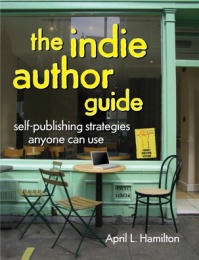
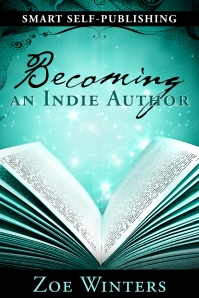
April Hamilton and Zoe Winters are two writers who were at the forefront of the “Indie Author” movement. April is the founder of Publetariat, “an online community and news hub built specifically for indie authors and small, independent imprints.” Zoe produces a humorous animated YouTube series called Zoe Who?, which seeks to combat the stigma that still surrounds self-publishing.

In addition to their own works of fiction, April and Zoe have each published informative guides for writers who are considering self-publishing: April’s is called The Indie Author Guide: Self-Publishing Strategies Anyone Can Use and Zoe’s is Smart Self-Publishing: Becoming an Indie Author (click on the pictures for links to purchase). Today, Inside The Writers’ Studio talks to April and Zoe about their books, about the conflict between the traditional and indie publishing worlds, and about what makes a good self-publisher.

PAPER RATS: When did you start writing your book, and how long did it take?

APRIL HAMILTON: The Indie Author Guide began life as a series of free how-to guides I wrote and offered for free on my website. As I kept cranking them out, it wasn’t long before I realized I had more than enough material for a book and decided to collect everything I’d already written, plus a lot of new material, and publish it as a book. All told, it probably took me about five months to author the material and one more month to deal with editing, formatting and publishing.


ZOE WINTERS: I really don’t track that sort of thing. Becoming an Indie Author had been a concept for awhile. Then when I took a break from the Internet in October, I decided to get serious about finishing and editing it. Because it spanned a bit of time and sat unworked on for awhile, I don’t really know how long it took. I’m like that about most books. I don’t clock them. They just take as long as they take. I don’t even know how long Blood Lust or any of the novellas took. Time becomes sort of meaningless when you’re on your own schedule.

RATS: Where do you live?

APRIL: I live in Los Angeles, California.

ZOE: Planet Earth. Though there have been rumors I live elsewhere.

RATS: What would you say is the primary focus of your book?

APRIL: The main thrust of The Indie Author Guide is to provide clear, detailed, plain English, step-by-step directions in self-publishing and author platform/book promotion tasks. If I’ve succeeded with this book, anyone with a modicum of computer skills and a willingness to learn can use its content to self-publish in print and ebook formats, and then go on to develop or optimize an author platform and book promotion strategy. The Indie Author Guide is all about empowering individual authors and micro-imprints to tackle publishing and book promotion by providing them with the specific information and instructions they need.

ZOE: Attitude. I give a lot of tips and how-to, but the main focus, besides stripping away all the extra fat to basically say: “okay, this is what you REALLY need to know to get started. Here’s my process…” was the concept of having the right attitude. A lot of the book had personal experiences of mine along the way as well as a lot of troubleshooting and mistakes I’ve made. A lot of it is about this idea that you don’t have to be perfect to do well. You’re going to make some mistakes, everybody does. It’s what you do with them that makes a difference.

RATS: Please share the chapter titles that appear in your book.


Read the rest of the article on Inside the Writers’ Studio.