Quick links, bringing you great articles on writing from all over the web.
First, I totally love Westworld, so I am biased about this post from .
~ * ~
What Is Your Character’s Cornerstone?
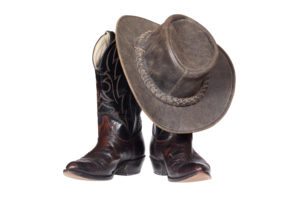 If you’re not watching the excellent HBO series Westworld, you should. Not only is the show a study in deft plotting and complex themes, but it’s a delicious, entertaining mystery that continues to surprise me week after week. (The season 1 finale is tonight at 9:00 EST, but it’s worth a binge-fest.)
For the unitiated, here’s a brief, spoiler-free premise: Westworld is a Wild West-themed park populated by robots—called “hosts”—who are so lifelike they can’t be distinguished from actual human beings. Though they’re controlled by intricate programming and the humans who run the park, the hosts look, speak, move, and bleed just like we do. Ultra-rich tourists are given free reign to interact with, kill, and “enjoy” the hosts as they please, without consequence. The hosts are assigned to specific roles (the farmer’s daughter, the handsome rogue with a dark past, the madam at a saloon) and given specific storylines to follow, which they complete on endless loops.
Westworld explores many themes, but one of the most compelling topics it tackles centers on how both humans and hosts are influenced by their pasts. How can robots have pasts? you might ask. These backstories are bestowed by the programmers and writers who run Westworld and control its hosts, and they serve a function beyond simple verisimilitude. As Elsie, one of the technicians on Westworld, puts it: “Backstories do more than amuse guests; they anchor the host. It’s their cornerstone.”
 A game of billiards begins with the cue ball striking the racked balls, which then scatter across the pool table. After that the players take turns trying to clear the table by pocketing another ball (either stripes or solids), all while keeping the cue ball out of the pockets.
 When I work with a writer on their first serious novel manuscript, there are certain aspects they usually get right on instinct alone. There’s the content – a believable story world, characters with solid backgrounds and stuff to do. They usually write fluently too. But there are other, more hidden levels of craft that they usually haven’t noticed in good books, but will make an immense difference to the quality of their work. So here are a few.
 You may have a clear vision for what or who your book is about — but do you know how to tell your story? One of the first major decisions you’ll face as an author is determining the style of narration in your book. Is your story best served by writing in first person, third person, or — if you’re feeling adventurous — second person?
 Proofreading will make your story better. There are few guarantees anyone can give about art – even fewer that apply to every individual – but that’s one of them. Proofreading, in fact, is the single most effective way to make your story better; a magic bullet that can transform a piece of writing from unpublishable to unbelievable.
 This week’s Refresher Friday takes another look at three ways to improve your storytelling. Enjoy!
 Woohoo! Angela Ackerman is back in the house with another fabulous post! Do not miss this one!
 by
by 
 Lots of writers struggle with the opening to their books, no matter what genre. I’m working with one client in my retainer coaching program who is writing a very large story–it spans thirty years or more. It’s a memoir, and a lot has happened to her in her long life, so choosing the starting moment is very challenging for her.
 Here’s a scary thought. When it comes to writing, you may have done everything you’ve been taught to do with utter perfection, and precisely because of that, it turns out you’ve written something that is flat, boring and uninvolving. This all too common phenomenon is something I’m going to be deconstructing, myth by myth, for the next several months in my columns here. I’m beginning this month with the overarching granddaddy of them all – the myth that derails otherwise riveting stories before they’re even created.
 Our guest blogger on common obstacles to writing your book is my friend-in-real-life Kate Hanley, a New York Times-bestselling ghostwriter who helps authors get their message out and make a difference in the world. Her self-paced online class, “
 A story starts on page one, right? This post by author Veronica Scott will make you think about where your story really starts…
 Ask any agent or editor what they look for in a manuscript and inevitably they’ll say they’re looking for voice. A strong voice. A unique voice. An original voice. A realistic voice. But how do you ensure you and your main character possess this? That’s the billion-dollar question, isn’t it?