You may have used Amazon’s previewer tool in the past, where you were able to embed a preview link on your website or blog post. If you had, you will have realized that the widget was starting to show it’s age, didn’t always work the way it was suppose to, or at all.
That has all changed.
Amazon has updated its Kindle Instant Preview tool and it is wonderful. See below for a sample.
There is so much to love. The look has been updated and the embed is mobile ready. Now, people can easily share your book! Add your Amazon affiliate ID during set up, and when they do share your preview, your affiliate link goes along with it. All while on your author site.
At the top of the embed you have the “Buy” button which opens a new window on Amazon to purchase the book. The “Share” button allows people to either email your preview, post on Facebook, or tweet on Twitter. They even have a short link that can be shared anywhere, which includes your affiliate link. The bottom section lets you know how much of the free sample is left and will allow you to adjust the font size. Very helpful for small screens! On computer or tablets, if you click on the “Preview” link, the sample is opened as the same size as the image. However, if you click on the text, it will toggle the bottom options and allow you to view the sample full screen.
The best part is that Amazon has made this so very easy to set up. First find your book on Amazon. On the right side of the screen, by the share buttons is the <embed> link. Click on that embed link and customize. You have a choice to create a link that will go to the opened preview pane on Amazon, or the ability to “Embed on your site (HTML)”. Here is where you add your Amazon affiliate tag, and make other customizations such as the size of the image.
Not every book may be available, but so far I haven’t found one that isn’t. If you are already selling the your book(s) directly yourself, this may not be an ideal option for you. But for many authors, the pain of having to deal with setting up a store to deal with purchases makes this a wonderful alternative. See Amazon for more details.
~ * ~
If you liked this article, please share. If you have suggestions for further articles, articles you would like to submit, or just general comments, please contact me at paula@publetariat.com or leave a message below.
Today’s post is a bunch of helpful publishing tidbits offered by Dave Bricker on The World’s Greatest Book. While a hodgepodge offering, each bit of wisdom offered is worth the read. What publishing advice would you give a new author?
The following publishing advice is based on my own experiences and those of my clients. I hope you find it valuable and encouraging, even if it changes your expectations.
I’ve written and published 6 books, and I’m working on my seventh. I’ve guided many remarkable people through the process of telling their remarkable stories, and served as editor, typesetter, cover designer, web developer, and marketer. I love writing, publishing, and book design, but the least pleasant part of my work involves delivering “straight talk” that has popped many a shiny bubble. My experiences in publishing have been overwhelmingly positive, but I routinely hear from writers who have made expensive mistakes. Others are frustrated and stuck in the writing process. The good news is that with a bit of research, the right resources, and a few reality checks, problems can be avoided. You probably can’t do it yourself, and you probably can’t do it for free, but you can publish an excellent book and find the process rewarding.
Here are few snippets of writing, book design, and publishing advice:
Of course it sucks; that’s why it’s called a “rough” draft. Keep writing.
Many great books are terrible products. Many terrible books are great products. Write for the marketplace or write because you have something to say, but know where your book lies on the spectrum between art and business. Adjust your expectations accordingly.
If you liked this article, please share. If you have suggestions for further articles, articles you would like to submit, or just general comments, please contact me at paula@publetariat.com or leave a message below.
Do you know the different types of rewrites needed for a successful story? Lauren Sapala does a great job of explaining the three major types and how to manage each of them on her blog. Check it out and let us know if you have any hints or cool hacks for rewrites.
~ * ~
3 Major Types of Rewrites, and the Big Mistake to Avoid with All of Them
One of the first things a writer learns is about the power—and the challenge—of the rewrite. For those writers who assume that everything Ernest Hemingway wrote flowed perfectly out of his pen on the very first try, the illusion is shattered. The more experience a writer gains, the more they know that rewriting is part of the process for all writers. But that doesn’t mean that rewrites still aren’t confusing, overwhelming, or just plain difficult. They most definitely can be all of those things. What can really be helpful is for writers to back up, look at a map, and make sure they’re not going in the wrong direction.
After you finish your first sloppy draft, you can expect to move through a few different phases of rewriting. Here’s a quick overview of the Big 3:
Cutting/Fleshing
This type of rewrite will benefit the most from critique group feedback or editorial suggestion. Your beta readers can pretty easily tell you which character descriptions were a bit skimpy, and what passages went on and on…and on…and ended up being way too verbose. Fleshing out characters and scenes can be fun, and cutting can sometimes be painful. This is where that old saying for writers came from: “Kill your darlings.” It means that sometimes there will be sections you fell in love with, but that just don’t technically work, are redundant, or don’t align with the rest of the narrative. Regardless of your love for these particular lines, if multiple beta readers are pointing out the same issue and suggesting you cut them, they probably need to go.
If you liked this article, please share. If you have suggestions for further articles, articles you would like to submit, or just general comments, please contact me at paula@publetariat.com or leave a message below.
Brent Underwood took a picture of his foot and created a “best selling” book out of it. He gives the details over at Observer.com. In the post Categories, keywords, Amazon, and you. How to get the most out of your choices. I discussed the way to optimize your choices on Amazon to get your book the best rankings. Brent obviously took this to an extreme and managed to get his foot a best selling listing. While this tactic did work, I have to disagree with Brent a little bit. He got three friends to buy and rate his book, and there is nothing stopping anyone else from doing this, but readers are smarter than that. I doubt that he could make any sales or legitimately rank. Yes there are bad people out there trying to scam the system, but Amazon keeps on knocking them down and readers are pickier that that. Would we be better off as a whole if people didn’t try and game the system? Yes. Should people ignore the “best selling” marker? No, it is just one more piece of information, among a bunch of other pieces of information that readers use to choose titles. Read the article and let us know what you think.
~ * ~
Behind the Scam: What Does It Take to Be a ‘Best-Selling Author’? $3 and 5 Minutes.
I would like to tell you about the biggest lie in book publishing. It appears in the biographies and social media profiles of almost every working “author” today. It’s the word “best seller.”
This isn’t about how The New York Times list is biased (though it is). This isn’t about how authors buy their way onto various national best-seller lists by buying their own books in bulk (though they do). No, this is about the far more insidious title of “Amazon Bestseller”—and how it’s complete and utter nonsense.
Here’s what happened in the book industry over the last few years: As Amazon has become the big dog in the book world, the “Amazon Bestseller” status has come to be synonymous with being an actual bestseller. This is not true, and I can prove it.
*****
Last week, I put up a fake book on Amazon. I took a photo of my foot, uploaded to Amazon, and in a matter of hours, had achieved “No. 1 Best Seller” status, complete with the orange banner and everything.
How many copies did I need to sell be able to call up my mother and celebrate my newfound authorial achievements? Three. Yes, a total of three copies to become a best-selling author. And I bought two of those copies myself!
The reason people aspire to call themselves “bestselling author” is because it dramatically increases your credibility and “personal brand.” It can establish you as a thought leader. You’re able to show that you not only wrote a book, but that the market has judged it to be better than other books out there. It’s a status symbol, one of that cashes in on the prestige of one of man’s oldest past-times. At last, I had acquired this coveted title for myself.
If you liked this article, please share. If you have suggestions for further articles, articles you would like to submit, or just general comments, please contact me at paula@publetariat.com or leave a message below.
Working on my dialog was my Nanowrimo 2015 focus, beyond writing the 50k words of course. I applaud every author that can manage dialog. After a while I start going a little crazy because how many times had I used the word “said”. Kaitlin Hillerich address “said” fatigue among other important dialog points in her article on Inks And Quills. What are your strategies for dealing with dialog?
~ * ~
Writing 101: Let’s Talk Dialogue
“I think we should sell everything and invest in racing llamas.”
Dialogue is a tricky little beast when you’re a new writer. From punctuation to making it sound realistic, there’s a lot that can go wrong. When done well, dialogue can be a true delight for the reader and make a story shine. But mess it up and, well…it can really put a damper on things.
Today, we’re going to look at some dialogue basics to get you started off on the right track. If you’re confused about punctuation, speech tags, or the difference between spoken and written dialogue fear not–keep reading and we’ll tackle them together!
Behind on the Writing 101 series? Click to catch up! Part 1 (The Fundamentals of Story), Part 2 (Writing Term Glossary), Part 3 (Creating a Successful Hero & Villain), and Part 4 (Unraveling Tension, Conflict, and Your Plot).
What is Dialogue?
Dialogue is the spoken words between two or more characters, which is signaled with quotation ” ” marks. Most of your story will consist of dialogue. Dialogue not only moves your story along, but it also helps reveal who your characters are.
However, dialogue in fiction is not the same as dialogue in real life. When we write dialogue for a story we are actually creating an artistic imitation of real speech.
Why? Because no one would want to read real-life dialogue. In real speech, people stammer, um and uh, talk over and interrupt each other, get distracted, forget what they were going to say, bring up random stuff, chit chat about the weather… Trust me, no one wants to read that! It would be a mess.
To really see the difference between real and written dialogue, take a look at this piece of dialogue I’ve transcribed from an interview with Doctor Who actor David Tennant:
If you liked this article, please share. If you have suggestions for further articles, articles you would like to submit, or just general comments, please contact me at paula@publetariat.com or leave a message below.
Please note that while this article is targeting eBooks, there are still some great tips for print covers. However, print covers are more complicated and will be addressed in a future post.
You are not suppose to judge a book by it’s cover, but that is exactly what people do. In the post Categories, keywords, Amazon, and you. How to get the most out of your choicesI showed you how to use categories and keywords to help your book rank higher in Amazon’s search. Now that your book is showing up in front of more potential buyers, you need to make sure you grab their attention. How? With an awesome cover.
You need awesome, because there are a lot of other books competing with yours. You have about 6 seconds to grab potential customer’s attention, and let them know that their next great read is your book.
There is a lot of information that goes into a great cover: color theory, font choices, layout flow, and more. If you can, you should hire a professional. If you can’t hire a professional, don’t use MS Word to create your cover. Use a better program such as Canva, which is free, and will at least give you an option of professional layouts. Either way the tips below will help you.
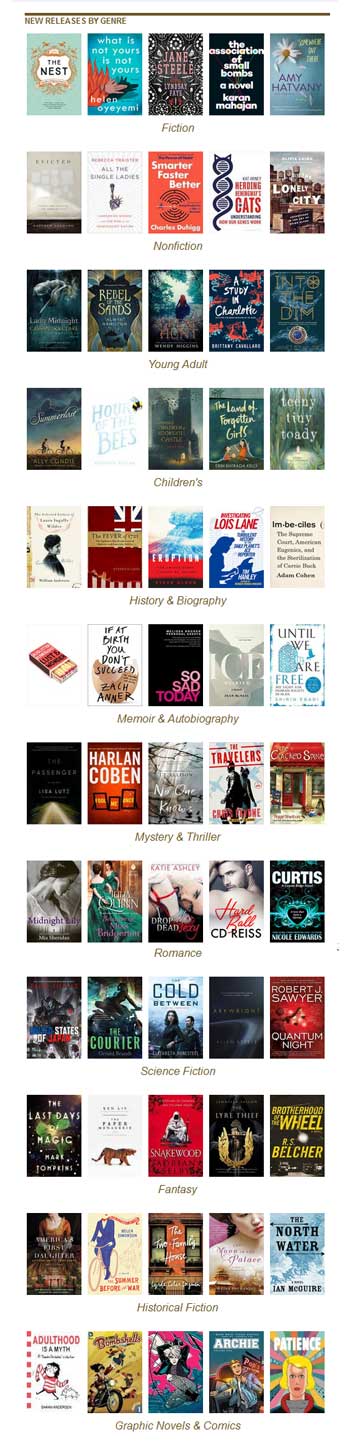
Size – A good cover will look great even in thumbnail size. Readers should still be able to get the gist of the book and at minimum be able to read the title. A lot of dedicated eReaders are in grayscale, so make sure you check that your cover works for them. The ideal height/width ratio is 8:5 (1.6). See the screen capture of the recent book list I got from Goodreads on the right for some examples.
KISS (Keep it simple silly) – Simple is better, especially if you are designing your own cover. A simple design sizes better and is easier to convey information to the reader. This doesn’t mean your cover needs to be boring, far from it. A simple design can be very powerful. Covers with more details need careful handling, and are best managed by a professional. You don’t want to overpower your reader or loose the essence of your story with too many details.
Title – Make it stand out. This means good space around the title, a readable font, and a good size.If you have a long title, take the best part and make it the focus. Have the less important parts be, well, less important. For example:
THE AMAZING TRUE STORY OF BELA LUGOSI AND HIS WONDER RACING LLAMAS: PART ONE – BELA LUGOSI IS ALMOST KILLED AS A CHILD BY A RUNAWAY RACING LLAMA (PART 1 IN THE RACING LLAMAS SERIES!)
It is a bit much for a cover. The eye is overwhelmed. Try instead:
The Amazing True Story Of Bela Lugosi And His Wonder Racing Llamas
Part One – Bela Lugosi Is Almost Killed As A Child By A Runaway Racing Llama
(Part 1 In The Racing Llamas Series!)
The bold part is still long, but it gets the title and general story across. The rest can be moved to other areas of the cover, breaking up the text into nice bite size bits. Notice the natural breaks, which happen where there is punctuation. Each section can stand on it’s own.
Story – Does your cover convey a general sense of what your story is about and the genre? Your graphics should match the mood and fit your story. If your story is a regency romance then having a woman on the cover in a modern slip dress doesn’t fit, no matter how breathless and heaving her bosoms are.
Invest – Resist the temptation to be cheap. It is OK to want the best value for your dollar, but I guarantee I can spot your MS Word clip-art a mile away and so can potential readers. If you go to a site where you can hire someone cheaply, be aware that they are probably working off a template. Your cover will look a lot like a bunch of other ones. There are places where you can get good images or artwork for a decent price. A true professional will take time to understand your story and make the cover match.
Image Effects – There are a lot of fun tools you can play with to create rainbow gradients, text outlines, and embossing effects. Go nuts and have fun! Then delete all the effects and put those tools away.
Color – Most website’s backgrounds are white. So if your background color is white, you will fade away. Even using a few shades different from white will make a big difference. Don’t use a big black frame to fix this.
Your cover will look better if you use color judiciously. This doesn’t mean that you have to use boring colors. If you use colors that are harmonious with each through color theory, it will be more pleasing to the reader’s eye. There are tools that will help you pick out a palette of colors that looks good together. I like the one at Adobe. It is free.
Fonts – Fonts are like spices. A few mixed together is yummy, too many a disaster. Pick two or at most three that look good together and stay with them. Google Fonts are free and offer a wide variety of choices. Make sure you pick one that matches the mood of your story, but is not so fancy it can’t be read. If you have one “decorative” font, pick a simpler one to match. Avoid Comic Sans or Papyrus like the plague. No seriously, don’t use them – ever.
Flow – The eyes can only look at so many things at once. Your layout should be set up to guide the reader to the main points you want to convey. You can use position, size of elements, and even your graphics to lead the your reader down the path that communicates your story.
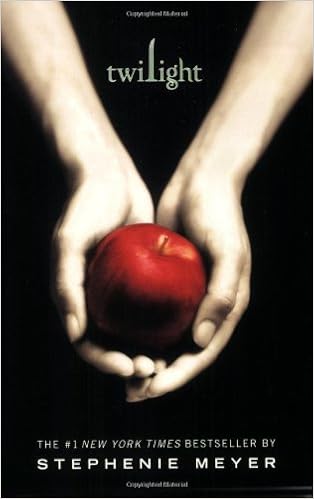
Symbolism can be very powerful. Instead of using a literal part of your story as the cover, use symbols to convey the main point or mood. This attracts your reader but can also leave a little mystery to the reader. No matter how you feel about the story, The Twilight books by Stephenie Meyer, have wonderful covers that use symbolism in a very powerful way.
Review – Have someone you trust look at your cover. Someone who will tell you the truth. Then get a second opinion. Get lots of opinions, lots of eyes, to look at your cover fresh. Be open to feedback, but don’t start changing everything based on what individual people say. If you can manage it, get a couple of different covers and hold a contest where people can vote on the best.
Look for unintended consequences. I recently came across a wonderful story, very well written about the power of family and a group of sisters. The cover was well done with one exception. The graphic was a pair of shoes, positioned on the top, with the title below. They symbolized the need to see other people’s perspective. Very nice. Except, they still had legs in them. Dangling from the top, with no body. Like one of the sisters made the mistake of using the Comic Sans font and couldn’t face the consequences any more. How more powerful would it have been to just have a pair of shoes, waiting to be stepped into, so that the reader could figuratively walk in the characters footsteps?
Brainstorm what emotion, concept, key thing about your book you want to get across to your readers. Take a look at the screenshot above from Goodreads. What books stand out to you and why? Go to Amazon and do a search on your genre and ask the same questions. While you can’t copy another person’s cover you can see what elements seem to work for them and apply those elements to get your own awesome cover. A great cover is the next step in connecting with your ideal reader.
~ * ~
If you liked this article, please share. If you have suggestions for further articles, articles you would like to submit, or just general comments, please contact me at paula@publetariat.com or leave a message below.
On her site Fiction University, Janice Hardy, has some great basic advice including point of view, structure, and plotting as well as what not to sweat. I know I learned a lot. This article is a great overview, but she also offers deep cuts on the subjects you want to learn more about. Well worth your time! What advice would you give to newb writers?
~ * ~
Under Development: Writing That First Novel
By Janice Hardy, @Janice_Hardy
This week’s Refresher Friday takes an updated look at what to worry about (and not) when writing that first novel. Enjoy!
Writing can be a daunting task, but it can be even more daunting for those who know they want to write, but just aren’t sure how to start. What do you focus on first? Should you worry about how publishable the idea is? What’s the fuss about query letters, and do you need to write one?
It can make you crazy.
Here’s my advice for anyone who’s brave enough to pick up the pen and start writing. These elements can help you build a strong foundation on which you can develop your skills. They also applies to those who are still trying to get their writing legs under them.
Read a Lot
One of the best ways you can develop your writer’s ear is to read widely, both in your genre and market and without. You’ll start seeing (and hearing) how to put together sentences and what makes a great dramatic scene. It’ll also familiarize you with your genre, let you see what else has been done, and make it easier to spot cliches. When you find a book that particularly wows you, analyze it and figure out why it appeals to you so much.
The only way to practice writing skills is to write. Don’t worry about how good or bad the work is, just get it down. You have to start somewhere, and while you skinned your knees learning to walk, you’ll make mistakes and fall down as you learn to write. But every time you put words together, those words get better and you grow as a writer.
Now for the more specific stuff, because that’s what you really want to know, right?
If you liked this article, please share. If you have suggestions for further articles, articles you would like to submit, or just general comments, please contact me at paula@publetariat.com or leave a message below.
They say write what you know but what if you are doing something that you have no experience with? For example a really intense fight scene, because all fights scenes should be intense. On the Better Novel Project, Christine Frazier breaks down what makes a good fight scene. What are your tricks for a gripping fight scene?
I recently received this e-mail about fight scenes:
Do you have any advice for creating a fight? I am writing an action/fantasy novel, and I am inexperienced with this particular type of scene. Thank you for any advice you may have! -Sara
Thanks for the question, Sara! I agree that its tough to “write what you know” when most of us have never been in a life-or-death physical brawl with a fantasy villain.
Let’s lay out the blow-by-blow action in these three fight scenes to see what similarities we can find:
Harry Potter’s fight against Quirrell/Voldemort in Harry Potter & The Sorcerer’s Stone (Ch. 17).
Bella Swan’s fight against James (the tracker vampire) in Twilight (Ch. 22).
Katniss Everdeen’s fight against Clove (District 2 girl tribute) in The Hunger Games (Ch. 21).
If you liked this article, please share. If you have suggestions for further articles, articles you would like to submit, or just general comments, please contact me at paula@publetariat.com or leave a message below.
Interested in guest posting to promote? Jillian Petrova should know what she is talking about as she guest posted on Writers And Authors with her tips on how to make your guest posting opportunities work for you. If you are interested in guest posting on Publetariat let me know in the comments or send an email to paula@publetariat.com.
~ * ~
6 Tips for Writing Wildly Successful Guest Posts
Bloggers often write hit guest posts without knowing what made it oh-so-popular. For them, writing guest posts that were good, not-so-good, great, or mediocre is quite routine. Very often, they’re not even worried about the quality of the guest posts and they just keep cranking out new ones everyday to meet the “quantity” standards of the blog.
However, doing so often results in a blog with a lot of potential, but limited content to meet that potential. By “potential” we mean more visitors, page views, leads, subscribers, and benefits for the audience.
By now, you’re probably wondering what it takes to meet that potential and the quality standards of any blog. So we pretty much summed it up for you:
1) It fits the niche: I’ve seen so many guest posts that seem like the writer had no idea whatsoever who they were targeting. I’m not just talking about the topic of the guest post. I’m also pointing towards the needs, interest, habits, and language of the audience. The more niche-oriented your guest posts, the more likely they are to succeed. If you’re hiring a writer, write specific guidelines. Whatever you do, keep the audience in mind!
If you liked this article, please share. If you have suggestions for further articles, articles you would like to submit, or just general comments, please contact me at paula@publetariat.com or leave a message below.
Robert Gregory Browne adds some serious heat over on Kill Zone. You might be familiar with the story being broken up into three acts: Set-up, Confrontation, and Resolution? Robert asks why not look at it as Seduction, Foreplay, and Climax. I think my monitor is melting after reading his post. Hubba hubba!
~ * ~
Seducing Your Readers
Let’s talk about sex.
Those of you who are uncomfortable with the subject, feel free to bail out now. I’m likely to get pretty raunchy.
Still with me? I thought so.
When we make love, most of us have a particular goal in mind: that moment when your entire body seems to stem from one central point, when every nerve-ending tingles wildly as fireworks assault your brain. That moment, of course, is orgasm, and anyone who has experienced one (or two or three)— especially with a willing and enthusiastic partner (or two or three)— knows that it can be an exquisitely pleasurable sensation.
But are all orgasms created equal? Of course not. The quality of our orgasms is directly related to the quality of the fun and games that precede them, not to mention our emotional bond with our partner, and our willingness (or unwillingness) to surrender ourselves fully to the moment.
So what, you’re probably wondering, does any of this have to do with writing?
YOUR WILLING PARTNER
Writing is an extremely intimate act. In his book, On Writing, Stephen King describes it as a form of telepathy. You put your thoughts on paper, and days, months, or even years later, someone reads your mind.
Think about it. With a simple arrangement of words, you have the potential to pull your audience into your mind where they can be stroked and fondled and toyed with— sometimes gently, sometimes rough. The result is often a partnership so strong and emotionally satisfying that neither of us ever wants to let go.
Who of us here can forget those times when we’ve read a book we didn’t want to end? And when the end did come, we felt drained, elated, and thoroughly satisfied, much like we do after a night of unbridled passion.
Getting to that place wasn’t an accident. The writer of the book—at least in most cases—didn’t merely fumble his way toward climax. If he (or she) did his job, every step was carefully choreographed to lead us around the third act corner toward the final pay-off. And the quality of that pay-off is related to one important thing:
If you liked this article, please share. If you have suggestions for further articles, articles you would like to submit, or just general comments, please contact me at paula@publetariat.com or leave a message below.
Your ideal reader represents the core person who will buy your book. While you want to sell as many books as possible, getting your title in front of the people who will actually read and buy your story is the real goal. So sitting down and setting up an ideal reader profile or profiles can help you in many ways. Such greats as Stephen King use them and he talks about using ideal readers in his book On Writing.
By identifying and figuring out who your ideal reader is, you can then focus your story and your marketing to that target audience. Yes, you should have an ideal reader while you are writing. A hot sex scene would not do well in a story that is written for a fan of young christian romance. Knowing who you are writing for helps you to keep boundaries, which improves your writing.
Raising Llamas for Profit – Chapter One – Watch out, they spit!
So someone who only likes gritty noir detective stories will not be the right person for your regency bodice ripper romance beach read, nor will someone who is looking to raise llamas for profit. What seems obvious in that example becomes more difficult in real life. So how do you narrow your ideal reader down.
What is your genre?
The first step is to know what your general genre of book is. You probably already have an idea, but you should still go to Amazon and looked for books that are like yours in terms of content. Scroll down the book details page until you find “Look for Similar Items by Category”. That category is your genre.
You want to balance becoming too specific in your genre search vs too broad. Romance is a perfect example. The romance genre is so broad that it could mean a wide variety of choices. You have everything from dinosaur shifting romance (yes that is a thing), to step brother fantasy (yes still a thing), to innocent sweet valley high romances. But by going down a category level on amazon you can narrow it down. So paranormal romance is better than general romance, but don’t make your focus so narrow that you block readers. If you only focus on velociraptor shifting love stories, your ideal reader pool is going to be pretty small.
Non-fiction vs fiction vs kids
There is a difference with your ideal reader profile depending on if your title is non-fiction, fiction, or kids.
Kids books are more defined by age than genre, at least until you get to young adult. Your ideal reader might be male or female or not be gender based at all. Your ideal reader could also be an adult who is trying to get the child to bed, or to learn how to read.
With non-fiction titles, you are generally looking to solve a problem or focus on a particular subject. How-to books are a good example for solving problems. For example a how-to on setting up a budget is solving a problem. Instead of your ideal reader being someone who needs a budget, try focusing it a little more. So your ideal reader is a small business woman who is trying to manage both her personal and business finances. That would provide a better focus. A biography is a good example of a focus on a subject but is too broad a category. Narrowing your ideal reader down to someone who likes to read about politicians is a good compromise, while narrowing it down to corrupt politicians in New York during the during the 1860s is going too far.
Because fiction encompasses such a large variety of stories, doing your research can really help define who your ideal reader(s) are and help you to stay focused.
Research
Once you find your genre, you can try to google your broad genre and demographics. For example, if my genre is romance then I would google “Romance demographics” and I find the Romance Writers of America Romance Reader Statistics.
You can also go back to Amazon and find the books that are similar to yours. Go down and look at the reviews and the reviewers. You can get a general sense, for example, on how many reviewers are men vs women. Click on the individual profiles for more details. Most of the time there is not a lot more information, but you can see what other books the individual feels passionate about enough to write a review.
Check out the author. Do they have their own author site? If so, go look and see who they are marketing to, and check the comments there. Do they have a Facebook page or Twitter account. Who follows them there? All of this will give you a general idea of who your ideal reader(s) are.
Brainstorming
So now what? Write it down! Compose a couple of sentences on one or a few different ideal reader types. You can make it as simple as writing the demographics down, or even create personas with names.
Are they male or female? How old are they? What is your core story? If you had one minute to talk about your story what would you say to get the gist of your story across? Who would that appeal to?
You don’t need to worry about blocking a reader out if they don’t fit your general demographics. If there is a gentleman who loves Christian romance, he will still find you if you write for the demographics for that genre.
Using Your Ideal Reader
In your writing – If your story is about a plucky woman who is in charge of a military campaign in space but studied and applies the theories of Sun Tzu in great detail then you might have a few different ideal readers. They could be sci-fi fans, military fans or even history fans. Address your ideal readers needs. Perhaps you put a quote from “The Art of War” in every chapter header, provide campaign maps, and have your protagonist get more conquests and less romance.
Targeted marketing purposes – By knowing your ideal reader you can then find out where they are located and can talk directly to them. With our example above, you could start by looking at historical military groups, science fiction fans, or strategy buffs. When you write your copy, you can address their particular needs. This way you are focusing your valuable time and attention on the people most likely to become your fans and buy your book.
Another bonus is that if you decide to find an agent or sign with traditional publisher, they are going to want this information and will be impressed that you already have it figured out.
By finding and addressing reader needs, you improve your writing but also improve your ability to focus your marketing on the people most likely to become your fans and buy your books. We are told that writers should write for themselves, but the real satisfaction is finding a true fan to share your story with. Ideal reader profiles help you to recognize who it is you are writing for and increase the chances of finding your true fans.
Today I am sharing with you a post from The She’s Novel Blog by Kristen Kieffer, who can’t take a bad picture. Kristen shares with us some insights that she gathered while doing research for her next course. Full disclosure Kristen and I have no relationship, I just really liked this article and thought you would too. While reading the one insight that stood out for me is number 3 – The Importance of Publicizing Your Progress. I know that I should and it would help me be accountable for big task. Read the article and let me know what you think, or if there was one insight that stood out for you.
~ * ~
10 Writing Lessons I Learned While Creating Self-Editing Success
Hey, friends. Long time, no see.
It’s been just over a year since I launched She’s Novel, and in all that time I don’t think I’ve ever been away from the blog for so long. Three weeks, y’all. How crazy is that? I can’t begin to tell you how much I’ve missed it.
But where have I been? In full-blown creation mode, that’s where!
As many of you know, my first full-length e-course–Self-Editing Success–launched for pre-sale last weekend (hurray!). Since that time, I’ve spent every waking hour creating content for the course.
With 6 modules, over 35 videos, and countless worksheets, I’ve hardly had a moment to spare. But today, I’m back! And so I thought I’d get a bit more personal than usual here on the blog and share with you 10 different writing lessons I learned during the creation of my Self-Editing Success e-course.
You see, I didn’t just take the information in my head and slap it onto a bunch of slides to create the course. I spent months researching different editing topics, analyzing bestselling novels , and chatting it up with you lovely readers to make sure I included everything you need to know in order to revise your manuscript for success.
And along the way, I learned so much about writing for myself. New techniques, truths about the editing process, and mistakes and myths that far too many writers believe. Today, I want to share all of those things with you so we can both continue to grow as writers.
So let’s get started!
In the process of creating Self-Editing Success, I actually learned three new techniques for completing productive edits and holding yourself accountable. Let’s talk about that.
…………….
1. The Two Approaches to Editing
From the planners vs pantsers debate alone, it’s painfully obvious that there is no right way to write a novel. Even if they follow certain patterns, every writer has their own unique process for bringing their stories to life.
One thing that never occurred to me though? That some authors don’t edit their manuscripts linearly!
My experience with editing has always been to start at chapter one and work my way through the entire manuscript, making changes to either the story or the writing itself depending on my current draft. This was a lengthy process of course, often taking me six months or more, but it was always worth it in the end.
But while chatting it up with some writers on Twitter back, I was surprised to learn that not all writers edit in such long drafts. Some choose to focus on a single issue at a time (e.g. fixing plot holes or eradicating flowery language) and jump around to make those edits happen.
If you liked this article, please share. If you have suggestions for further articles, articles you would like to submit, or just general comments, please contact me at paula@publetariat.com or leave a message below.
So you are writing an article or a book and there is a subject matter that you would really like to add, but you don’t know very much about it and don’t want to come off sounding like a newb. Amy Gustine over on Literaryhub has some great tips on how to research like a pro. What are your secret hacks for researching?
One day I decided to stop letting fear prevent me from trying to write certain stories, specifically the fear of not knowing things. I didn’t disavow my penchant for realism, or deny the importance of accuracy. Instead, I resolved to find out what I could achieve with research. It began as a dare to myself, and also a kind of surrender to life’s limitations. I can’t always afford the time or money to do on-site research and there are places I wanted to go in my stories—Gaza, 19th-century Poland—that no amount of either would take me to.
I took up the task of researching from afar in a spirit of experimentation and learned that it was like most undertakings—you have to pick two: cheap, good, or fast. You can’t have all three. I always choose good and cheap, which means I’m not fast. Ninety-five percent or more of what I learn doesn’t make it into the story, but because I enjoy learning, and I suspect that everything is tied together, this doesn’t trouble me. It shouldn’t trouble you either, unless you’re in a hurry, and then you better pick a different profession.
To write what you don’t know, try these strategies:
If you liked this article, please share. If you have suggestions for further articles, articles you would like to submit, or just general comments, please contact me at paula@publetariat.com or leave a message below.
Today we visit Jamie Gold, paranormal author extraordinaire. My 8th grade English teacher would often talk about stories needing woof and weave. The terms refer to old fashion weaving on a loom. You need the woof, the long threads, to define and hold the structure and then the weave, the threads that pull it all together until you have a complete product. Jamie discusses the need for story structure, which is like the woof and provides a base for your tale to be woven on. How do you organize your story structure?
~ * ~
Using Ebooks to Understand Story Structure
by Jami Gold on February 11, 2016
When we’re on the writing learning curve, we have to learn so many aspects of the craft that we can become overwhelmed. We have to learn how to develop characters, follow grammar rules, include settings and emotion, etc.
One aspect that many writers struggle with is learning story structure. Story structure refers to how we can organize a story so it creates a satisfying experience for readers.
If we’ve ever had a friend try to describe a movie, book, or a real-life event and they keep rambling or going off on tangents, we understand the importance of a good structure for making a story enjoyable. A story that goes off the rails will be confusing (“Wait, who was that character again?”), boring (“Sorry, I zoned out for a second.”), or worse.
On the other hand, we might have a friend who can make their daily check of the mailbox sound like an adventure. We just know there’s going to be a point to their story, so we remain enthralled with every twist and turn.
In other words, good story structure is an important element of good storytelling. While our friend could use good story structure and still be bland in the storytelling, it’s harder to imagine a well-told story that rambled or went off on distracting tangents or dragged on too long, etc.
So let’s take a look at how we can better understand what story structure is, and how we can learn from other stories how to use it in our own…
If you liked this article, please share. If you have suggestions for further articles, articles you would like to submit, or just general comments, please contact me at paula@publetariat.com or leave a message below.
BooksGoSocial has a great post about pricing for self publishing authors. Please note that this a business blog. I have no affiliation with them and am not endorsing their services since I have no experience with them, but agree with Laurence O’Bryan‘s take on optimal pricing. It is a really good read and matches my experience. If you have ever done business with BooksGoSocial please let us know how you liked their services in the comments below.
~ * ~
What Is The Best Price For An Ebook?
At BooksGoSocial we have promoted over three thousand books in the past three years.
2016 is likely to be a year of real growth for indie authors and for trad published authors who gain some control over their pricing. Ebook sales for indies (what used to be known as self published authors) are up, and traditional publishers are pricing their ebooks high to stop Amazon becoming their number one channel and then eating them for lunch.
By pricing ebooks high (above $10) traditional publishers are leaving a gap in the market for indies to fill.
Here’s our recommendation on how you should price your Kindle/ebook to take advantage of this gap:
Free
Only if you have a closely linked series and book number one can be priced at free to get readers started on your series.
.99c
If you are a new author and you want make it easy for people to buy your book, and you want to increase your total earnings. This price can be used for a short period to get your book onto a best seller list and then you can move the price up. When deciding a price do not consider the effort put in to write and produce it, consider what total earnings you want. By pricing at .99c, and then increasing the price you can achieve higher earnings. I have seen this working.
If you liked this article, please share. If you have suggestions for further articles, articles you would like to submit, or just general comments, please contact me at paula@publetariat.com or leave a message below.
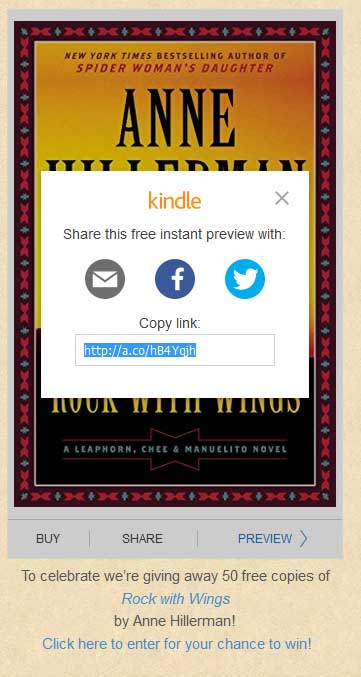
 There is so much to love. The look has been updated and the embed is mobile ready. Now, people can easily share your book! Add your Amazon affiliate ID during set up, and when they do share your preview, your affiliate link goes along with it. All while on your author site.
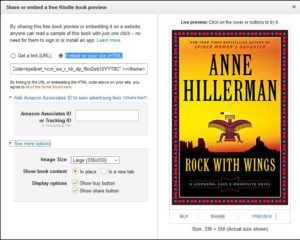 The best part is that Amazon has made this so very easy to set up. First find your book on Amazon. On the right side of the screen, by the share buttons is the <embed> link. Click on that embed link and customize. You have a choice to create a link that will go to the opened preview pane on Amazon, or the ability to “Embed on your site (HTML)”. Here is where you add your Amazon affiliate tag, and make other customizations such as the size of the image.
 T
T
 3 Major Types of Rewrites, and the Big Mistake to Avoid with All of Them
 I would like to tell you about the biggest lie in book publishing. It appears in the biographies and social media profiles of almost every working “author” today. It’s the word “best seller.”

 Size – A good cover will look great even in thumbnail size. Readers should still be able to get the gist of the book and at minimum be able to read the title. A lot of dedicated eReaders are in grayscale, so make sure you check that your cover works for them. The ideal height/width ratio is 8:5 (1.6). See the screen capture of the recent book list I got from Goodreads on the right for some examples.
 Flow – The eyes can only look at so many things at once. Your layout should be set up to guide the reader to the main points you want to convey. You can use position, size of elements, and even your graphics to lead the your reader down the path that communicates your story.

 This week’s Refresher Friday takes an updated look at what to worry about (and not) when writing that first novel. Enjoy!

 Bloggers often write hit guest posts without knowing what made it oh-so-popular. For them, writing guest posts that were good, not-so-good, great, or mediocre is quite routine. Very often, they’re not even worried about the quality of the guest posts and they just keep cranking out new ones everyday to meet the “quantity” standards of the blog.
 Let’s talk about sex.

 Using Your Ideal Reader
 Hey, friends. Long time, no see.
 February 10, 2016 By
 by
by 
 At BooksGoSocial we have promoted over three thousand books in the past three years.