National Novel Writing Month (NaNoWriMo) is just around the corner. Are you ready? I know, I know, there is still almost three weeks before the first day but this is about when I like to start thinking about what I am going to write and what my writing goals are this year.

I have made a deal with my family that they mostly follow, where they encourage me to write and support me for NaNoWriMo. I have still yet to get any of them to join me but I try. If you are doing NaNoWriMo (and why not!) feel free to find me! I would love it, because I often don’t get to go to a lot of the meet ups. My username is paula1849.
As an admitted semi pantser I don’t do a lot of prepping ahead of time, but I do take the time to think about what I want to write. 50 thousand words is a lot so I don’t like to waste a single one. So I end up creating a very general story idea in my head and start to work around different issues and problems. Then on the first day, I put the story down on paper and make a very general outline which I then fill in. No wasted words!
As I continue to try and grow in my writing, I also look to find a particular area in which to grow and practice. Last year I focused on dialogue, and found the experience to be quite helpful. I had been struggling because a lot of dialogue I wrote seemed stilted and it seemed to me like I had too many “said”s. I took the few weeks before last year’s NaNoWriMo to really focus on the stories I read to watch how those authors managed their dialogue. It turns out, there are a lot of “said”s but you don’t notice it as much as a reader. The good part of NaNoWriMo is that you are not suppose to stop and edit, but push to get your words out and your numbers met. So when it came time to write my 50K words, I was pushed to write better, faster and that improved my dialogue.
This year I am going to focus on “showing not telling” more. I got a really crazy science fiction story that I had dreamed about that really needs to be written. The dream was so vivid that I think I will be working on world building a little bit too! I am so excited!
So what do you do to prep for NaNo?
Have a great day!
Paula
 by James Scott Bell
 For many authors, psychology is a godsend, lending them new insights into
  “Oh, I want to write today, but I just don’t have the time!”
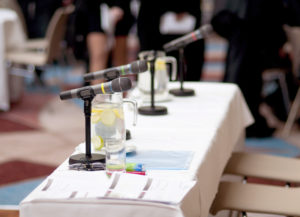 I just attended the Writer’s Digest Conference and as always, I returned home tired and full of inspiration. But there’s something that has stuck in my mind that is nagging at me. Saturday afternoon, I was sitting in the lobby, chatting with several aspiring writers who had a lot of questions about the industry and genre categories among other things. At one point, I overheard a conversation between two attendees adjacent to me. One of the writers turns to another and says, “Isn’t this so great? I’ve met a lot of people, exchanged cards with them.” Etc. Etc. But the other person shrugged and said, “I guess, but I think it’s lame the way these things are all about sponging off of the wannabes to make a bunch of money.”
 I’ve spent the last eight months writing a novel, and I’m now closing in on the finish.
 If you’ve written nonfiction for any length of time, particularly if you write in a specialized “niche,”it’s possible to reach a point when you feel as if you’ve run out of fresh ideas. You’ve done all the seasonal stories, covered all the breaking developments in your field—and the ideas for your next feature just aren’t coming. You’ve reached what we in the industry politely refer to as a “dry spell,” although when you’re in one, it more often feels like you’ve crash-landed in the desert.
 As we’re going deeper into the ten key scenes you need for the first layer in your novel, I want to explore the midpoint some more. I wrote about that 50% mark of your novel in
  After finding myself backed into a creative corner with Canyon Echoes, and using a rudimentary version of outlining to get myself out, I was still reluctant to embrace the plotter program. I had been a pantser for nearly 20 years and the idea of changing the way I wrote was daunting. A little outlining had saved Canyon Echoes, but my fear of losing the creative flow was simply too great.
 Many pulp writers of old made good bank with a hit series character.
 What Makes An Iconic Character? (And How Can You Create One?)
 Why is it so many new novels are—to be blunt—crap? How can we find an author we love with one book, then all the love goes away with the next? What’s going wrong? What’s missing? Where did everything go wrong?How can we learn and do better?
 This question single-handedly turned around my writing career. It has become the first thing I ask my characters as I devise new and better ways to torture them along the road to their happily-ever-after. First, though, let me give credit where credit is due.