Some Things That Were True About Publishing For Decades Aren’t True Anymore

This post, by Mike Shatzkin, originally appeared on his The Shatzkin Files blog on 1/9/12.

Back when my father, Leonard Shatzkin, was active with significant publishers — the quarter century following World War II — he observed that very few books actually took in less cash than they required. That is not to say that publishers saw most books as “profitable”. Indeed, they didn’t. They placed an overhead charge of 25% or 30% or more on each book so most looked unprofitable. But that didn’t change the fact that the cash expended to publish just about every book was less than the cash it brought back in.


The exceptions were usually attributable to a large commercial error, most commonly paying too much of an advance to the author or printing far more copies than were needed. But, absent that kind of mistake, just about every book brought back somewhat more revenue than it required to publish it.

This led Len to the conclusion that the best strategy for a publisher was to issue as many titles as the organizational structure would allow. That was a lesson he passed along to the next generation of publishing leadership that came under his influence. And the leading proponent of that business philosophy was Tom McCormack, who worked for Len at Doubleday in the late 1950s, then went on to Harper & Row before he ascended to the presidency of then-tiny St. Martin’s Press in 1969. Tom often credited the insight that publishing more books was the path to commercial success as a key component of the enormous growth he piloted at St. Martin’s over three decades.

(I checked in with Tom, who is long-retired as a publishing executive but a very active playwright, about how many books didn’t claw back the cash expended. He told me that his “non-confirmable recollection” is that the percentage that did at least get their money back ranged from 85% to 92%. He recalls “incredulity” from his counterparts in other houses, whom he believes simply couldn’t “wrap their minds around the meaning of the statistic: revenues minus disbursements.” He went on to tell me that this number “seemed effectively irrelevant to them. They had an overriding and deeply flawed notion of something they called title-profitability. They thought they were analyzing the profitability of a title with their ‘p&l’.”)

Despite the apparent immutability of the fact at the time that most titles brought in incremental margin, many publishers who were losing money would come to the opposite conclusion. They would decide they should cut their lists, pay more attention to the titles they published, and create more profits that way. I remember discussing the futility of that approach in the 1980s with my friend and client, Dick McCullough, who was at that time the head of sales at Wiley. When I observed that the publishing graveyard was littered with the bones of publishers who pursued cutting their lists as the path to profits, Dick said of their efforts to cut “yes, and very successfully too”.

I got another lesson about this reality in the late 1980s when a company I consulted to (Proteus Books) sued its distributor (Cherry Lane Music) for a failure of “due skill and competence” in the sales efforts for Proteus Books. One of Proteus’s expert witnesses was Arthur Stiles, who had been Sales Director at several companies, including Doubleday, Lippincott, and Harper & Row. Stiles confirmed that big and competent publishers routinely put out thousands of copies of titles in advance of publication, with extremely few failures in terms of getting the initial placements. He was testifying in a time that was still like what my father experienced: the industry’s title counts were growing, but so were the the number of bookstores in which they could be placed.

Those days are over. And, coupled with the ebook revolution, the implications of that are profound.


Read the rest of the post on The Shatzkin Files.

Upcoming Book Awards and Contests

Publetariat Editor’s Note: Publetariat is not affiliated in any way with the awards or competitions mentioned in this article, offers no specific opinion on any of them, and receives no compensation for their mention on this site. 

Deadlines are coming up soon for several book award competitions.

Winners of the Amazon Breakthrough Novel Award will receive a publishing contract with Penguin Books. Entries are accepted from January 23 through February 5, 2012, and it’s best to enter as early as possible. Unpublished manuscripts and self-published books are accepted.


If you published a book during 2011, consider entering one or more book awards programs to generate recognition and publicity for your book. There are a number of these competitions, and the entry fees can really add up, so you’ll want to be selective. Here are deadlines for several popular award programs:

The Ben Franklin Awards, sponsored by IBPA, is considered by many to be the most prestigious award for independent publishers. The deadline for entries has been extended to January 15, 2012.

ForeWord Book Awards – $1,500 cash prize, sponsored by ForeWord, a book review publication (January 15)

Nautilus Book Awards – for nonfiction books (January 31)

Next Generation Indie Book Awards (February 24)

IPPY Awards  (March 15)

National Indie Excellence Book Awards (April 15)

Writer’s Digest Self-Published Book Awards – $3,000 cash prize (April 20)

There are also award competitions geared toward specific types of books. See this list for ideas. Be sure to read the eligiblity and submission instructions carefully when entering. 


This is a reprint from Dana Lynn Smith‘s The Savvy Book Marketer.

Goal Setting for Writers

So many of us become interested in a fresh start at this time of year. We want to do better, get more done, become more successful, etc. For writers, this can include a number of approaches such as:

  • Work or projects accomplished
  • Entering new areas
  • Improved skills
  • Improved discipline
  • Greater recognition

Work or Projects accomplished– This pertains to getting the work done. Goals in this area are focused on various combinations of word counts, pages, number of articles or projects such as books written. Whatever it is, try not to bite off more than you can chew. Be realistic and plan ahead. In the military, we use a method called backwards planning. If you want to plan an attack for a certain time, start at that time and work backwards as to what must be done before that attack is accomplished in reverse order. For example: Let’s say you want to write a book and submit it to an agent/publisher or begin the self-publishing process. What’s the last thing you’ll have to accomplish in that process. If it is to submit the manuscript first, you’ll need to write a query letter or proposal package. Before that happens, the ms will need a final proofing. Before that, you’ll need a professional edit. Before that, you’ll need to go through the self-edit process. Before that, your final draft needs to be finished. Before that, you will need to write the book. Before that, you should outline the book. Before that, you will need to come up with a character bible/data-base. You should have conducted a good bit of your research before that. Before that, you will need to come up with a problem(s) to be solved or a theme and context.

Note, each one of these steps takes time. Some can be done simultaneously with others. Each takes a finite amount of time and effort. By doing a planning process like this, it will insert a degree of reality as to what is doable. It will also provide a series of sub-goals and steps to be accomplished and you will be forced to consider most of what needs to be done.

Related to all of this is setting realistic work effort goals such as when you will work, how long you will work, and how much you will get done each time you do.

If you’re working on projects of lesser scopes, such as magazine article, you can still use a similar planning process, but do it multiple times.

Entering new areas– Lets say you have been writing mysteries or thrillers but would like to try your hand at a different genre this year, such as paranormal romance. Lately, a number of well-established writers have been doing this when they depart from adult writing, changing over to young adult or mid-grade level writing in an attempt to capture more of a market earlier on. There are several important things which must take place before doing that, specifically: read, read, read. Become familiar with what that new genre or form looks and feels like. What kind of structures and language are used? Who are the big-gun writers in the new field and what are their reputations based on?  What’s done and what’s not done and why? Who in the industry specializes in the new area and how should they be approached, be they agent, publisher, reviewer, or market segment. You probably did something like this when you initially began writing in your specialty. Now you have to do it again.

Improved skills– So you want to be a better writer, then you need to learn to do so through self-study and with help from professionals. Although I have written several screenplays, I knew I wasn’t writing them as well as I could be. I had read “Screenwriting for Dummies” and several other good books on the subject. I had also read a number of screenplays of successful movies. I watch a lot of movies and TV episodes on Netflix. Still, that wasn’t enough. I finally signed up for and took a 10-day intensive internet course in subtext writing. I count the tuition I had to pay as an investment in myself. Do you see a pattern here? I did my due diligence with my self-study at several levels and still paid for professional guidance. I’m not saying I will now write great screenplays, but I know what I write will be much better than when I first began buying formatting software and trying my hand at it back in 1997.

Improved discipline– Be firm with yourself. If you set goals, work toward them on a regular, systematic basis. It’s just like setting weight-loss goals. You have to do it the right way and work at it constantly. The key word here is “work.” Have you ever met someone who is constantly talking about their someday dreams but who do nothing to actualize them? All the dreaming in the world will be for nothing if you don’t make the efforts to make them happen. New Years always puts people in the frame of mind to set goals, but that’s the easy part. The hard and meaningful part is attaining them.

Greater recognition– The most successful writers understand how important it is to gain recognition. They are always marketing themselves through the social media, industry organs, public appearances, and creating a fan base. The book industry is like the music industry. Who knows of you and who will buy your product? As iffy as this business is, the powers that be will always consider someone with a strong fan base or platform before they will consider a complete unknown.

OK, this may not be everything, but hopefully it will give you a few things to consider when setting those New Years goals.


This is a reprint from Bob Spear‘s Book Trends blog.

Moving Toward Amazon Only

And the craziness continues. Yesterday The Sex Club, which is now selling well again, was suddenly being discounted on Amazon from $2.99 to $.99. Which means, I was suddenly making a third of the money. After cursing loud and long, I tracked down the culprit. Kobo was selling the title at $.99—even though I requested they take it down two weeks ago.

I requested the takedown because I enrolled The Sex Club in the Kindle Select program and it requires exclusivity. So the fact that it’s still selling there could also get me kicked out of the program. I’m doing everything possible to correct this, but retailers are notoriously slow about taking down books, especially if they’re selling.

I distribute to Kobo, Sony, and various other retailers through INgrooves, and this is not the first time I’ve had to deal with the discounting issue. For those not familiar, here’s the short version: Amazon will not be underpriced. If a competitor puts an ebook on sale, Amazon matches the price. This can be a serious problem for authors who make most of their money from Amazon and need to control what price their books sell for on Amazon.

When I starting losing money on Amazon, I see my mortgage payment for the next month disappearing. Which leads me to strongly consider withdrawing all my books from INgrooves. The small amount of money I make from other retailers is offset by the profit I lose from the discounting issue.

My only hesitation, as always, is readers. I want them to have full access to my books, regardless of their e-reader device. But I’m running a small publishing business (Spellbinder Press), and I have to make smart business decisions. I have to be able to track and predict profit.

Also, I have to remind readers that my ebooks are available for purchase from my website.

Other writers tell me I should upload to Smashwords as my distributor, but that doesn’t fix the discounting issue. And I’m tired of continuously having to scan the other retailers to ensure they’re not undercutting my ability to make a living from Kindle sales.

Pulling my books from INgrooves would leave me with ebooks available on Kindle and Nook only. But what I sell on B&N/Nook every month won’t even pay my cell phone bill.

After I see my first bonus payment from Amazon for enrolling in the Select program, I’ll have to decide whether keeping my Detective Jackson books on B&N is actually worth it. I predict I’ll be exclusive to Amazon by the end of the next year. Some people may see this as a sell out. But I have to make a living, and I’m worth more than minimum wage.

Readers: Can you sympathize with this decision?

Writers: How do you deal with the discounting issue?


This is a reprint from L.J. Sellerssite.

2011 Round-Up. Achievements, Reflections And What Could Be Improved

I’m one of those people who thrives on goal-setting and measurement. I’m always setting new goals and although I often change direction, I tend to achieve more than if I set none at all.

It is important to celebrate achievements so this is my annual round-up. It’s not meant to be horn-tooting, more of a record of the year.

I hope you have learned a lot from The Creative Penn in 2011 and I look forward to serving you further in 2012. I’d also love to know if you achieved your goals this year before we all set new ones in the coming days.


Fiction Writing

Pentecost, my first novel, was published in Feb 2011 and has now sold 16,034 copies.

Prophecy, the 2nd in the ARKANE series was published yesterday on the Kindle. Print, Nook & other versions to come in Jan but I still got it out in 2011! I won’t be officially launching it until January 20th but it is available on the Kindle store if you’d like to purchase!

I’m pretty excited about the future of fiction with digital publishing. I’ll be exploring more in this arena in 2012 and onwards. I have so many creative ideas I want to explore.

I have also started a blog for my fiction fans, JoannaPenn.com where I will be adding information about my research and more.


The Creative Penn

This blog has now reached it’s 3rd birthday (hoorah!) It has won the Top 10 Blogs for Writers for the 2nd year running (as one of the Top 10 after 2100 nominations and comments). I’m really pleased with that so thank you if you nominated me.

In terms of growth and online platform, I shall record figures here for posterity as it’s good to revisit these regularly and this has become my annual checkup.

There are currently 3162 subscribers to this blog on Feedburner, 6585 subscribers to the newsletter, 23,279 followers on Twitter, 2418 on Facebook/TheCreativePenn and 1034 on Google+. Considering I’ve only been on Google+ for a few weeks, I’m interested to see how fast that is growing and the engagement over there. I may well give up Facebook in 2012! (but never Twitter!)

The Creative Penn podcast has now reached 113 episodes. There have been 41,358 downloads, at around 3400 per month in the last few months. The top listening countries are US (53%), China (12%), UK (10%) and Australia (7.4%).

In light of all this, I may be looking for some sponsorship for the podcast in 2012! If you’re interested, please do email me direct.

The most popular podcast has been On Changing Your Life, Writing and Marketing a Book which just happens to be an interview with me! You can download the backlist here – there’s over 60 hours of free information on writing, publishing and book marketing with more every week.

My YouTube channel The Creative Penn has 395 subscribers and has had 63,997 views of 122 videos. The top videos have been Tips for Publishing on the Kindle (3690 views) followed by Pentecost Book Trailer (2544 views). The top countries are US, UK, Australia and Canada. Demographics: 51.4% male, 48.6% female. Over 50% in the 45-54 age bracket. Although this isn’t spectacular, I will continue to invest in video as I think it is a growing market and the more I do, the more I enjoy it!

Transition to full-time author-entrepreneur

This wasn’t even something I thought would happen this year but a combination of circumstances have made it so.

I left my consulting job of 13 years for the more precarious, but rewarding, life of an author-entrepreneur. I have also moved hemispheres from Brisbane, Australia to London, England.

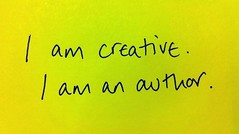
For the full story, read “I am creative, I am an author. From affirmation to reality.”

For this transition, I primarily thank Amazon Kindle for the KDP publishing platform, and WordPress for enabling this blog as well as Twitter for my network. Together, those services have changed my life!

If you’d like to invest further in your education, I now have the following products available for sale, with a focus on mini-modules, not full-blown courses:

I shall be expanding this digital product range in 2012 and rewriting the Author 2.0 Blueprint and modules in order to update everything to this ever-changing market.

How did I do against my goals for 2011?

Here are my New Year’s resolutions from Jan 2011.

  • Publish Pentecost – achieved.
  • Go to ThrillerFest in New York in July & pitch a publisher. I cancelled this trip as we moved from Australia to London in May which changed the budget somewhat. I would still love to go to ThrillerFest and the flight would be cheaper from London. I’m not so bothered about pitching to an agent now though. I am very happy being indie at the moment. I do have a goal of 50,000 book sales and then I may decide to approach an agent.
  • Finish Prophecy – achieved.
  • Launch a new blog for mystery & thriller lovers. I did launch MysteryThriller.tv but to be honest, I have now stopped doing reviews on video and am just reviewing books I like on Amazon & Goodreads. I don’t have the bandwidth for more reviews in general. The aim was to get some advertising revenue from the blog but it wasn’t justifying itself in terms of time and effort. I can make more income from writing fiction and this blog, so I won’t be continuing with that. So yes, I achieved it, but it was a misplaced goal. You can follow my reviews on Goodreads here.
  • Enjoy 1 day unplugged a month. Hmm, I don’t think I achieved this … I continue to be a driven person who isn’t very good at stopping. My husband says I am like a Ferrari with no fuel gauge. I only stop when it all falls apart. This is my natural rhythm. I have tried meditation again this year but it stops after a few days. I continue to journal a lot though, which is a kind of meditation. I definitely do unplug, but not regularly enough.
  • Learn more about grammar, language and the craft of words. I have specifically read prize-winning literature and poetry in order to glean more about language. I continue to listen to podcasts and do training as well as read books and of course, interview people. I also learn A LOT from having my own work edited. If you read Pentecost and then Prophecy, I hope you can see improvements in my writing. So, achieved.
  • Continue to expand The Creative Penn. I’ve definitely achieved this but it’s not a stretch goal. It’s more of a maintenance activity now. I LOVE this blog, it brings me so much enjoyment to be useful to you and to share the journey. So please do keep commenting and keep emailing me with your questions.

[On January 2nd] I will be sharing my goals for 2012.

How did you do with your goals for 2011? Please do share your achievements and how it went. Let’s keep each other honest!


This is a reprint from Joanna Penn‘s The Creative Penn.

Is Your New Year's Resolution "Inbox Zero"? Here's How To Do It.

Inbox Zero is that state of digital communications nirvana in which you empty your email inbox, and keep emptying it on a daily basis. This may sound like a pipe dream to many, especially if you’ve had your email account for many years and your inbox message count is hovering somewhere around 1700, as mine was when I finally bit the bullet and tackled Inbox Zero. But believe me: it can be done, it’s not that difficult, and you don’t need to worry about the possibility of deleting messages you’ll later wish you hadn’t. First, let’s look at why Inbox Zero is a very, very good idea.


THE WHY

If you’re like me, you receive anywhere from 15-40 new emails on a daily basis. Some can be immediately deleted as spam, or filed in some existing folder, but many of them fall into that gray area where you know you’ll need to take some action or respond in some way, but can’t do so immediately for whatever reason. Maybe you need to do some research, maybe you need to invest some time in crafting a thoughtful reply…whatever. So you make a mental note to deal with those "gray area" emails at your first opportunity, and maybe you even mark them with a star or checkmark or whatever other symbol your email program allows to highlight important messages, then the next load of 15-40 new messages comes in and the "gray area" emails slowly but surely get pushed off your inbox screen and are soon forgotten.

Next thing you know, you’ve got 1700 emails in your inbox, you know that quite a few of them required a response or action at some point, and you also know that finding them will be a big, hairy pain. And even if you can find them, it’s probably too late to take whatever action you had in mind when you first saw them. Meanwhile, the people who sent those emails are thinking you’re a huge flake and entirely unreliable. These are not good traits for the reputation of an indie author, for whom building and maintaining a contact network are important.

You’ve thought about spending a day, or several days, or a week going through your inbox one message at a time and dealing with them once and for all, but it’s a daunting task. You can’t just summarily delete any messages that are older than a certain date of receipt, because many are from people you really will need to get back in touch with at some future date. You know you’ve got a problem, but you can’t see your way clear to a workable solution.

THE HOW

Here’s how you do it.

1) Create a folder called "Old Mail" and archive all messages that are 60 days or older into that folder. This will take a little time, since you’ll have to do a search based on your date criteria, mark all the matching messages as "Old Mail" and archive them, but it’s a whole lot less work than paging through the actual messages one at a time.

Yes, you will definitely be archiving many messages that really ought to have been deleted instead. But if you don’t have the time or desire to look at every one of your inbox messages individually, this is the most efficient tack. Besides, most email providers allow their users gigabytes of storage, so space limitations aren’t generally a concern. The important thing is, you haven’t deleted anything. So if at any point in the future you desperately need to find the email address of that contact who, back in 2010, offered to interview you when your book was published, you can easily do so by searching your email.

2) Go through the remaining, relatively recent messages in your inbox one at a time, and dispose of them appropriately: reply, and/or file, delete, or report as spam. Again, this will take some time, but MUCH less time than tackling the original virtual stack. If there are any you’re filing, but not opening to read because you already know what’s in them, be sure to still use the "mark as read" option before filing them away. This will prevent your email system from showing you an alarming count of supposedly new, unread messages for each folder.

2a) Don’t be afraid to create LOTS of folders. If you need to create a folder called "Reply After [date of your choosing]", by all means do so. Your goal is to get every single message out of your inbox, whether by replying, filing or deleting. Creating some folders with built-in action triggers in their titles, such as certain dates or events, can be very helpful, since you’ll see those folders sitting right there on your email screen every day.

In December I received many emails related to cross-postings for Publetariat and already had content scheduled through the end of the year. Rather than let these emails sit in my inbox, where the old me would’ve reasoned, "How can I forget about these if I keep them in my inbox?", I created a folder called "Publetariat-Publish In Jan". Now I’ve got all the relevant emails collected in one handy spot. After everything from the folder’s been published, I’ll re-label the emails as "Publetariat – Contributors" and archive the messages permanently there.

Be sure to create folders for your personal emails, too. I have folders for "Family", "Shopping", each of my kids’ schools, and plenty more.

3) Unsubscribe from any mailing lists that aren’t really adding value to your life, or that, despite your best intentions, you know you never actually have the time to read. If there are some you just can’t bear to part with, or don’t want to unsubscribe from because they’re from members of your network and you may need to refer to them at some point in the future, create a folder for each subscription and immediately mark each copy as "read" and file it when a new one comes in.

4) Gaze admiringly at your spiffy, EMPTY inbox and give yourself a pat on the back. And a cookie. You deserve it.

5) Going forward, every time you receive an email dispose of it on a same day basis: reply, and/or file, delete, or report as spam. Create new folders as needed, and dispose of the mail in your action-trigger folders when each trigger occurs.

You will find Inbox Zero becomes addictive. The presence of a mere 4-6 emails in your inbox will seem an unbearable clutter, and you’ll long to see that inbox screen empty once again. But most importantly, you’ll be back to taking care of business and done with letting important messages and opportunities fall through the cracks.


April L. Hamilton is an author and the founder and Editor in Chief of Publetariat. This is a cross-posting from her Indie Author blog.

Top Posts of 2011: E-Book Cards Will Change The Way You Sell E-Books: Transform A Digital Book Into A Physical Product

This post originally appeared on Publetariat on 10/23/11 and has received 1163 unique pageviews since then, making it one of the most popular posts on Publetariat in 2011.

Publetariat welcomes author Cheri Lasota. In this guest post, Cheri introduces the idea of using physical gift cards as a means of ebook distribution through brick-and-mortar and other offline outlets.

Have you heard of e-book cards? If you haven’t already, I think you will soon. They are a new book marketing technique making headway and headlines around the country now. 

I heard about them from author Dean Wesley Smith. The idea stems from this simple question: how do authors and publishers sell a digital product in a physical store? 

So many of us are releasing e-book only versions of our fiction. In such cases, how do we sign our books at events? How can we hand-sell our books at conferences, speaking tours, or to the neighbor next door? How do we start to educate the paperback public that e-books are both the wave of the future and the here and now? E-book cards can accomplish all this.

These plastic cards are the same size as your credit card or the gift cards you might buy at the store. Why that size and shape? 

·      You can fit them into your wallet or purse.

·      You can slip them into larger sleeves or envelopes that can display even more content about the book.

·      You can put them in a display holder that has a slot for business cards.

·      You can sign them at events because the plastic makes them durable.

·      You can mail them in a standard envelope for promotional packages because they are so small and compact. 

And just think about how little space they would take up on the bookstore shelf, as opposed to a 600- to 800-page paperback?

SpireHouse Books released my novel on Sept. 13, 2011 and we have wholeheartedly embraced e-book cards in our marketing campaigns since then. 

Thus far, we sold many of the cards at my book launch, I’ve sold some by hand, several stores are displaying and selling them, many have bought them as gifts for their friends, and I have used them as giveaways at events and elsewhere.

In the future, we plan to mail them out to book reviewers,continue to use them for giveaways and to sell at events, give them as gifts for holidays and birthdays…the possibilities are endless.

You can tailor your e-book cards for your own needs. For my cards, my publisher put the book cover on side 1 and included two important notes on it:  “E-book Card Edition” and “Read On Any Device.” On the accompanying display, we mention that the e-book card edition is cheaper than anywhere else the book is sold, which gives bookstore owners a clear incentive to stock them and gives readers a great reason to buy in-store as opposed to buying online. Our e-book card edition also contains exclusive content.

On side 2, we included a “tagline” as well as a short synopsis of the storyline; clear, concise instructions on how and where to download the book; an ISBN/barcode; and a unique scratch off promotional code,which the buyer plugs into my publisher’s website.  

We see this as an incredible opportunity for bookstores as well as authors and small publishers. Spread the word to other authors. Talk about this with your local bookstore managers. Think outside the box and you may find that these cards give you access to readers you never thought you could reach. 

Have questions? Just comment on this post.


[Publetariat Editor’s note: more of the how-to nuts and bolts, and costs, of getting ebook cards produced are covered in this linked post from Dean Wesley Smith, which was referenced by Cheri near the beginning of this post.]

_______________

SpireHouse Books just launched Cheri Lasota’s first novel, Artemis Rising, this fall. The book is a YA historical fantasy based on mythology and set in the exotic Azores Islands. Currently, Cheri is writing and researching her second novel, a YA set on the Oregon Coast. Over the course of her sixteen-year career, she has edited fiction, nonfiction,screenplays, and short stories for publication. Cheri also has twenty-four years of experience writing poetry and fiction. Learn more about Artemis Rising at http://www.cherilasota.com or buy it at http://bit.ly/ArtemisRisingNovel.


Top Posts of 2011: Promote Your Book by Commenting on Blog Posts

This post originally appeared on Publetariat on 5/27/10 and has received 2101 unique pageviews since then. It’s been one of the most popular posts on Publetariat in 2011.

Commenting on other people’s blogs is a great way to get visibility, build relationships with bloggers, subtly promote your book, and get links back to your site (if the site gives "do-follow" links). But you can hurt your credibility if you go about it the wrong way. Here are some tips for successful blog commenting:

Actively look for relevant blogs to comment on. Subscribe to the feed of the most important blogs in your area of interest, and use tools like Google Alerts to keep an eye out for relevant posts on other blogs. You can also use Google Blog Search or blog directories like My Blog Log to find blogs that are a good fit.

Contribute to the conversation. Don’t just drop by and say "great post."  Instead, make a thoughtful comment that contributes something. You might offer an additional tip or real-life example, or expand on a point the blogger made. If you’re commenting on a book review, explain why you enjoyed reading the book. Your comment doesn’t have to be long, but you do need to say something useful and relevant. Do not give the impression that you are just there to promote your book or leave a link to your site.

Don’t make inappropriate comments. There’s nothing wrong with disagreeing with a point that someone has made (and many bloggers encourage disparate views), but do so in a polite, respectful way. I’m amazed at some of the rude and tacky things people say on blogs and in online forums.

Don’t be overtly promotional. Commenting on someone else’s blog is not the place to blatantly promote your book or services.  However, there are subtle ways to convey that you are an expert on the topic being discussed and encourage people to click on your name to visit your website.

You might work in a reference to your book related to the comment you are making. Here are some examples:

"Twitter is such an important tool for authors that I devoted an entire chapter in my book to promoting through Twitter."

"In researching my book, Selling Your Book to Libraries, I discovered that . . ."

"Because I write mystery novels myself, I really appreciated the way that the author . . ."

Depending on the topic under discussion, I sometimes sign my name with a tag line such as "Dana Lynn Smith, The Savvy Book Marketer" or "Dana Lynn Smith, author of Facebook Guide for Authors."  Some people include their website address in their signature, but many bloggers frown on this. Creating a signature that’s several lines long and blatantly promotional is not appropriate. Some people think that including any type of signature or reference to your book is too promotional.

You will have to use your judgment to determine what is appropriate, but you might look at what other commenters on the blog are doing as a guideline. Just remember that you are a guest on someone else’s site and mind your manners. Comments, anyone?

Excerpted from The Savvy Book Marketer’s Guide to Blogging for Authors by book marketing coach Dana Lynn Smith. For more book marketing tips, follow @BookMarketer on Twitter, visit Dana’s Savvy Book Marketer blog, and get a copy of the Top Book Marketing Tips ebook when you sign up for her free newsletter.


Top Posts of 2011: New YUDU Research Report Finds That Tablets Are Usurping e-Readers as Reading Device of Choice for Consumers

This press release originally appeared on Publetariat on 6/16/11 and has received 1141 unique pageviews since then, making it one of the most popular posts on Publetariat in 2011.

[press release] Research Provides Detailed Insight and Statistics on the Rise of the e-Book Industry; 2011 Is Likely "The Beginning of the End" for Dedicated e-Reader Devices


CAMBRIDGE, MA–(Marketwire – Jun 15, 2011) – Digital publishing company YUDU Media (www.yudupro.com) today published a new report summarizing key research, facts and figures on the e-book market, which continues to grow at a blistering pace. The report, titled, "Rise of the e-book: e-book stats and trends," discusses some of the key components of the industry in its current form, aiming to provide analysis and insight into some of its most recent developments.

A sampling of the research included in this report:

  • E-book sales now outpace print book sales, as sales of e-books nearly tripled in the US from 2009 to 2010.
     
  • Tablets such as the iPad appear to be overtaking e-reader devices such as the Kindle as the platform of choice for reading e-books; Forrester predicts that by 2015, there will be twice as many owners of tablet PCs than there are of dedicated e-readers.
     
  • Apple’s iBookstore is gaining rapidly on Amazon.com as the highest volume sales platform for e-Books.
     
  • E-books have helped fuel success for self-published authors, who are no longer beholden to large, traditional publishing houses to get their works into the hands of readers.

"The e-book market shake-up is likely to become more pronounced over the course of the year, with a growing number of publishers and consumers alike choosing a tablet as their hardware of choice," said Richard Stephenson, CEO of YUDU Media. "While 2010 may be remembered as the birth year of consumer e-books, 2011 may well be considered as the beginning of the end for the dedicated e-book reader."

The e-book market in 2011 will experience exponential growth which will impact the book publishing industry as a whole. YUDU’s report offers a deeper analysis of the e-book industry with evidence that transitions in the market go beyond a simple upward sales trend. Ongoing technology innovations and shifts in consumer behavior are driving the continued growth of the e-book market, which publishers are embracing to meet consumer demand and factoring in as part of their overall growth strategy in order to compete in this rapidly changing environment.

Those interested in more detail can access the white paper online at www.yudupro.com/e-book_whitepaper or on the iPad/iPhone by downloading the YUDU Media App and selecting ‘e-book Report.’

About YUDU Media
YUDU Media is a web, mobile and tablet ePublishing specialist that’s been serving digital publishing solutions to book and magazine publishers since 2003. YUDU has customers in over 70 countries, produces up to 1,200 digital publications a day and has developed almost 100 iPad and iPhone Apps. YUDU Book customers include Wiley, AA Publishing, McGraw-Hill Ryerson and HarperCollins.


Top Posts of 2011: 8 Simple Steps To Self-Publishing

This post originally appeared on Publetariat on 5/4/11 and has received 1444 unique pageviews since then, making it one of the most popular posts on Publetariat in 2011.

Thanks go to Self-Publishing Coach Shelley Hitz for contributing this guest post

Are you interested in self-publishing a book?

It might not be as much work as you think. In fact, if you already own a website or blog, you can seamlessly transform your most popular content into a book. Think about it: you can take the same great content you’ve already written for your site and reformulate it into a printed book, PDF eBook or audio book to make the most of all your hard work. Follow these steps and you’ll be well on your way to becoming a self published author, like me!

8 Simple Steps to Self Publishing Your Book:

  1. Create an outline and chapter layout using the best articles from your website or blog.
     
  2. Enter your content into a template formatted for your desired book size (i.e. Microsoft Word).
     
  3. Save your book as a PDF file.
     
  4. Select a designer for your book cover or design it yourself.
     
  5. Select a self publishing [services] company.
     
  6. Sign up for an account with your publisher and upload your documents.
     
  7. Begin promoting and selling copies of your book online, via your website or blog and in person.
     
  8. Finally, convert your book into various formats to get the most out of your work (i.e. PDF eBook, audio book and Kindle eBook).

That’s it!

I stumbled upon the concept of self publishing books in the fall of 2008 when one of our colleagues, a fellow speaker, showed me a copy of his self published book. Not only were his books affordable-they only cost him $2-$3 each-but their quality was excellent. And he also gained the instant credibility of being a "published author."

I thought, "I can do this!"

And believe it or not, after about one month of hard work, I was ready to publish a 190-page book based upon my website, Teen-Beauty-Tips.com.

How did I do it? I followed eight simple steps!

The Nuts and Bolts of Publishing My First Book

Step #1: To get started, I assembled my first draft based on the best articles from my website. Once I selected the articles, I decided on an outline for my book and formatted the content into chapters.

Step #2: I then decided on a book title, "Mirror Mirror…Am I Beautiful? Looking Deeper to Find Your True Beauty," and began the process of copying and pasting the text of my articles into a Microsoft Word template.

Step #3: Next, I converted my Word document into a PDF file using the free edition of PDF995 (to do this click on properties, then advanced option and select the "statement [5.5 X 8.5] " from the drop-down menu for the paper format).

Step #4: Since I was working on a very low budget, I decided I would use a DIY design approach and used Photoshop to create my book cover.

Step #5: After more research on self publishing, I decided to use CreateSpace (affiliated with Amazon), to publish my book. Why? Well, there are no upfront costs, they list you quickly with Amazon and I can buy books for less than $4 each to sell at events.

Step #6: Finally, I was ready to upload my files and order my proof copy! My 190-page black and white soft cover book cost a mere $3.13 + shipping, with the help of the Createspace Pro Plan.

Although the Pro Plan requires a one-time fee of $39, followed by a $5 annual fee, these small fees are well worth it! With the Pro Plan you gain significantly higher royalties and can also buy copies at a much lower cost to sell at events. Therefore, I highly recommend the Pro Plan for anyone interested in self publishing with Createspace.

Step #7: What a great feeling to self publish my first book! I immediately began selling copies online through my website and at speaking events.

Step #8: My final step was to create other versions of the same book. I chose to offer it digitally as a PDF eBook and give a free copy away to my newsletter subscribers. In a very small niche-Christian teen girls-this has helped to build my list to almost 3500 subscribers in a relatively short period of time.

I also recorded an audio version of my book using the free software, Audacity, and a $30 microphone. Once the audio files were completed, I began selling the MP3 downloads of the book through ClickBank and the CD version of the audio book using Kunaki. With Kunaki, I can buy CD’s for as little as $ 1 (+ shipping).

Finally, I expanded my book’s influence by making a version available for the Kindle. To convert my book into the Kindle format, I removed all of the pictures embedded in the Microsoft Word template and saved it in as a HTML document. I then uploaded my book to Kindle Direct Publishing, text and began offering the Kindle version from my website as well. You can see my sales page here.

Do I Make Money Selling Books?

I’ll be honest. In such a small and specialized niche, I’m not getting rich by selling books from my website. However, I am receiving regular paychecks from both online and offline sales. And as my website traffic increases (now over 1000 visitors per day), my sales also increase.

If you want to "make it big" in publishing, I recommend that you hire a professional to design your interior book template and your book cover design. I also recommend hiring a professional editor. After taking the DIY route initially, I did eventually decide to hire a designer to update my book cover.

And finally, if you want to truly self publish, I recommend that you start your own book publishing company and use Lightning Source. Be aware that it does require more time, money and effort upfront. However, in the end, you can earn more in royalties by self publishing through Lightning Source, especially if you want to sell books to international audiences or in bookstores. If you’re interested in using Lightning Source, I recommend reading a book by Dan Poynter called, "The Self Publishing Manual" to help guide you step by step.

You Can Do It!

Since you’ve already invested so much time and energy into writing your website or blog, why not take a little extra time and get the most from your content by repurposing it into a self published book? Follow my eight simple steps and you, like me, will soon be selling physical products like paperback books, audio CD’s as well as digital products like Kindle books, PDF eBooks and MP3 downloads from your website.

Are You Ready to Get Started?

If so, I recommend that you go and download my free book templates and then sign up for a free Createspace account. It costs you nothing and yet provides you with an easy action step toward achieving your goal of getting published.

And have fun…soon you’ll be a published author.

Shelley Hitz is an entrepreneur, author and speaker. Her website, Self Publishing Coach, provides resources and tutorials that help you publish and market your book. Discover 200+ free book marketing and author tools in Shelley Hitz’s 36-page free report. You can also find Shelley on Facebook, Twitter and YouTube.

Top Posts of 2011 – An Aside to Authors and Publishers: CreateSpace Expands Distribution Through Deal with Ingram

This post originally appeared on Publetariat on 12/3/09 and has received 4574 unique pageviews since then. It’s been one of the most popular posts on Publetariat in 2011.

For many Kindle Nation citizens, this post will be an easy one to skip over. It’s about what we around here call dead-tree books, and at first blush it may seem of primary interest to authors and independent publishers, because, at first blush, it is.

But the bottom line is that the playing field for publishing and bookselling just got a lot closer to being level, from the point of view of authors and independent publishers. And in the long run this could be a good thing for readers and independent bookstores as well.

Here’s what has happened, with thanks to TeleRead’s Paul Biba for the heads up.

CreateSpace.com, a print-on-demand publishing company wholly owned by Amazon, has made a deal with the nation’s largest book distributor, Ingram Content Group, and Ingram’s own print-on-demand subsidiary, which is called Lightning Source. As a result, CreateSpace authors and publishers are now able to distribute their titles to thousands of bookstores, libraries and online retailers. Here’s a link to the CreateSpace press release (full text of the release also provided at the end of this post).

For the past three years, CreateSpace has been far and away the best printing deal available for independent authors and publishers, except for one glaring omission. The CreateSpace platform allowed its clients print-on-demand production, with no up-front capital costs and no inventory or out-of-pocket fulfillment costs, at per-unit production costs that are competitive with short-run production costs for print runs ranging from 1,000 to 3,000 copies. For authors and publishers seeking to sell their books through Amazon or through their own websites and events, this amounted to a very sweet deal. CreateSpace has been my independent publishing company’s production arm for the past three years, and the interior and exterior quality of their printed trade paperback books has been flawless.

But there was a huge disconnect between CreateSpace and the rest of the bookselling world beyond Amazon, because CreateSpace did not offer wholesale distribution to bookstores, online retailers, and libraries. And the alternatives, involving Ingram and its primary competitor Baker & Taylor, were often difficult to navigate and significantly more expensive.

Now all that has changed in a collaborative deal that is so dramatic that it makes both companies’ spokespersons’ rhetoric about their passionate commitment to books seem utterly believable.

There are three new CreateSpace Expanded Distribution Channels, in addition to the previously available choices of the Amazon bookstore, a CreateSpace eStore whose doorways are seldom darkened by paying customers, and a relatively cheap author-copies feature:


CreateSpace Direct: By enabling this distribution outlet, you can make your books available to certified resellers such as independent bookstores and book resellers. The CreateSpace Direct program allows eligible resellers to buy books at wholesale prices directly from CreateSpace.

Libraries and Academic Institutions: By enabling this distribution outlet, you can make your book available to public libraries, elementary and secondary school libraries, and libraries at other academic institutions.

Bookstores and Online Retailers: By enabling this distribution outlet, you can make your book available to thousands of major online and offline bookstores and retailers, and expand the size of the potential audience for your books.


The expanded distribution royalties payable by CreateSpace to authors and indie publishers — about 20% in many cases depending mainly on retail price and page count — will be less than royalties paid on Amazon store sales, but will in most cases be significantly more than the royalties that would be payable either through what we still call "traditional publishing" or through the kind of short-run digital publishing referenced above.

[Publetariat Editor’s note: according to information posted on the Createspace site, the bookseller cut (referred to as "Sales Channel Percentage" on the CS site) is 20% for sales made on the CS site, 40% for sales on Amazon.com, and 60% for sales made through the Expanded Distribution Channel (EDC) program. Also, the site specifies that only books set up with the Pro Plan option are eligible for EDC. Some authors are finding they would have to raise the retail price of their books to earn a royalty on EDC sales due to the 20-40% higher bookseller cut on those sales.] 

Authors and indie publishers who have books in print on the CreateSpace platform can initiate expanded distribution options for their titles immediately. Here’s how:


  • Go to your CreateSpace dashboard page.
     
  • Select an "Available" title for which you would like initiate expanded distribution options and click on the pencil/edit icon to its right (image shown to the right of this bullet item —>). 
     
  • Scroll down to the heading called Sales Channel Management and click on the "Edit" hyperlink to the right of the heading.
     
  • Scroll down to the heading called Expanded Distribution Channel Sales and, at the bottom of the page, review the Distribution Royalty Calculation to ensure that you are prepared to accept the royalty offered to you for these channels. You can change your book’s price, but the price will be fixed across all of CreateSpace’s distribution channels.
     
  • If you wish to go forward and enable Expanded Distribution, click on the "Enable" button next to each of the three sub-categories. You will be able to enable the Libraries and Academic Institutions button only if your book’s ISBN was provided directly by CreateSpace.
     
  • After you have clicked on these buttons and see "Enable" in green to the right of the sub-categories, click the "Save" button at the bottom of the page.
     
  • You will be returned to the previous page, where you should scroll down to the Sales Channel Management heading and verify that you see a line that says "Sell via Expanded Distribution – Yes."


That’s it. Good luck.

[Publetariat Editor’s Note: according to the Createspace FAQ on the EDC program, "It may take up to six weeks for your title to begin populating in the distribution outlets you select."]

Here’s the full text of the CreateSpace press release, for your convenience:


CreateSpace Announces Expanded Distribution Options for Members through Ingram Content Group and Lightning Source

CHARLESTON, S.C. – Dec. 03, 2009 – CreateSpace, part of the Amazon.com, Inc. (NASDAQ: AMZN) group of companies, today announced a new agreement with Lightning Source Inc., the print on-demand unit of Ingram Content Group Inc. The collaboration between the two companies will expand CreateSpace’s distribution options for its members beyond Amazon.com and CreateSpace eStores.

Under the new agreement, CreateSpace’s Books on-Demand platform will allow members to print and then distribute their titles to thousands of bookstores, libraries and online retailers. CreateSpace members will have access to this enhanced print and distribution option as part of the CreateSpace Pro Plan, a program which gives members access to lower print pricing for their own book orders and better royalties for sales on Amazon.com.

"With this expansion, CreateSpace members will not only be able to reach Amazon.com customers, but they can also reach the thousands of bookstores, libraries and online retailers that work with the Ingram Content Group, " said Dana LoPiccolo-Giles, managing director, CreateSpace. "With Lightning Source and Ingram, our members can make their titles available to the larger book marketplace while remaining inventory-free with print on-demand."

"At Ingram, we are passionate about books and the book industry," said Philip Ollila, chief content officer, Ingram Content Group. "Our new relationship with CreateSpace is a continuation of Ingram’s long-term strategy to offer the broadest selection of books to our customers worldwide."

For more information about CreateSpace, please visit www.createspace.com.

About CreateSpace
CreateSpace is a leader in manufacture on-demand services for independent content creators, publishers, film studios and music labels. CreateSpace provides inventory-free, physical distribution of Books, CDs and DVDs On-Demand, music downloads via Amazon MP3 and video downloads via Amazon Video On Demand. CreateSpace is a brand of On-Demand Publishing LLC, a subsidiary of Amazon.com, Inc. (NASDAQ: AMZN).

About Lightning Source
Lightning Source is the leading print-on-demand company in the world, offering the unique combination of quality one-off book manufacturing and access to the most comprehensive distribution solutions in the publishing industry. Lightning Source is an Ingram Content Group company. The Ingram Content Group of companies provide a broad range of physical and digital services to the book industry, and immediate access to the largest selection of books and book-related products in the industry. For more information visit www.lightningsource.com

About Ingram
Ingram Content Group Inc. provides a broad range of physical and digital services to the book industry. Ingram’s operating units are Ingram Book Company, Lightning Source Inc., Ingram Digital, Ingram Periodicals Inc., Ingram International Inc., Ingram Library Services Inc., Spring Arbor Distributors Inc., Ingram Publisher Services Inc., Tennessee Book Company LLC, Coutts Information Services, and Ingram Marketing Group Inc. For more information, visit www.ingramcontent.com

About Amazon.com
Amazon.com, Inc. (NASDAQ: AMZN), a Fortune 500 company based in Seattle, opened on the World Wide Web in July 1995 and today offers Earth’s Biggest Selection. Amazon.com, Inc. seeks to be Earth’s most customer-centric company, where customers can find and discover anything they might want to buy online, and endeavors to offer its customers the lowest possible prices. Amazon.com and other sellers offer millions of unique new, refurbished and used items in categories such as books, movies, music & games, digital downloads, electronics & computers, home & garden, toys, kids & baby, grocery, apparel, shoes & jewelry, health & beauty, sports & outdoors, and tools, auto & industrial.

Amazon Web Services provides Amazon’s developer customers with access to in-the-cloud infrastructure services based on Amazon’s own back-end technology platform, which developers can use to enable virtually any type of business. Examples of the services offered by Amazon Web Services are Amazon Elastic Compute Cloud (Amazon EC2), Amazon Simple Storage Service (Amazon S3), Amazon SimpleDB, Amazon Simple Queue Service (Amazon SQS), Amazon Flexible Payments Service (Amazon FPS), Amazon Mechanical Turk and Amazon CloudFront.

Amazon and its affiliates operate websites, including www.amazon.com, www.amazon.co.uk, www.amazon.de, www.amazon.co.jp, www.amazon.fr, www.amazon.ca and www.amazon.cn.

As used herein, "Amazon.com," "we," "our" and similar terms include Amazon.com, Inc., and its subsidiaries, unless the context indicates otherwise.

Forward-Looking Statements
This announcement contains forward-looking statements within the meaning of Section 27A of the Securities Act of 1933 and Section 21E of the Securities Exchange Act of 1934. Actual results may differ significantly from management’s expectations. These forward-looking statements involve risks and uncertainties that include, among others, risks related to competition, management of growth, new products, services and technologies, potential fluctuations in operating results, international expansion, outcomes of legal proceedings and claims, fulfillment center optimization, seasonality, commercial agreements, acquisitions and strategic transactions, foreign exchange rates, system interruption, inventory, government regulation and taxation, payments and fraud. More information about factors that potentially could affect Amazon.com’s financial results is included in Amazon.com’s filings with the Securities and Exchange Commission, including its most recent Annual Report on Form 10-K and subsequent filings.


MEDIA CONTACTS:
For CreateSpace

Amanda Wilson
amandasu@createspace.com

For Amazon.com
Amazon Media Hotline
206-266-7180


This is a cross-posting from Stephen Windwalker’s Kindle Nation Daily.

Top Posts of 2011: Self-Publishing Resource Roundup

This post originally appeared on Publetariat on 5/12/11 and has received 1773 unique pageviews since then, making it one of the most popular posts on Publetariat in 2011.

Since Publetariat’s launch a bit over three years ago, the site has become a trusted resource and thriving community for indie authors and small imprints. For that, I thank each and every one of you. It’s also become a favorite haunt for writers who are considering going the self-pub route, but don’t feel quite ready to come out of the shadows and stake a claim to a readership independently. To them, I offer this roundup of particularly useful articles and resources for those just starting out.

Choosing A Self-Publishing Service Provider

Mick Rooney’s POD, Self-Publishing and Independent Publishing made its name on its analysis and reviews of various service providers, and continues to post service provider reviews and commentary about them on a regular basis.

Over on their Greene Ink blog, Stephen Wayne Greene and Meredith Greene offer the recent results of a survey they’ve taken among indie authors, asking which service provider the authors preferred and why.

Considering Lightning Source? See this case study over on the Foner Books blog.

Joel Friedlander explains what a subsidy publisher is, and why you shouldn’t work with one, on his The Book  Designer site.

This free, sample lesson I wrote for Publetariat Vault University will help you crunch the numbers when comparing service providers, and I’ve made these worksheets I designed for my book, The Indie Author Guide: Self-Publishing Strategies Anyone Can Use, available online as a free pdf download, too.


Getting Your Book Ready For Print—or Ebook—Publication

Editing – there are LOTS of articles and tips on editing right here on Publetariat. Whether you’re looking for DIY editing tips, guidance on when and how to work with a professional editor, or how to find and hire a freelance editor, you’re sure to find what you’re looking for.

Joel Friedlander offers a kind of crash course in self-publishing on his The Book Designer site, from Getting Ready to Publish, to Planning Your Book, Understanding Fonts & Typography, and Making Print Choices

Joel also offers this post on Ebooks &  Ebook Readers, and I’ve made my Indie Author Guide to Kindle Publishing and my Kindle Publishing Workshop (from the Writer’s Digest Business of Getting Published conference, 2010) available as free pdf downloads on this page of the Indie Author Guide companion website

Author Platform and Book Promotion

You’ll want to visit Dana Lynn Smith’s The Savvy Book Marketer site for lots of great articles on book and author promotion, with a particular focus on using new media and social media.

Also be sure to check out Joanna Penn’s The Creative Penn, where you’ll find excellent how-tos on subjects like podcasting and making your own book trailer, as well as plenty of insight and firsthand accounts from Joanna herself regarding her own experiences as an author and speaker.

Once again, Publetariat has you covered with its own treasure trove of articles on author platform and book promotion.

Indie Audio

So you wanna learn how to turn your manuscript into an audiobook, and maybe release that audiobook in podcast form and make it available online for free? Podiobooks is the place to start. They’ve got a large and helpful community, a mentoring program, and excellent tutorials, all for free.

So you wanna release your indie book on audio and sell it? Audible has just announced its ACX.com service, which will allow you to do just that. Hey, if it’s good enough for authors like Neil Gaiman and MJ Rose, and Random House, it might just work for you, too.

Community, Support, and Motivation

The Association of Independent Authors is there for you, with resources, online discussion forums, and news from around the globe that affects indie authors.

If you just need a good old fashioned kick in the pants to get you motivated and excited about the possibilities of going indie, or need to feel like you’re not all alone out there in the indie wilderness, there’s hardly a better source than Zoe Winter’s Weblog. Whether she’s talking about her own struggles and successes, her writing, publishing and book launch approaches, or commenting on the state of publishing in general, Zoe tells it like it is and pulls no punches.

Mark Barrett’s Ditchwalk is another excellent stop, where you’ll find a mix of commentary and reportage on Mark’s own adventures in the world of indie authorship.

Finally, Publetariat’s got an extensive library of articles on the topics of motivation, writer’s block and the writing life.

Now get out there and do it!


April L. Hamilton is an author and the founder and Editor in Chief of Publetariat.

Top Posts of 2011: Lightning Source – Reviewed

This post originally appeared on Publetariat on 6/3/10 and has had 3129 unique pageviews since then. It’s been one of the most popular posts on Publetariat in 2011.

Lightning Source (LSI 268.40) has become synonymous with authors pursuing what is described as ‘true self-publishing—whereby an author sets up their own imprint, purchases a block of ISBN’s and uses Lightning Source’s global print and fulfilment services to publish and make their books available for distribution.


“Lightning Source, an Ingram Content Group company, is the leader in providing a comprehensive suite of inventory-free on-demand print and distribution services for books to the publishing industry. Lightning Source gives the publishing community options to print books in any quantity, one to 10,000 (POD or offset print runs), and provides its customers access to the most comprehensive bookselling channel in the industry in both the United States and the United Kingdom.”

Founded in 1997, with its headquarters in La Vergne, Tennessee, Lightning Source is a subsidiary of Ingram Industries Inc., and a sister company of U.S. book wholesaler, Ingram Book Group. Lightning Source quickly established itself as the global leader for print-on-demand book printing and fulfilment services with massive operations in their La Vergne base and their plant in Milton Keynes, United Kingdom. The Lightning Source digital library database holds over 750,000 books and has built lasting partnerships with Ingram, Baker & Taylor, Amazon.com, Barnes & Noble and Gardners. LSI’s strength is the flexibility to print and ship a single copy of a print-on-demand book or several thousand copies.

LSI has become so synonymous with POD (print-on-demand) that authors often lump the global print solutions provider in with so-called self-publishing companies like Lulu and CreateSpace. LSI is neither a POD publisher nor an author solutions service. They are a global digital printer for the publishing industry, but due to the explosion in self-publishing, they now deal directly with authors wishing to utilize their services. However, dealing with LSI directly requires a new account holder to verify that they have registered blocks of ISBN’s under a publishing imprint name and they provide an accessible bank account and sign a commercial contract with them.

Working with LSI as a publisher or author does require a reasonable hands-on knowledge of book creation software and the proficiency to provide and load-up print ready files to industry print standards directly to their website. This is not a service that should be used by the faint-hearted or novice author and I would strongly suggest that previous experience in self-publishing and book design is required, or contracted out to a professional prior to attempting to submit a book file to LSI’s database. My own experience with LSI reveals a company laden with online tutorials and guidance, a strong commercial customer focus, but a professionalism that means they are not available for hand-holding. This is one of the reasons their website is packed with the necessary information an author might need; from technical book specifications, a spine width calculator, and a step-by-step manual. The actual process of loading up a book file to LSI can be mastered with a degree of study, patience and attention to detail—by no means beyond any computer-savvy author.

https://www.lightningsource.com/covergenerator.aspx
https://www.lightningsource.com/spinecalc.aspx
https://www.lightningsource.com/tutorials/tutorials_title_set_up.aspx
https://www.lightningsource.com/ops/files/pod/LSI_FileCreationGuide.pdf
 

“Thank you for your interest in Lightning Source.

If you are a publisher…

… and want to become a customer please proceed to our New Account page.

Please note that Lightning Source does not provide design, file work, editorial, promotional or marketing services. These are solely the responsibility of the publisher.


If you are not a publisher…

… and require publisher services, like design, editorial and marketing services, please contact an author services company.”

 
Lightning Source, in the following benefit section, explain the Print to Order and Print to Publish programs they offer – meaning the author or small press operator has the option to utilize LSI’s print and distribution services or simply use their print facilities.

Print to Order

With this service the publisher sets the retail price, wholesale discount and return policy.

We send the data out to our Distribution partners (including leading distributors such as Ingram, Baker & Taylor, Barnes & Noble, Amazon.com and others).

They capture the demand from booksellers, libraries and consumers and we print to fill the order.

We collect the wholesale price, deduct the print cost and pay the publisher the balance.

The price for this service is $12.00 a year per title. Just one dollar a month.

B&N purchases through Ingram Book Group.

As you know Lightning Source titles are listed in the Print-to-Order program – an exclusive service that allows Ingram to display 100 copies on hand at all times. As part of this arrangement, and to avoid book buyers from having to backorder, we at Lightning Source guarantee books ordered by Ingram will be printed and returned to their shipping dock within 8 – 12 hours, generally in time to be included in the book buyer’s regular order.

Print to Publisher
 
With this program we fill orders placed by the publisher and ship them in any quantity to any location. That can be one book to a reviewer or 5,000 to a warehouse.

As part of that service we offer Offset printing on paperback quantities of over 2,000 or hardback quantities of over 750.

Turn around time on digital printing is days, turn around time of offset is about 7-10 days depending on the books specifics.

Offset printing
 
Offset printing isn’t a component of Print to Order.
 
We also offer traditional printing services for titles that require large print orders.

In effect, dealing directly with LSI, is simply cutting out the middle-man—or in this case the author solutions services who use LSI, like Lulu, Outskirts Press, Xulon, Xlibris, and hundreds of others. The difference is—the author will pay $75 for title set-up ($37.50 each for interior and cover files). You are also required to purchase a proof copy and you are charged $12 per year to keep the title in LSI’s database. One important detail authors should be wary of is the LSI submission load-up fee of $40. This does not apply to the first submission load-up, but does apply on any subsequent file revisions after the proof is delivered. This is why I believe LSI is really only for the seasoned self-publisher, familiar with working with print ready PDF files. Print charges for POD books are set out below, and taking our normal 200 page colour cover and black and white interior as an example, her is how it plays out:
 

PRINT CHARGE EXAMPLE

$0.90 per unit $0.90
+ 200 pages x $0.013 per page $2.60
Total print charge per unit $3.50
 
Authors buying copies of their book directly from LSI only pay for the book at print cost—there are no mark-ups or built in fees imposed by LSI. The author, when setting up a title, decides what retail discount should be given, but LSI advises not to go below 20%. However, some retailers may expect far more discount (up to 55% – Amazon) before they will even consider stocking your book.
 
In light of the above costs – pause for a moment – and just consider what fees other POD publishers/printers will try to charge authors. Yes, sometimes the fees charged by other author solutions services can be in the thousands, and often, the author is getting little more than a printed book made available online.
 
When it comes to royalties—LSI don’t do a ‘Mill City Press’. You really do get 100% profit following the subtraction of print cost and retailer discount.
Returns Program
The decision to make a book returnable lies with the author/publisher, and significantly, LSI do not charge a fee for this service. Why should they? Returned books will be subtracted off author/publisher payments. This is one area which should really highlight to authors using author solutions services, and paying anything up to $500 for a returns program, just how much authors can be gouged on profits when the POD publishing middle-men muscle in on the business of publishing.
 
Online Distribution and Availability
Provided an author ensures their book is listed with Nielsens Books in Print, using LSI, who are owned by Ingram in the US, you are, for the most part, getting exactly the same promised distribution that you get with Lulu, CreateSpace’s Pro-Plan or AuthorHouse (AUH 222.38), or most other POD author solutions services.
 
Yes, you will have to look after all the promotion and marketing of your book, but the reality is, many POD publishers actually use their affiliation with LSI/Ingram as if that in itself was the gateway to heaven. It is not—but it is no more or no less than you as an author are getting from most other author solutions services.
 
Lightning Source may be a bridge too far for some authors, unfamiliar with preparing book files for a printer, but for the charges and gouging practices engaged by some author solutions services, it may actually be worth the effort to pause and contemplate crossing that bridge.
 
Frankly, LSI’s reputation as a digital printer and fulfilment service is not in question—they are also used by the world’s leading mainstream publishers just as much by author solutions service providers. Bluntly, if you are not using a service like LSI, Lulu (LUL 244.75) or CreateSpace (CSP 256.21) for printing and making your book available—you must think beyond the production of your book—and ask what exactly it is any other company is providing you with, beyond what the above companies do economically.
 
RATING: 8.5/10
 

This is a cross-posting from Mick Rooney‘s The Independent Publishing Magazine.

Top Posts of 2011: The Truth About Createspace's Free ISBNs

This post originally appeared on Publetariat on 4/14/09, and has received 6296 unique pageviews since then. It’s been one of the most popular posts on Publetariat in 2011.

If you’ve heard about dire consequences of accepting the free ISBN offered by CreateSpace, or that those free ISBNs aren’t "real" ISBNs, you’re just hearing misinformation perpetuated by people who don’t understand what ISBNs are all about, who’ve never used CS’s services, and/or who have an axe to grind against CS.


The ISBN: A Mainstream Tracking Tool
 
The ISBN system was developed in 1966 to facilitate the creation of a single, standardized method publishers, booksellers and libraries could all use to track books.
 
Prior to the advent of the ISBN system, each publisher, bookseller and library had its own, internal tracking system, and none of those systems could easily share information with one another. This didn’t pose much of a problem until the mass-market paperback was introduced by PocketBooks in 1939. Prior to that time, only hardcover books were available to buy and they were very expensive; booksellers didn’t tend to move a lot of copies per month, and it wasn’t too difficult to track those sales or report them back to publishers.  
 
Despite the huge popularity of the paperback book, bookstores snobbishly refused to stock them until the 1950’s, seeing them as somehow inferior to the hardcovers on their store shelves. Nevertheless, millions of copies were flying off the racks at bus stations, drug stores and markets, and the need for some kind of standardized tracking system soon became apparent. 
 
From Wikipedia:
The International Standard Book Number, or ISBN , is a unique, numeric commercial book identifier based upon the 9-digit Standard Book Numbering (SBN) code created by Gordon Foster, now Emeritus Professor of Statistics at Trinity College, Dublin, for the booksellers and stationers W.H. Smith and others in 1966.
 
An ISBN is assigned to each edition and variation (except reprintings) of a book. The ISBN is 13 digits long if assigned after January 1, 2007, and 10 digits long if assigned before 2007.
 
Generally, a book publisher is not required to assign an ISBN, nor is it necessary for a book to display its number [except in China]. However, most book stores only handle ISBN-bearing merchandise.
 
How Important Are ISBNs, Really?
 
Over time, the ISBN has come to be associated with legitimacy in book publishing, since all mainstream-published, hard copy books have ISBNs and the ISBN system has been adopted industry-wide. The claim that a book without an ISBN cannot be stocked by any library or retailer is a myth, however. The fact that an ISBN makes it easier for them to keep track of their books makes them reluctant to work with books lacking ISBNs, but this is a matter of choice on the part of the retailer or library, not a rule backed by law or regulation. This is why indie booksellers are able to stock chapbooks and other books lacking ISBNs.
 
ISBNs are only important to the extent publishers, libraries and retailers rely upon them. For example, since the ISBN system hasn’t been uniformly applied nor enforced where ebooks and audiobooks are concerned—probably because publishers have never believed ebooks or audiobooks will ever comprise a significant piece of the publishing pie—, ISBNs are considered entirely optional for books in those formats.  
 
Are CreateSpace’s Free ISBNs "Real"?
 
R.R. Bowker is the official U.S. ISBN Agency; all ISBNs in the U.S. originate from Bowker, though they can be re-sold once purchased from Bowker.
 
The free ISBNs issued by CS are real ISBNs which CS purchases from Bowker in blocks just like any other publisher. However, when you accept the free ISBN from CS, CS remains the registered owner of that ISBN—ISBN ownership is not transferred to you.
 
Registered ISBN Ownership – Why Does It Matter? 
 
All the false claims I hear about CS books (that they can only be sold on Amazon, that they can’t be listed in Bowker’s or other bookseller catalogs, etc.) stem from the fact that CS remains the registered owner of the free ISBNs it provides. This isn’t as big a deal as it’s made out to be for most individual indie authors, and any author or small publisher who prefers to register her ISBNs in her own name can purchase her own ISBN and barcode block direct from Bowker (as of this writing, it costs US$150) rather than accept the free ISBN from CS.  It’s also worth noting, mainstream authors aren’t the registered owners of their ISBNs either: their publishers are. 
 
Registered ownership of an ISBN only becomes a pertinent issue in three cases: 1) when the book changes publishers/printers, 2) when the publisher or author wants the book added to catalog listings, and 3) in litigation over copyright, publication rights or proceeds from sales.
 
1) ISBNs, Once Registered, Are Non-Transferable
 
Since CS is the registered owner of the free ISBNs it provides, if the author chooses to withdraw his book from CS and publish it elsewhere he must acquire a new ISBN—but this is true of mainstream books as well. 
 
It’s not too likely to happen thanks to contractual obligations, but if Neil Gaiman somehow wrests control of his The Graveyard Book away from Harper and gets a different publisher to put it back into print,  the existing ISBN on the book will remain the property of Harper and the new publisher will have to purchase and assign a new ISBN for their printing of the book. And if that should happen, the old ISBN floating around in the system will cause confusion for people trying to purchase the book; a lookup on the title may point to the old ISBN, and the book published under that ISBN will turn up as "out of print".
 
Even if you elect to withdraw your book from CS and publish it elsewhere for some reason—and let’s face it, once the book is in print and listed for sale, this isn’t a great idea—you didn’t pay anything for CS ISBN so you’re not losing anything by letting go of that ISBN. You’re introducing the possibility of ISBN confusion, but that’s your fault, not CS’s.
 
Some people will protest that a new ISBN must also be acquired if you want to release an updated or revised edition of your CS book, but that’s true for any book within the ISBN system: each edition of any book being offered for mass-market, retail sale in the U.S. must be assigned its own, unique ISBN, regardless of who published it or how. 
 
2) Only The Registered Owner of the ISBN Can Create Catalog Listings
 
Only the registered owner of an ISBN can list the associated book with the Library of Congress, Bowker’s Books In Print (catalog for U.S./Canadian libraries and booksellers), Ingram (another U.S. catalog), or the Nielsen’s catalog (for UK/European libraries and booksellers), and CS elects not to create those listings for any of its ISBNs.
 
Most authors have been told these listings are crucial to their books’ success because libraries and book retailers generally rely on catalogs for all their book orders; if your book isn’t in the catalogs they won’t know it exists, and even if you tell them it exists, they won’t usually order it.
 
They could order direct from CS, but they’re not likely to do so since their entire system of ordering and tracking inventory is based on catalog orders.  Also, orders placed directly with CS aren’t returnable in the same way as books ordered in bulk through catalogs. As a rule, CS books are only returnable if the book is defective or was damaged in transit.
 
However, in my opinion this is a non-issue for the great majority of indie books because libraries and mainstream book retailers aren’t likely to stock our books anyway.
 
It’s true that if your book is listed in the catalogs you can tell potential buyers that your book can be ordered through any bookseller, but if the buyer must place an order for the book (as opposed to picking a copy up off a bookseller shelf), why wouldn’t he place that order on Amazon, where he’ll get it at a lower price and may be able to get free shipping as well?
 
I’m also fairly confident the big, chain bookstore is an endangered species (I blogged about it: Big Chain Bookstore Death Watch), so in my opinion there’s little point in spending much time, money or effort on courting them.
 
There’s one important caveat here. When you publish through CS, an Amazon listing is automatically included as part of the publishing process for free, though you can choose to opt out of the listing. Listings on Amazon’s international sites are not included. In order to get your book listed on any of those sites you must register your book with the Nielsen’s catalog (it’s free), and in order to register with Nielsen’s, you must be the registered owner of your book’s ISBN. 
 
3) ISBNs Are Important In Court
 
Being the registered owner of the ISBNs affords you certain legal protections as a publisher, and helps to establish copyright in the U.S. in cases where copyright hasn’t been registered separately. That’s why the one case where even I think it’s definitely worthwhile to buy your own ISBN/bar code blocks direct from Bowker is if you’re running, or forming, your own small imprint. 
 
Does CS Recycle ISBNs?
 
With respect to the hysteria surrounding CS’s recycling of its ISBNs, that’s all it is: hysteria. So long as your book remains with CS, the assigned ISBN remains with your book. It’s true that when an author withdraws his book from CS after the ISBN has been assigned, CS may re-assign the ISBN to a new book. However, this isn’t the nefarious practice so many naysayers make it out to be.
 
5/4/09 Correction: According to Amanda Wilson, CreateSpace’s Public Relations Manager, CreateSpace does not, and never has, re-assigned its ISBNs. If an author accepts the free ISBN and subsequently removes her book from CreateSpace, the ISBN assigned to her book will go out of circulation.
 
ISBN re-use would definitely be a problem for books listed in any of the mainstream catalogs, because anyone looking up a book by ISBN might get the book to which the ISBN was originally assigned, or the book to which the ISBN was re-assigned. In fact, re-use of ISBNs is strictly prohibited in those listings. I also previously discussed the issue of ISBN confusion on out-of-print books.  
 
Even so, this is not an issue for authors who accept the free CS ISBN because only the registered owner of the ISBN can list the associated book with any catalog services, and CS chooses not to do so. Remember, if those listings are important to an author he can purchase his own ISBN and barcode block direct from Bowker
 
Mainstream Concerns Aren’t Always Shared By Indies
 
Most of the worries about CS’s ISBN practices are based on mainstream publishing and book distribution models, which are largely inapplicable to individual indie authors.
 
Since I only publish my own books and wish to remain "out and proud" about my indie status, I elected not to form my own imprint, and I also elected to leave CS listed as the publisher for my books. I have no plans to withdraw my books from CS, and can’t really think of any reason why I might want to do so in the future. I don’t care about getting my books listed in the mainstream catalogs, since I find it’s much easier (and less expensive) to drive buyers to my Amazon listings than it would be to drive them into brick-and-mortar stores.
 
7/27/10 Update: After I published my books with them, Createspace instituted a strict policy whereby Createspace is not to be listed as the publisher anywhere in or on Createspace-produced books; either the author or company/imprint name (if applicable) is to be listed as the publisher of record.
 
True, my books aren’t visible to book buyers outside the U.S., but since I never planned any big international marketing push, nor to release my books in foreign language translations, international listings haven’t been a priority for me to date. Mainstream booksellers will often hold back on international releases of first editions from all but their most popular and bestselling authors as well, so I’m not alone in taking the conservative approach.  I may elect to purchase my own ISBN/bar code blocks when publishing future editions, but on my first editions there was no reason for me to refuse CS’s free ISBNs and I suspect the same is true of most indie authors. 
 
An Opposing Viewpoint
 
In the interests of fair play and full disclosure, I’m providing a link to Walt Shiel’s discussion of ISBNs on his View From The Publishing Trenches blog. Mr. Shiel is adamant in his belief that ISBNs should only be registered to the author or an imprint, and that ISBNs should never be re-used.
 
Note that Mr. Shiel comes from a background in mainstream publishing however. In my estimation, all the arguments he offers are either based on assumptions or realities that are only applicable to the mainstream publishing/bookseller world, or warn against potential problems that are no more likely to crop up for an indie book with the free CS ISBN than for a mainstream-published book with an ISBN registered to the publisher. For example, Mr. Shiel talks about how the author must return to whomever is the registered ISBN owner for subsequent print runs of his book—but the concept of print runs isn’t applicable to POD books, ebooks or digital audiobooks.
 

Click here to share this on Twitter!

April L. Hamilton is an author and the founder of Publetariat. 


Top Posts of 2011: How To Lose Fans And Alienate Visitors

This post originally appeared on Publetariat on 9/6/09. It’s received 2179 unique pageviews since it first appeared, and was one of the most popular posts this year.

Hi, Joe or Jane Author. My name is…well, it doesn’t really matter what my name is, all that matters is I’ve just signed up for your newsletter, or started visiting your site or blog, or registered for membership on your site, or started following you on Twitter, or friended you on Facebook or MySpace or FriendFeed or Goodreads or LibraryThing or something similar. This should be the start of a wonderful relationship, in which you share useful and amusing information with me and I sing your praises to everyone I know, buy your books, register for your webinars and show up to your speaking engagements. So far, so good.

Now here’s how to f**k it up.


Bombard me with emails. When I signed up for your newsletter, Helpful Tips or the like, unless you specified otherwise at the time I signed up, I’m expecting to hear from you no more frequently than once a week. And in all honesty, if your messages take longer than about five minutes to read, I won’t. Between my job, my family commitments, my social commitments, my own reading and writing, and the fall TV schedule ramping up again, I don’t have time to wade through your too-frequent or too-lengthy missives.

Bait and switch me. It might surprise you to learn that when I signed up for your newsletter or Helpful Tips I was expecting to receive…wait for it…news or Helpful Tips, NOT advertising messages. It’s fine to have a one- or two-line sales pitch at the end of your email, or to send out the occasional message about your upcoming book or speaking engagement, but the rest of your content better be worth my time and attention. Look at it this way: would you read a magazine that had nothing but full-page ads in it? If your favorite TV show suddenly started consisting of 80% ads and 20% show, would you keep watching it?

Son of bait and switch me. If you’ve promoted your free webinar, ebook, members-only site, newsletter or whatever else you’ve got as Twenty Surefire Strategies to accomplish some goal, and I sign up, I’m expecting to receive…you guessed it: Twenty Surefire Strategies. When you give me a series of sales pitches for twenty fee-based products or services from you and your affiliates instead, I tend to conclude you’re a lying liar.

Return of the son of bait and switch me. Goodreads, LibraryThing, Shelfari and other reader community sites are places where people share their reactions to books they’ve read and engage in discussions about all things book-related, generally from a reader’s perspective. If the only books on your virtual shelf are those you’ve written yourself, or if you’ve got a variety of books on display but reserve your gushiest reviews for your own work, it’s obvious you’re using the site as a marketing outlet. Way to give new authors everywhere a bad name.

Bait and switch me, the revenge. It’s great that you’re branching out into new areas, or already operating in multiple areas, but don’t assume I want to branch out with you. I signed up for your Sci Fi Wonks site because I enjoy science fiction in general, and yours in particular. Imagine my surprise (and annoyance) when I also started receiving emails from your Gory Horrors site. And your Renaissance Romance N’ Ribaldry site. And your [insert religious affiliation here] Inspiration Of The Day site. And your eBay store. Bonus question: how angry do you think I was to find there were no “unsubscribe” links in any of the unwanted emails?

Bait and switch me, the final chapter. I understand I may need to provide my email address when posting a comment on your blog or site, because it protects you from spammers and hackers. And of course, if I’ve used the Contact form to send you a remark or question off-site, you need my email address to respond to me. But neither of these actions gives you the right to add me to your mailing list. Even if you’ve added some verbiage to your site pages to indicate that’s what you’ll do anytime someone enters his or her email address anywhere on your site, since that’s not how upstanding and honest most sites operate, if you want to avoid any appearance of bait-and-switchery you need to have a separate page just for mailing list signups.

Bait and switch me, the remake. Facebook, Twitter, FriendFeed, MySpace and other social networking sites are intended for…seriously, do I have to say it? Social networking. Not marketing or sales pitches. If most (or worse, all!) of your tweets, status updates or blog entries are only there to promote yourself or your work, you’re wasting my time. Just like I said about signing up for your newsletter or Helpful Tips, I wasn’t expecting to get a steady stream of advertising.

Are you beginning to sense a common thread? When I’m getting a lot of quality content from you, I don’t mind getting a modicum of advertising and promotion too. Sometimes I’m truly glad to hear about your new book, service or product, especially if I’m getting a special discount, premium edition or access to material or events not made available to the general public. But the moment the balance between content and advertising tips in the direction of advertising, I’m out. The moment I start thinking you’ve abused my trust, I’m out AND spreading the word. So please, don’t make me tweet angry.


April L. Hamilton is the founder and Editor in Chief of Publetariat. This is a cross-posting from her Indie Author blog.