If the Government Makes Agency Go Away

This post, by Mike Shatzkin, originally appeared on his The Shatzkin Files blog on 3/8/12.

The Wall Street Journal reports that the Justice Department has notified the Agency Five (Hachette, HarperCollins, Macmillan, Penguin, and Simon & Schuster) and Apple that it plans to sue them for colluding to raise the price of electronic books. I have no standing to comment on the law here. But if this does mean the end of the agency model, it would seem to be a cause for celebrating at Amazon and a catalyst for some deep contemplation by all the other big players in the book business.

Agency pricing, for those who have not been following the most important development in the growth of the book market, enabled the publishers to enforce a uniform price for each ebook title across all retail outlets. This was Apple’s desired way to do business, and it addressed deep concerns the big publishers had about the effect of Amazon’s loss-leader discounting.

Although the WSJ article and Michael Cader’s follow up in Publishers Lunch make no “agency is dead” declaration and there are quotes from publishers and others indicating that there are a range of possible outcomes, including a version of agency that is modified to allow some discounting, everybody in the industry now has to contemplate what it would mean if the agency model is legally upended.

To Amazon, it would mean they would be free to set prices on all books again, including the most high-profile and attractive ones that come from the big trade houses. That is an opportunity they are likely to seize with loss-leader discounting of the biggest marquee titles.

To Barnes & Noble, it would mean they have to devote cash resources to ebook discounting that they might have preferred to dedicate to further development of the Nook platform, maintaining the most robust possible brick-and-mortar presence, and improving the user experience at BN.com. Unconfirmed stories abound that B&N is about to announce an international expansion. Whether that will produce cash flow immediately or require it for a while is not yet known. For B&N’s sake, it would always better if it were the former, but if they’re about to fight discounting wars, it might be critical.


Read the rest of the post, which includes commentary on possible impacts to authors and others, on The Shatzkin Files.

The Business Rusch: Lies, Damned Lies, and Statistics

This post, by Kathryn Rusch, originally appeared on her site on 3/7/12.

The quote in my title comes from Mark Twain’s autobiography.  Twain said:

“Figures often beguile me, particularly when I have the arranging of them myself; in which case the remark attributed to Disraeli would often apply with justice and force: “There are three kinds of lies: lies, damned lies and statistics.”


The problem with Twain’s attribution, however, is that no scholar can find anything in Disraeli’s papers that even resembles it. (Yes, scholars have that kind of time on their hands.) The website twainquotes.com cites an 1895 article by Leonard H. Courtney in which the quote first appeared—or so everyone thinks.

I find it hilarious that the source of this quote about statistics is almost impossible to track down. I also find it funny that Twain’s preface to the quote has gotten lost in the pithiness of the “lies, damned lies, and statistics.”

“Figures often beguile me,” he wrote, “particularly when I have the arranging of them myself.”

And thus, Mark Twain, who died in 1910, has poked at the heart of modern publishing. We all love statistics – or figures, as he calls them – but they prove nothing. In fact, this year, statistical analysis is harder than ever.

You’d think it would be easier. We have computers, after all. We have incredible processing speeds and more information at our fingertips than ever before. We can “crunch” the numbers quickly and easily.

The problem is in which numbers we crunch.

Let’s take, for example, the number of e-book sales versus the number of print book sales. We’re seeing a lot of statistics about the percentage of e-books in the marketplace. And those statistics come from reputable organizations.

I felt uncomfortable about those statistics at the end of 2011, and I feel even more uncomfortable about them now. These statistics purport to examine all books sold, and I know that’s not true. I also know that there are equations that supposedly take a statistical sample, and apply them over information not yet gathered (or information that’s impossible to gather). And even though I know the mathematical model is accepted, I’m still uncomfortable.

You see the mathematical model in polling all the time. Pollsters contact 1,000 or 10,000 or 100,000 sufficiently diverse people, poll them, and then use them as a statistical sample that supposedly represents the entire population. This same technique takes place in medical studies. Studies gather information from 50 to 500 to 5,000 people, gauge their reactions to, say, a medication over a period of time, and then use those as a basis for the result.

People who watch medical studies, for example, generally ignore the ones with less than 100 participants, and really believe the ones with tens of thousands of participants. And if those tens of thousands were studied over years, then the medical study is considered even more accurate than the one that follows someone’s reaction to a treatment or a medication over a few hours.

See why Mark Twain insisted that he liked figures if he arranged them himself? Or to put it in 2012 language: he liked statistics if he manipulated the information himself.

One of the first things I learned as a journalist, back in high school of all places, was how to look for statistical manipulation. “Four out of five dentists surveyed” might mean that five dentists were surveyed, and four of them (the ones who worked for the company) liked the product. Or it might mean that four out of five dentists in a survey that contacted 10,000 dentists (none of whom worked for the company) liked the product.

Both statements would be true. Four out of five dentists liked the product. But only one statement might be information that a consumer might benefit from.

As the past year has continued, it has become clear to me that e-book sales are rising. Anyone who watches numbers knows that. Every day there’s a new tablet hitting the market, or some new version of an e-reader. Just this week, Apple unveiled iPad 3.  At the same time that Apple announced the New HD iPad (which is what they’re calling it), Google announced Google Play which it claims will rival iTunes. We’ll see.


Read the rest of the post on Kathryn Rusch’s site.

Box Your Can’t-Get-Started-Writing Blues

This article, from Blue Horizon Communications, originally appeared on that site on 5/11/09.

The most difficult problem you face in writing your book can be summarized in just two words.
 
Getting started.

 
You have a brilliant idea, of course, and an outline or some notes. Maybe even a chapter draft, or two. But now what?
 
If you are like most will-be authors, you begin casting about for other things that demand your attention — first.
 
The birdfeeder needs cleaning. The gardening stuff at the back of the garage needs weeding. Heck, the entire garage needs to be emptied and put back in pristine order. It’s good feng shui, you tell yourself.
 
In other words, after the brilliant idea, the outline, the notes, and the drafts, you’ve earned the right to your resistance.
 
Why? Because you don’t know — that is, know specifically — what to do next with your book. Writing it feels so frustratingly vague, so frighteningly VAST.
 
So, you tackle the things that you do know how to do: birdfeeder, gardening stuff, garage. And then you feel guilty and pained. Uncomfortable.
 
But wait. You needn’t be stuck in discomfort. There is a solution to resistance. A simple solution. It is a . . . Box.
 
Yes, a box. Not a literal box, but the imagined form of a box, which you can use as a magical tool to get to work on your book — without suffering from let’s-just-do-other-things-first-itis.
 
Here is what it takes to create a Box:


Read the rest of the article on Blue Horizon Communications.

Best and Worst of the Digital Writing Life

This post, by C.J. West, originally appeared on the Crime Fiction Collective blog and is reprinted here with that site’s permission.

When my last physical was over, my doctor asked, “You still writing suspense novels?”

“Absolutely.” I smiled.

“But what do you do to make a living?” he asked.

If I sold a book for every time I heard that one…

Then yesterday someone asked about my schedule and was surprised that I usually work well past midnight. That’s if you call what I do work. I love writing and if I’m not sleeping, spending time with my kids, or doing chores, I’m working.

My boss is a slave driver!

Work for me can be anything from researching a subject for a new book, writing and editing a novel, to spending time online connecting with friends in the writing community.

Since the writing life is such a mystery to non-writers, I thought I’d shine a light on what my little corner of the universe is like.

The top 10 great things about being a writer in the digital world:

10. Writing connects me with thousands of great people all over the globe.

9. My commute consists of pulling back the covers and stretching to power on my laptop.

8. The digital store is open 365 days a year (366 this year) and I can see exactly what I’m earning minute to minute.

7. Tweeting and Facebooking are important job skills.

6. Blogging about my addiction to chocolate or my attempts to diet earn me readers.

5. My office fits in a carry-on with room to spare. I can work on a beach or plane.

4. When I’m looking out the window and dreaming, I’m doing my best work.

3. My imaginary coworkers can’t sue for sexual harassment and they don’t complain about working conditions or low pay.

2. People write to tell me my writing has changed their lives.

1. The digital explosion has allowed me to reach tens of thousands and earn a living doing what I love.

Ten worst things about being a writer in the digital world:

10. Mediating squabbles on the digital playground.

9. There is no excuse for being late to work.

8. I can check my earnings minute to minute, but sometimes it’s better not knowing.

7. My family and friends think I should have a real job.

6. Everyone thinks I’m available to help them 24/7. See # 7.

5. Marketing. I love writing. I’m not fond of selling. (But I do like giving stuff away.)

4. Thousands of people think I can write a bestselling book about their great idea, give them half the royalties, and we’ll both be rich. It’s funny until they ask the third time.

3. If something good happens in the book business it’s always luck.

2. If something bad happens, it’s my fault.

1. My imaginary coworkers don’t do what they’re told even though I created them.

I hope you enjoyed this peek into my writing life.


Holes in History—License for Imagination

This post, by Suzanne Tyrpak, originally appeared on the Historical Fiction eBooks site on 12/31/11.

When I write historical fiction I look for the holes in history, because that’s where I can fill in the gaps and allow imagination free reign.

Writing historical fiction is similar to writing fantasy, except, when writing historical fiction, there are limitations. To some extent, we know about other times, places and people of the past. To some extent, history has been documented. But, as well as creating boundaries, these limitations serve as jumping-off points for story and can fuel the imagination.

World building is essential for historical fiction and fantasy—the writer must create a world and sink the reader into it. In historical fiction, unlike fantasy, readers often have preconceived ideas about the world the writer is creating. For example, if I say ancient Rome, images will probably populate your mind. You may have gleaned these images through reading, movies, television, travel—but you have some knowledge of that time, and I don’t have to build the world from scratch. As a writer, it’s my job to draw those images together for the reader and paint a picture which serves as the context of my story.

This involves a lot of research. And the research can be overwhelming. I’m not a historian. I write fiction. I do research so I can highlight details which will serve my characters and my story. Selecting these details is key. Too many details and my story will be boring, too few and it will lack authenticity. Deciding which details to put in and which to leave out is one of the great challenges of writing historical fiction.

Rather than war and politics, I’m interested in the daily lives of ancient people, especially the roles of women—a lot of that has not been documented. In order to create that world, I steep myself in fragments of writings, jewelry, household goods and my imagination.


Read the rest of the post on the Historical Fiction eBooks site.

QR Codes and Tomorrow’s Blog

Have you ever wondered, when you’re out interacting with people on your fan page on Facebook, whether your author platform was actually growing?

Or questioned whether you should be doing some serious Tweeting, like a lot of other authors do, to gather a big following?


Well, good news. Dan Blank from We Grow Media will be here tomorrow with a content-rich article about exactly how to get started answering questions just like these.

I know you don’t want to miss it. Dan’s gathered some great resources and uses his vast experience helping authors to show you how it all works.

Using QR Codes for Book Promotion

There have been a number of publishing-related events nearby recently, and that got me thinking about promotion.

From past experience I knew that most event-goers get weighed down with freebies from vendors, and everyone ends up with plastic totes stuffed with promotional literature that might get seen, but might not.

A few weeks ago I created some new business cards at Moo.com. They print on Mohawk Superfine, probably my favorite printing paper of all time, and other similar stock. The cards are twice as thick as normal business cards and larger, too.

So I went back to Moo.com and made this one:

book marketing

In this case, the book I’m promoting is the free PDF I give away on the blog (top [of the right column on my blog]).

I reasoned that, rather than try to sell somebody I had just met something they might or might not want, content marketing could make my job a lot easier.

After all, I would be in groups of writers and indie publishers, the exact people who are likely to be interested in the articles here and in the free PDF.

By giving them the card, they would have the option of downloading the PDF. If they take the trouble to get it, I can assume that they are going to be interested in the other things I do.

Here’s the back of the card:

book marketing

My hope is that the promise of the PDF and the novelty of the QR codes will intrigue people enough to get their smartphone out and scan them. Of course, I’ve included a “human readable” web address as well.

After this, my next experiment with QR codes will include analytics, since I just ran across a very clever way to track QR codes with Google Analytics.

Of course, this is more metrics, more analysis to look at.

Authors as Marketers

Hate it, huh? But let’s face it. The more book discovery and purchase happen online, the more adept self-publishers have to become at understanding how this stuff works.

That’s exactly the reason I’m doing the analytics I do here on the blog and in my other projects, and why I’m excited to bring you Dan’s article tomorrow.


This is a cross-posting from Joel Friedlander‘s The Book Designer.

Yep, Life is Getting Harder for the Indie Author

This post, by Ruth Ann Nordin, originally appeared on The Self-Published Author’s Lounge on 2/25/12. 

This is a piggyback on Joleene Naylor’s post which talks about Amazon removing about 4000 books.  Details are in her links, so I won’t go over it except to say that it looks like authors (in general) are seeming to have a harder time keeping their books on sites where we need to sell them to make a living or to be on our way toward making a living.  Sorry I’m posting so soon after you, Joleene. 

The post Joleene just made falls in line with the same topic I have in mind, which is the fact that screws are being tightened across the board for authors.  From the post Joleene made, it sounds like small publishers will face some hard times as well.  My focus will be on indie authors because this is an indie author blog. 

Last night, I came across this thread on the Kindleboards:  http://www.kindleboards.com/index.php/topic,105037.0.html.  It was saying that Smashwords is dropping erotica titles with incest, beastiality, rape, and underage characters.  I’m summing it up, but you can go to the latest press release on Smashwords to learn the specifics: https://www.smashwords.com/press/release/27.  The Kindleboards link will give you more of a commentary on it and what authors think of this.

I’ve been studying this since last night and through the morning to best form my thoughts for this post.  I wanted to do a post on it because this is something that has the potential to impact all of us, but I wanted to get as many facts straight as possible.  Even after the time spent on looking up articles on this, I don’t know if I have the full scope of what is happening.  Is it only indie erotica authors who write the above taboo themes being removed, or are small press authors affected, too?  If I got my facts right (and I might be wrong so correct me if I am), then it sounds like Siren Publishing still has books up at Bookstrand with the taboo subjects in their erotic books.  That’s the gist I got from this Kindleboards thread: http://www.kindleboards.com/index.php/topic,104604.0.html.  I am not familiar with Bookstrand.  Until this week, I never even heard of them.


Read the rest of the post on The Self-Published Author’s Lounge.

Indie Author’s Barriers

This post, by M. Keep, originally appeared on her Femmedia blog on 2/24/12. 

I wrote before about barriers and piracy, but this time I want to narrow in on a single barrier.

The biggest barrier for indie publishers (of all media) is not being known. No one is going to buy your book, or game, or movie, or anything else if they don’t know you or it even exists. 

Anyone who has become well-known in their market has had an enormous amount of luck on their side, be it a good review on a popular site (or many popular sites), or if they just got a small group of fans that kept growing as they kept putting out more and more media.

The barrier here is obvious – people can’t buy your stuff if they don’t know it exists. Piracy, then, has been stated to have had a very positive effect on people who aren’t well known. There was a group of indie musicians that came out in support of Napster back in the 90s. These relative-unknown’s were building a fan-base. People were looking for sounds similar to what they already enjoyed, and Napster provided an easy way to browse similar users collections and be exposed to a band they never would have heard of otherwise.

The same applies to books.

Even once you do stick your head above the crowd, you have to make it count. I don’t read as many books as I’d like because I’m not familiar with many authors that have impressed me, and $10 (the typical paperbook price) is daunting to figure out if I like an author. My location isn’t very library friendly either, so it’s a 40 minute walk to and from a library and there are just some points of the year I’m not up for that hike (say, in the winter or rain).
 

Read the rest of the post on Femmedia.

Latest Ebook Alliance

It was inevitable. Smaller e-book enablers are striking deals with major companies in order to see their content distributed and sold. E-books are no different from any other valuable commodities; they need economy of scale to be able to succeed and survive. The latest is last week’s deal struck between Smashwords and Blio.

Mark Coker, founder and CEO of Smashwords, announced the deal and explained it in an email to all the authors who have e-books on the Smashwords site that they would now also be carried by Blio, a major e-book distributor that provides content from the major publishers.

Baker and Taylor, the second largest book distributor in the world, uses Blio to sell its e-books to indie bookstores and libraries. My bookstore, The Book Barn, has its own landing page on Baker and Taylor’s data base. If you go to that page, you can see the Blio connections. You can even download their free AP to turn your computer into a book reader. Blio also connects with Google Books where over 1,000 e-books that have outlived their copyright protection can be had for free.

This is a win/win for everybody. It also levels the playing field with Amazon and Barnes and Noble. All this makes good business sense.

[Here’s a link to the Smashwords blog post about the new alliance.]


This is a cross-posting from Bob Spear‘s Book Trends blog.

Simple Steps to a Successful KDP Select Free Promotion

If you have read my previous posts on Amazon’s KDP Select Program, you will already know that I joined this program primarily for the five free promotional days Amazon gives you in exchange for selling your ebook exclusively with them for three months. (You may take these 5 days at any time during the three months.) You will also know that my participation in this program (both through borrows and free promotions) significantly pushed both my historical mystery books up the bestseller ranks in numerous categories, resulting in a substantial increase in my sales.

What you don’t know is what steps I took to ensure these promotional days were as effective as possible. That is what this post is about.

My goal here is not to persuade you to sign your book up for the KDP Program (I still think that McCray’s post on KDP Select is the clearest discussion of who should join), and if you want to learn about the pros and cons, just search in Publetariat and you will get a wide range of view points.

My goal is not to promise if you follow these steps your promotion will be successful. The KDP Select Program has only been around for three months and the information is only just beginning to filter out about authors’ experiences. For example, I know very little about how non-fiction books or literary fiction has succeeded in the program. It is only because I have had success in two of my own promotions that I am daring to offer suggestions. I want to caution you that these tips are based on very limited empirical evidence and on my reading about the promotions of a few others. Therefore, they should be read with caution.

Having covered my butt, here goes. 

First Step: Make sure your book is ready to promote:

I will repeat what I have said before many times in my pieces on selling on Amazon: don’t start any kind of promotion until your book is “ready for prime time.” Getting your book on the free list isn’t going to get people to download it, read it, review it favorably, or buy your other books if the cover is amateurish, formatting and editing are sloppy, there isn’t a well-written description, your author central page isn’t complete or the book isn’t in the right browsing categories.

Second Step: Decide which book(s) to promote:

If you have a series where it matters which book is read first, offer the first in the series first. If you look at this from the perspective of readers, this makes sense. Many, if not most, readers like to read series in order. Therefore, if one of the goals of the free promotion is to gain new readers to the series, start them off at the beginning. For me this was Maids of Misfortune. My hope was that putting the first book up for free would encourage people to go on and buy the second. After the first promotion, the increase in sales in the sequel, Uneasy Spirits, demonstrated the efficacy of this strategy.

If you have stand-alone books or series books that can be read easily in any order, the question of which books to start with depends on your goals. For example, you might want to start with your loss leader-the book that is selling the least. Here the goal would be to get people to find that book, give it more positive reviews, and start it on the way to becoming a better selling book. This is why I put up my second book, Uneasy Spirits, for free in my second promotion. I wasn’t content with the bump in sales it was experiencing. It had only been out for four months, hadn’t gotten that many reviews, and was struggling to stay in the top ten of the historical mystery category. Putting it up for promotion in mid February got it up solidly in the top three in historical mysteries.

However, you might want to start with your strongest selling book, the one that you think has the best chance of getting the largest number of downloads and the largest subsequent bump in sales. I initially put up Maids of Misfortune for a second time only six weeks after the first promotion so that for one day both it and Uneasy Spirits would be free together. I did this because I thought that Uneasy would sell better in tandem with the first book in the series, which was probably true since the bulk of the downloads for the book came that first day, not the second when it was free by itself. But what I hadn’t expected is how well Maids would do this second time around–hitting the top 100 best-seller list for three days in a row. If your main goal is making money, you may want to put your best selling book up first and more often!

Third Step: Decide when and for how many days you should do the free promotion:

Remembering that you need to sign up in advance (although I signed up the night before once and the book went up on time), do spend some time thinking about these questions. I chose my first promotion for December 30-31 for two reasons. First, I thought a Friday and a Saturday would get me my largest market because I often find my regular sales go up on these days (weekend reading). Second, these two days came near the end of the Christmas vacation. You know, when the presents are put away, the guests are gone, and you are ready to put up your feet and try out your new Kindle before going back to work or school.

I did my second promotion a month and a half later, again on a Friday and Saturday but this time before the long Presidents’ Day weekend because Monday would be a holiday. Same idea. Holidays mean people read recreationally, and I wanted people to still be on holiday when the books shifted over to paid so that I would get some sales. This worked because Maids of Misfortune, which was only free on Friday, steadily improved its paid ranking on Saturday and Sunday, and by Monday evening had finally hit the top 100 list, where it remained for the next few days.

In short, think about timing. When do your sales usually peak, and what are your lowest sale days? Is there a holiday that you can tie your book promotion into (like Valentine’s Day, Mother’s Day, etc.)? Play around with this, who knows, maybe a Wednesday or a Thursday would work better for you than a Friday.

In general I would advise you to put a book up for free for no more than 2 days at a time. If your book doesn’t have many sales under its belt, however, it might take three days to get enough downloads to make a difference. Having seen how Maids of Misfortune did on its second free promotion, I suggest trying a 2 day promotion and then, after 6 weeks or so, doing a second one-day promotion to see if you can’t kick it up higher in the rankings the second time around. Remember it is all about visibility. The higher a book goes in both popularity and best-seller rankings after a promotion, the better the sales are going to be. See David Gaughran’s post on KDP Select and Popularity for a good discussion of this.

What I wouldn’t do is use all your 5 days at once, since it is my impression that, no matter how high you go in the paid rankings after a promotion, your rankings will almost certainly begin to slip after a month (if only because you are being bumped down by the latest book coming off a free promotion). If you have used up all your free days at once, you have to wait until you renew your enrollment into the Select Program to do another free promotion of that book, and by then your book may have slipped back to where it was before you started promoting.

I also think that you shouldn’t offer a second free promotion too quickly after a first promotion. I put Uneasy Spirits up for one day, two weeks after its first promotion, as an experiment, and had a very dismal number of downloads (less than 400, compared to the nearly 9000 downloads it got on the first free promotion).  There are other possible explanations for why this second free offer didn’t do as well as the first. I didn’t publicize it as widely as I did the first and it was free on a Thursday, not my best selling day. But I think the main reason for its poorer performance was that it was just too soon. I put one of my short stories up for free at the same time and it did much better than the novel –even though people were only getting a 99 cent deal on it — but it hadn’t been free for months.

Fourth Step: Advertise the promotion:

1. Make a list of friends and family you want to notify by email. Make a template of what you want to say along the lines of:

“I have decided to make my first historical mystery, Maids of Misfortune, available on Kindle for free for two days (put in date) to make the book more visible to readers. You could really help me kick off this promotional campaign if you could tell as many people as possible who have Kindles or can download Kindle books to go get their free copy at: (then url.)

Thanks, and I will let you know how well we did when the campaign is over!”

Then I would send this email out just a few days before the promotion starts so that people have a day or so to spread the word, but not too long so that they forget.

2. Find and sign-up for the Facebook pages that promote books and ebooks. These pages change fairly frequently so, in the search bar on your Facebook page, type in words like Cheap ebooks, Kindle, free ebooks, or appropriate genre terms (mystery, science fiction, historical fiction) to find pages that let you post about a book promotion.

3. Check out the blogs and websites that specifically promote ebooks in general, cheap or free ebooks, genre books, and indie authors. Some ask for a fee, others are free. I wouldn’t pay much, if anything, until I had done at least one promotion. You may not need it. Since many of these sites need advance notice, if you are going to do this, start early–one to two weeks in advance.

4.  Do some BSP (Blatant Shameless Promotion) on the appropriate pages for the groups you belong to (Good Reads groups, yahoo groups, Kindle Boards, etc,). This works best if you do it the day or two before, since some of the messages on these sites don’t get read right away. Always give the day of the week and the dates of the promotions so that people won’t think the book is still free when the promotion has ended.

DO NOT promote yourself on pages or message boards where this is against the rules; this angers people and wins you no friends or fans.

5. Post something related to your book but something more than just an announcement of the promotion on your blog. See this post that Abigail Padgett did the day her free promotion started on the first of her Bo Bradley mysteries as a good example. This can be another way of getting out the message and peaking people’s interest in the work.

6. During the promotion, tweet or post on your Facebook pages several times, reminding people of the promotion, mentioning how it is going, and thanking everyone for their help. Don’t be afraid to brag if your book is doing really well. I discovered some of the fans who read my messages enjoyed commenting on how much they had liked the book and recommending it to others. Some will thank you for reminding them because now they were going to tell their mother/sister/friend about how to get a free copy the book. Your friends will be gratified by your success and want to know how you did it.

I want to make it clear here that you do not necessarily have to do all of the above to have a successful promotion. For example, for my first promotion I didn’t contact any of the sites listed in #3, and I contacted only a few of them for the second promotion. If your book is already doing fairly well in terms of sales and ranking, and is in a lot of different categories, you may not need to do a lot of work ahead of time. But if you are promoting a book that hasn’t been selling well, or is on one of those large categories like historical fiction or contemporary fiction, with no sub-categories and lots of free books being listed, then advance promotion may be very necessary to get you the initial downloads you need to become visible on the free lists. 

Fifth Step: Keep track of some basic data on how the free promotion went.

The day before the promotions, I noted down the ranking of not just the book I was promoting, but also my other titles. I recorded the overall ranking and where it ranked on the one subcategory where it was in the top 100 (for both the best seller list and the popularity list.) Then during the promotion I wrote down these same rankings, plus the rankings in the other categories where the book started showing up about 3 times a day (the morning, mid-day, and at the end of the day.)

With the new dashboard Amazon has set up it is now easy to discover immediately after the promotion ends how many free downloads there were. I continued to write down this data for about a week after the promotion, because it took a while for the books to reach their highest spots on the paid list. Since I always note what my sales are each night I have also been able to watch the way in which the books’ overall sales have continued to be higher than before the promotion, despite later slippage in ranking.

Why do I do this? Probably because my training was in the social sciences and I like analyzing data (I did a computer analysis of working women from the 1880 manuscript census back in the days when you used punch cards to enter the data.) But it also helps me make decisions about staying in the KDP Select or doing other promotions.

So, has this helped? If you have had a successful promotion and have something to add, I would like to hear about it. If you did something like I did (putting up a book too soon) that you feel hurt your promotion, do share, so we all can learn what to avoid. KDP Select and the free promotion is in its infancy and the more we learn from each other, the more we will all be effective in reaching a wider audience with our work.


This is a reprint from M. Louisa Locke‘s blog.
The 7 Worst Mistakes Of Indie Authors And How To Fix Them

To be an independent author means taking your book project seriously. But most of us haven’t been in publishing for our whole careers, so it’s inevitable that we make mistakes along the way.

Mistakes aren’t bad either. They are the human way to improve and learn. But it helps if we can help each other!

I’m not perfect and I continue to learn along the writer’s journey but here are the worst mistakes I have made and seen others doing too. I’d love to hear from you in the comments about your mistakes as by sharing, we can all improve together.

(1) Not spending enough time learning about you, your book and your audience

You need to get to know yourself, as well as understand the goals for your book and the needs and expectations of your audience. If you don’t understand your goals, how will you know what path to follow and whether you are successful or not?

For example,

* Know yourself. If your dream is to have your book in every physical bookstore and airport, then you should be looking at traditional publishing. If you just want to reach readers, go ebook only with a low price or free. If you want to make income, make sure you have other products behind the book.

* Know your book and your genre. If you are writing historical romance, you should be reading that type of book and understanding what the audience look for and then making sure your book fits the niche – or look for another niche

* Know yourself. Are you in this for the long haul or is this one book everything to you?

There are lots more questions to ask yourself. The key is to spend time reflecting and writing around these topics which will really help shape your publishing decisions.

(2) Not getting a professional editor

The #1 criticism of self-published books is that they are not professional enough and I believe quality is in direct proportion to the amount of editing you have. Seriously.

I really think that every writer needs an editor.

If you get a pro editor, and take their advice, your book will improve beyond anything you could imagine. I’ll go further and say you need 2 editors – a developmental one for the structure of the book, and a copy-editor for the line detail and cleanup. Pentecost went through 3 editors in the end and I have just engaged a fourth to help me improve my writing further.

More on editors here.

(3) Not getting professional design

As above, we want our books to stand alongside traditionally published books and have the same level of quality. Unless you are already a designer specializing in books, then I recommend you hire someone. Check out Joel at The Book Designer or Derek Murphy’s CreativIndie book covers here.

If you really want to DIY, then read everything on TheBookDesigner.com including the Ebook Cover Design Awards so you can understand what works. You can also check out Ant Puttee at BookCoverCafe.com.

After evaluating my sales numbers and deciding that I don’t want an amateur product, I have decided to pursue ebook only for my books going forward. Your book publishing choice is up to you, but just make sure it is professional.

(4) Doing a print run without having a distribution deal

This was one of my big mistakes and I still hear of people doing it. Consider carefully whether you really want to publish a print book. If you do, brilliant. For the best result, hire a book designer and go with print on demand as the first option. You can order a few copies at cost to give to people.

<— Me in 2008 with way too many print books


But do you need to do a print run locally and have thousands of books delivered to your door?

This is important as you will have to pay in advance for the printing. You’ll also have to store them and ship them if you sell from your website.

Yes, it works out cheaper per book if you sell them all but are you going to sell them all? Do you have a distribution channel in place? e.g. a speaking platform or a guaranteed bookstore?

See the picture on the right? That’s me in 2008 with way too many books that I didn’t sell, before I discovered print on demand. They mostly ended up the landfill. Don’t make this mistake.

Also, check out this infographic for some great comparisons of offset vs print on demand.

(5) Paying way too much for services you can do yourself with a little education

I still get emails from people who have paid $10,000 for an author services package and received 100 books as well as losing the rights. Or people who have paid $5000 for their author website without knowing how to update it themselves.

I know most authors aren’t that interested in technology, but it is worth a little short term pain to empower yourself with some knowledge and save yourself a lot of money in the process. For example, if you just have a plain text novel, pay $49 for Scrivener and do it yourself. Then you can change the files whenever you like.

It’s fine to pay professionals for a service but make sure you know:
a) why you need it
b) how things will work in the future e.g. changing things, which is 100% likely to happen
c) what your alternatives are

(Obviously I don’t mean you should scrimp on editing or cover design but shop around and get the best deal for you and the right person for the job!)

(6) Doing no marketing at all, or getting shiny object syndrome

When I launched my first book, I only knew about offline marketing and mainstream media. I made it onto Australian national TV and radio and still sold no books. That’s when I decided to learn about online marketing. Life has been a lot better since!

Many authors think marketing involves bookmarks or book signings but these are probably the least effective forms of marketing.

Other people get into blogging, then Twitter, then Pinterest, Facebook, podcasting, video etc all in the same week and then burn out with exhaustion and decide that marketing doesn’t work. This is shiny object syndrome – jumping onto the newest, latest thing without giving the last thing a chance to work.

My advice here is to give something a try for 6 months of concerted effort before you expand. I started with a year of blogging, then moved into Twitter and podcasting, later I went with Facebook and video. These are my core marketing and platform building activities but they all took time to build.

Find what you enjoy and stick at it.


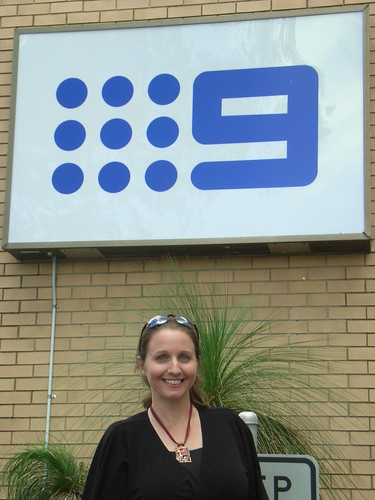
Me at Channel 9, Australia———————————->


(7) Focusing everything into one book

This is something I have only learned recently, and perhaps we can’t learn this except through our own experience.

When Pentecost came out, I was entirely focused on marketing it and making my new fiction career work. I heard the pros say you need more than one book but I was sure I could make it successful. It has now sold over 30,000 copies which is a modest success but more importantly, the sales figures have increased again with the launch of Prophecy. I can expect the same pattern on the release of future books too as new readers find me through the increased “shelf space”.

I am also understanding the long haul career of a pro-writer involves always working on the next book. Celebrating the last, but getting on with the next. This is our passion, but also our job. Obsessing over one book isn’t as important as getting on with the next.

I’d love to hear your comments. Do you agree with these mistakes and what else can you add?


This is a reprint from Joanna Penn‘s The Creative Penn.

15 Twitter Hashtags That Every Writer Should Know About

This post, by Joel Lee, originally appeared on makeuseof on 3/16/12.

Are you late to the social networking party? No worries. It took me a long time to get into the whole social networking thing, but I’m glad I did. It’s definitely been a beneficial experience.

Although Facebook continues to defend its position as the most popular social networking platform, you shouldn’t focus all of your attention there. As they say, don’t keep all your eggs in one basket. Where else can you go? Twitter! Twitter is a great resource for social networking, but especially so for writers. By taking advantage of hashtags, you can separate the useless and boring tweets from the ones that are interesting and pertinent.


What Are Hashtags?

Have you ever seen a tweet include a word or phrase preceded by a pound sign? For example, a few months ago, Charlie Sheen’s #winning hashtag went viral. It’s called a hashtag because the ‘#’ is sometimes called a ‘hash,’ and using hashtags is a way for you to insert searchable tags and keywords into your tweets.

There are thousands of different hashtags floating around the Twitterverse. Many of them are important and useful, and many more of them are absolutely meaningless. Why? Because anyone can make up a hashtag. A hashtag only becomes meaningful when a large number of Twitter users give it meaning.

If you ever encounter a hashtag that you’ve never seen before, use TagDef to look it up. You’ll likely find a definition posted there unless the hashtag is obscure. In that case, you probably won’t even want to know what it means.

Twitter Hashtags For Writers

#amwriting / #amediting – Of all the Twitter hashtags that could possibly be relevant for writers, these two blow every other out of the water. Both #amwriting and #amediting are Twitter “chat” hashtags and you’re welcome to join in at any time. These two tags have grown so popular that there is even a web community over at AmWriting.org.


Read the rest of the post, which includes descriptions of 8 more writer-relevant hashtags, on makeuseof.

Take A Break

I’m getting ready to re-vision my blog. By that I mean I’m going to take a short break to brainstorm some great ideas for future posts. I want to make this a place you can stop by to pick up handy tips and inspirational messages to help you in your day-to-day life, as well as catch a weekly laugh.

That being said, I don’t want to just leave you high and dry while I work up a new plan, so I’ll be re-posting some of the best from the last year. Enjoy!

Maybe it’s just a “man thing,” but both my husband and my father will run themselves into the ground to get a project completed. Given half the chance they’ll drag anyone helping them down, too.


Case in point: the guys chose a very hot day to put posts under our front porch roof to keep it from sagging, figuring the job would only take about 2 hours. It took most of the morning and the entire afternoon. Getting them to stop, even for a few moments to take a drink, meant needing to become an overbearing, stubborn commander with a voice that would ring across a parade ground.

Not a happy experience for any of us.

The reason I was given for driving themselves like that was they “wanted to get the job done.” Not an unreasonable response, but it wasn’t a very wise decision.

What’s the real problem?

It’s a combination between wanting to achieve a goal and having little respect for yourself and your body — that thing called a temple in the Bible.*

Accomplishing something you’ve set out to do is a great high. Finishing a goal takes away, at least for a time, those feelings of inadequacy, of fear, of anything that holds us back from being happy. It’s something like a “runner’s high” where endorphins are released.

The problem shows up in not respecting the body’s needs. Just like an athlete on a “runner’s high” can injure themselves, anyone driven to achieve a goal can harm themselves by ignoring the need to rest.

That goes as much for mental labor as physical labor because staying up late to complete a task, like meeting your daily writing quota (guilty!), when you know you can’t sleep in is as bad as pushing through physical exhaustion to finish building a porch.

Taking a break is not a sign of weakness. It is a sign of wisdom.

Breaks do prolong the time it takes to accomplish a task. There’s no getting around that. However, not taking a break risks injury.

In the case of my husband and father, it meant possible dehydration and heat stroke. For that sleepy writer it might mean making poor decisions at the day job or saying something to a loved one that you’ll regret later.

A better solution is to plan ahead. Make sure you add in time to take a few breaks. Expect whatever you’re about to do to take at least twice the time you think it should. If necessary, break it up over several days. There is nothing wrong with taking your time.

If you have a deadline, planning far enough ahead means no need to “pull an all nighter.” The other positive outcome is that you might come in ahead of your deadline. That feels even better because, not only are you ahead of schedule, but you’re not too tired to enjoy it.


This is a reprint from Virginia Ripple‘s blog.

Neil Gaiman Advises on Writer's Block

From Neil Gaiman‘s TumblrReposted as something that can be reblogged. ON WRITER’S BLOCK.

I’ve seem to be hitting writer’s block far too often now. My grade in my creative writing class is suffering because i don’t turn in anything because i’m never really satisfied with anything i do. all my good ideas seem to turn into bad ones once i write it down. How do you get pass writers block? 

You turn off your inner critic. You do not listen to your inner police force. You ignore the little voices that tell you that it’s all stupid, and you keep going.

Your grade isn’t suffering because your writing is bad, it’s suffering because you aren’t finishing things and handing them in.

So, finish them and hand them in. Even if a story’s lousy, you’ll learn something from it that will be useful as a writer, even if it’s just “don’t do that again”.

You’re always going to be dissatisfied with what you write. That’s part of being human. In our heads, stories are perfect, flawless, glittering, magical. Then we start to put them down on paper, one unsatisfactory word at a time. And each time our inner critics tell us that it’s a rotten idea and we should abandon it.

If you’re going to write, ignore your inner critic, while you’re writing. Do whatever you can to finish. Know that anything can be fixed later.

Remember: you don’t have to brilliant when you start out. You just have to write. Every story you finish puts you closer to being a writer, and makes you a better writer.

Blaming “Writer’s Block” is wonderful. It removes any responsibility from the person with the “block”. It gives you something to blame, and it sounds fancy.

But it’s probably more honest to think of it as a combination of laziness, perfectionism and Getting Stuck. If you’re being lazy, don’t be. If you’re being a perfectionist, don’t be. And if you’re stuck, figure out where the story went off the rails, or what you got wrong, or where you need to go deeper, or what you need to add to make it work, and then start writing again.
 

Pinterest: The Hottest New Social Site – Should Authors Join?

Everyone’s buzzing about Pinterest, a rapidly growing social site that’s all about creating and sharing collections of images (photos or illustrations) that you find around the Web or create yourself.

Pinterest calls itself a “Virtual Pin Board’ and members can use it to share their favorite artwork and books, organize recipes, plan weddings, post travel photos, and more.

The site is basically a giant online bulletin board that people pin images to. As a user, you create "boards" geared to different topics or interests.

As you’re cruising around the Web, you see an image that you’d like to share with others and you "pin" it to one of your "boards."  When someone clicks on the image, they can be directed back to the website that the image came from. You can also upload images from your computer.

You can post images related to your personal interests or hobbies, as well as images related to your book. You can also "follow" other people or boards, "like" or comment on images, and "re-pin" other images on the site to your own boards.

To the left is an example of a book cover that someone posted on a board called "Must Reads". You can see that it has attracted 218 likes and 113 comments, and it’s been re-pinned 5,393 times.

Pinterest can be integrated into your Facebook timeline, and you can add a “Follow Me on Pinterest” button on your website and cross promote the site through your other social networks.

After an incredible growth spurt in late 2011, Pinterest is now attracting nearly 12 million monthly unique visitors and generating a lot of buzz. Shareaholic recently reported that Pinterest is driving more referral traffic to websites than Google Plus, LinkedIn and YouTube combined. (Referral traffic is defined as visitors who land on a website through a link from another website.)

Naturally, many businesses are taking advantage of this new way to promote their brand and their products visually. But it’s easy for authors and other entrepreneurs to get caught up in "shiny object syndrome," chasing after each new thing that comes along and losing focus on what’s most important in their business.

Should you join Pinterest? Here are some things to consider:

    * How well does your book topic lend itself to sharing relevant images? Travel guides, cookbooks, and gardening books would be a natural, but authors in many other topics can probably find relevant images to share. Novelists could share images related to the storyline or setting of their book. Children’s authors can share images from their books. All authors can share their book covers and images from their blog posts.

    * Is Pinterest a good use of your time? The good news is that Pinterest doesn’t require as much time as other social sites like Facebook.

    * Is Pinterest something that you would enjoy doing for fun, to share images with friends and family or others you meet on the site? I have found that people pin a lot of beautiful artwork and photos and it’s fun to browse the site.

If you think you may want to use Pinterest, I recommend signing up right away so that you can secure the user name of your choice.

Right now, you have to be "invited" to join Pinterest. You can ask someone who’s already a member to send you an invitation, or click the red "Request an Invite" button at www.Pinterest.com.

To help you get up to speed fast, I have created the Pinterest Guide for Authors. This 35-page ebook contains numerous screenshots, so it’s a quick and easy read. 


This is a reprint from Dana Lynn Smith‘s The Savvy Book Marketer.