15 Steps to Create Great Blog Videos

Video is everywhere in blogs today. As many people predicted, when web surfers get broadband internet service, they want blog video and lots of it.

Let’s face it, we’ve all be raised on television in one way or another, and that’s got to be a powerful influence.

Lots of people enjoy learning through video lessons, and if it’s entertainment that drives your blog and your books, there’s no better way to deliver it than through video.

In order to deliver great content, it seems like you have to get your videos to look good, too. A year or two ago you could probably get away with bad-looking video if your content was good.

But the spread of video has also raised the bar as far as what looks “good” to the average viewer.

A few weeks ago a woman walked up to me at a publishing group meeting and introduced herself. “Actually,” she said, “I feel like I already know you since I’ve been watching your videos.”

Wow, that was great, because that’s just what I was aiming for. It’s also the way I feel about people I’ve watched on blog videos, and it’s a powerful testament to how we humans connect and how, if we invest ourselves in what we’re doing, it can really affect other people.

Which is Better, Video or Text?

Last week I posted a video instead of writing a post. At times I’ve wondered whether making a video takes more or less time than writing a typical 1,000-word article.

Over the past year I’ve acquired equipment for doing videos, gotten a ton of practice, and created hours of video for my online training course for authors, The Self-Publishing Roadmap.

So while I’m sitting at my desk pounding on my keyboard, right behind me are the lights, tripod, camera and a big whiteboard just waiting to be used.

The two processes—writing and making video—use completely different skills and equipment.

Writing a post is pretty straightforward:

  • outline
  • write
  • edit
  • format
  • add photo
  • post

With video, you get much more involved with technology and completely different kinds of processes. For short videos you might not need a script if you already know what you want to say, so at least you can avoid the writing part if you’re confident on your feet.

Of course, it’s far simpler to create screencasts where you make a movie of what’s happening on your screen, and you add your voiceover. I use a lot of these, too, but it’s the live action videos that I like the most.

With all that in mind, here’s my method of dealing with web video for blog posts, and for products and services that you might create from your blogging activity.

How to Create Blog Videos in 15 Steps

This is the basic process I go through—along with the tools I use—to make blog videos like the Book Marketing Continuum, a pretty simple whiteboard presentation that ran about 13 minutes:

  1. Outline content—there’s no way around this, and it’s very similar to outlining a written post. Regardless of how it looks, most people can’t just turn the camera on and start shooting impromptu and hope to get anything of quality out of it.
     
  2. Create a cheat sheet—I hang a single piece of paper on the front of the tripod so I can glance at it during filming. I do them with a Sharpie marker which makes creating diagrams very easy and quite visible from 4 feet away. I’ll use this as I work through the content. The illustration at the top of this article shows part of one of these sheets from a recent shoot.
     
  3. Adjust the lighting—On the recommendation of a cinematographer I bought a set of 2 “softboxes” on tripod stands. Unless you’re adept at shooting outdoors, you pretty much need to have lighting to get a good looking video.
     
  4. Check the microphone—You may have realized this, but while you can watch a video that’s not very well made and still get a lot from it, if the sound is bad, it’s likely you will stop watching. When I realized that microphones don’t have to cost that much, I got an Audio-Technica ATR-3350 microphone for less than $25, and it works great.
     
  5. Set the camera—Last year I made a bunch of videos using my iPhone. Although these came out better than expected, eventually I realized I needed a camcorder, and bought a Canon Vixia MF400. This allows me to zoom, adjust white balance and exposure, and generally takes great HD video.
     
  6. Shoot the video—Surprisingly, this part can be just a small part of the process. I know what I’m going to say, I’m all set up with equipment I’ve used a lot before, so I’m comfortable and just launch in. I was super pleased to find a tiny remote control that came with the camera, too. This allows me to flip the screen around so it’s facing front, which makes it easy to see if you’ve got the shot framed properly, then start filming with the remote. Love that.
     
  7. Transfer the video—My camera uses SD cards, so I’ve got a couple of those, and they are very cheap for mass storage. Not only that, I discovered the new Macintoshes now come standard with a slot for SD cards, making it very easy to get them onto my Mac.
     
  8. Convert the video—Unfortunately, I can’t use the videos in the format the camera uses (*.MTS) so the first thing I do is run them through a converter to get a .MOV file. I use Wondershare, a fast and capable program with lots of options.
     
  9. Edit the video—When I first got started with video I realized it would work for me if I could keep it simple. Like a lot of people I don’t have time to learn a ton of complicated new software. iMovie looked like what I wanted, but the interface was frustratingly hard to learn. Eventually I started using the editor in Screenflow, a fantastic screen recorder for Macintosh. I love this software for its simplicity, range of tools, and speed at getting video done without getting hung up in editing minutia. What a great program.
     
  10. Export the video—Once you’re finished adding titles and editing your video, you export it from Screenflow. You can send your videos straight to Youtube.com or Vimeo.com or just dump them to your drive in .MOV format. I’ve been hosting my videos on Amazon S3, a bulk hosting service. This means I’ve got another step to do.
     
  11. Convert the video again—The standard for web video is the MP4 format, and that’s the one that also plays on mobile devices like phones and tablets. So now I run the video through a great free product, Handbrake, to get them encoded properly for all kinds of uses.
     
  12. Upload the video—Since these files can get pretty big, you either have to use FTP software to transfer them to the server you’re using for hosting, or a special program. Right now I’m using a nifty free plugin for Firefox called S3 Organizer that does the job quickly and easily.
     
  13. Set permissions—By default all media files uploaded to the S3 servers are private, so you’ve got to go in and set the permissions through the ACL (access control list) because otherwise people will get an error when they press the “play” button.
     
  14. Create a player—If you use a host like Youtube.com you won’t have to worry about this, but for S3-hosted videos, you have to create the player that will actually show your video on your blog. I use the (paid) EzS3.com service to do this.
     
  15. Embed your video—Grab the code from your host (or EzS3.com player) and make sure it’s sized properly for your blog. The main content area on my blog is about 500 pixels wide, so I want to stay within those boundaries. Embedding is just a matter of putting the HTML code provided into your blog post.

Extra steps can include creating an MP3 audio file for those readers who would rather listen than watch, and that has its own conversion and uploading chores, too.

Is all that faster than writing a blog post? I don’t think so, but if you want to get the benefits of a great connection with your readers and the ability to explain complex or visual tasks, it’s really worth it. This whole process probably took me about 2 hours to produce that 13-minute video.

Have you thought of trying out video on your blog? Have you been able to streamline the process?


This is a reprint from Joel Friedlander‘s The Book Designer.
Living In The Past

This post, by Liza Perrat, originally appeared on The Writer’s ABC Checklist on 7/30/12.

Some wonderful advice from historical novelist, Liza Perrat, on how to breathe life into your novels.

I was initially drawn to historical fiction because I love history, and historical novels bring it closer to us in an entertaining fashion. I have only just set out on my third historical fiction adventure, so I’m far from being an expert, but this is what I’ve gleaned about this fascinating genre so far.

It appears very few historical fiction writers have university degrees in history. Most authors of historical fiction are, first and foremost, novelists who must master the craft of good fiction in the same way as contemporary novelists. Knowing how to write a good story, which hooks readers and keeps them turning the pages, is as vital as getting the historical details right.

Yet we do have to get those period customs and technological details right. Our ancestors had very different attitudes about many aspects of life than people of today. What was your heroine’s relationship with her husband, her children, the people with whom she lived? Did she use cutlery and plates? What job might she have had? Would she have been literate? Historical fiction falls flat on its face when the characters jump off the page as modern-day people dressed up in period garb, and details like this can be frustrating to research. But these days, with all the historical resources available, and the internet, authors spending the time and effort can usually discover those golden nuggets that will bring their story to life.

Besides spending hours online and frowning over the barely legible print of yellowed letters, postcards, diaries and old books, there’s nothing like spending time in a place, trying to imagine how it might have looked, felt and smelled, in the past. Readers like to sense the spirit of place –– the vegetation, the seasonal light, the odours. It pulls them into the story, makes them empathize with the characters, and provides a stage on which they can visualize the story. But readers will quickly become bored with history lessons, so information should be integrated into the story, without it coming across as school textbook.

Historical monuments and structures evoke the past and I like to study them as closely as possible, and take lots of photographs (preferably minus any lurking tourists!). A walk around the rural French village in which I live gave me the idea for Spirit of Lost Angels, the first novel in my historical series, set during the French Revolution, and recently published under the Triskele Books label. On the banks of the Garon River, I came upon a cross named croix à gros ventre (cross with a big belly). Engraved with two entwined tibias and a heart shape, it is dated 1717 and commemorates two children who drowned in the river. Who were they? How did they drown, and where are they buried?


Read the rest of the post on The Writer’s ABC Checklist.

Fifty Shades of Hypocrisy

When it comes to books like Fifty Shades of Grey, the Twilight series and The DaVinci Code (huge commercial successes that are pretty universally acknowledged as poorly written), outrage among authors who haven’t been as successful in finding a monster, dedicated fan base is generally off the scale.

I’m not going to reduce this to a simple case of jealousy, though jealousy is certainly a factor. It’s more like a sense of injustice, a feeling that authors who seem to be lacking in skill or talent haven’t truly earned the riches and fame being heaped upon them—particularly in the eyes of those who have labored long and hard on craft.

Anyone who aspires to authorship has been told her entire life that eventually, quality work rises to the top and finds the audience it deserves. Fifty Shades of Grey and Jersey Shore memoirs notwithstanding, I still believe this is absolutely true. The part that angry, hardworking authors seem to miss is that when "quality work rises to the top and finds the audience it deserves," that audience may not be large enough to crack the NYT Bestseller list, nor even necessarily the Amazon Top 100.

Why does this come as a surprise to anyone?

Look at the most popular television shows, musical acts and movies in the West. And by "popular", I mean the most commercially successful. With very, very few exceptions, it’s all lowest-common-denominator tripe, aimed at the 18-35 demographic, promoting the pursuit of youth, physical beauty, material gain and fame, above all else. If I wanted to put it more kindly, I might say it’s escapist wish-fulfillment material.

For many of us, life is already throwing enough physical, mental and emotional work our way that when we have a few minutes or hours to spare on entertainment, all we want is the cinematic, musical or literary equivalent of junk food. We want something shiny to distract us for a little while, that’s all. I’d have to count myself as part of that population most of the time, for the past few years.

Then there’s the (possibly larger) population of people who never seek out anything but the shallowist escapism in their entertainment. If a movie, song or book happens to make them think a little, fine. But they’re not looking for that, and if it requires them to think too much, they’re turned off because it starts to feel more like work than entertainment. It stops being fun, and nowadays, consumers expect everything from driving directions to language lessons to be fun.

Guess what? Quality prose is rarely described as "fun". It can actually be quite demanding. Clever turns of phrase often hinge on historical or literary references. Similes and metaphors are built on the foundation of a shared vocabulary between writer and reader. Intricate plots require the reader to keep track of multiple plot threads and character arcs. 

Writers who sweat these kinds of details in their manuscripts do so not only because they take personal pride in quality work, but because they want the reading experience to be the best it can possibly be for the eventual reader. But here’s the thing: if you’re preparing a seven-course, gourmet meal for dinner guests who only have the time or inclination (or both) to wolf down fast food, your eventual disappointment is both inevitable and predictable. Nobody who’s craving a Big Mac is inclined to seek out haute cuisine.

Here’s where the "Hypocrisy" from the title of this blog post comes in. As an author, you can strive to write prose your fellow authors and the literary establishment will admire, belittle the quality of a lowest-common-denominator bestseller, and mock the lowbrow tastes of the majority. But if you do all those things while simultaneously being angry that the majority isn’t buying and loving your book, you’re being a hypocrite. You’re not writing what they’re lining up to buy, and you don’t even want to write what they’re lining up to buy, so why begrudge them their choices and purchases?

In fairness, there’s definitely some skill and plenty of work involved in engineering entertainment so that it will appeal to the widest possible demographic. Nicholas Sparks is a master of this, and has the piles of cash to prove it. Adam Sandler isn’t likely to win an Academy Award in his lifetime, but he’s amassed as much wealth as a small island nation, and is beloved by millions the world over for bringing laughter into their lives.

None of which is to say that quality writing and commercial success are totally incompatible. When art and commerce meet and play nice together in the literary world, the result is a Neil Gaiman or Nora Ephron. Authors like these, who hit the magic trifecta of talent, skill and zeitgeist time and again are a rarity. They are the Bonos, Beatles and Bowies of the literary world: hugely popular, successful, admired, respected, and influential in their medium—all at the same time, both within their own profession and in the eyes of the general public. The most that the rest of us can hope for is to achieve maybe two of the things on that list, and not necessarily both at the same time or even in the same book. Anyone can hope to become a literary rockstar, but no one can plan for it the way one can plan for a successful career in medicine or teaching.

So pick a goal, art or commerce, and devote yourself to it. Accept that while it’s possible you may achieve both, it’s not too likely. Accept that in fact, it’s not even truly "likely" that you’ll achieve either one. Accept that writers who are willing to pander have better odds of enjoying the kind of sudden, ‘overnight’ success enjoyed by E.L. James, the author of Fifty Shades of Grey, just as an Us Weekly with a picture of a Kardashian on it is the odds-on favorite to far outsell an issue of the Economist with a picture of a Prime Minister on it. But also know that the likelihood such books will become beloved classics that future generations of readers will reach for, and recommend, time and again is remote.


This is a cross-posting from April L. Hamilton’s Indie Author Blog.

Remember When Amazon Set the Pace for Ebook Pricing? It’s Back!

This post, by , originally appeared on Digital Book World on 7/26/12.


Remember when Amazon set the pace for ebook pricing?

Remember when they set prices designed to build a market from scratch – and did just that – built a market from scratch?

If you don’t recall a time before Agency Pricing, a time when Amazon fully ruled the ebook roost, dust off your history books. That time is coming back, in very short order, and it’s going to completely redefine the publishing and ebook landscapes (again).

Once the DoJ case is officially adjudicated (with all signs pointing to the Hachette, HarperCollins, Simon & Schuster deal being the final structure of the settlement) we’re going to see an unprecedented 30-70 days where the ebook market and competitive landscape will be complete re-written – literally in real-time.

Despite all of the upheaval that’s coming, what I’ll be watching most closely is discoverability – specifically the ability for authors to build audiences in light of massive price competition from retailers and publishers.

With prices crashing through the floor, upstart authors losing their ability to compete / differentiate / build an audience based on price and publishers frantically racing to develop direct to consumer (reader) relationships in a bid to re-establish themselves as the foundation of the ebook market, it’s going to be increasingly difficult for readers to keep finding new quality works.

When best sellers are priced at (or nearly at) the same level as unknowns, the decision to venture off the beaten path will become more difficult. This is the same concept as purchasing Kleenex vs. the store brand tissue. If the price is close enough (<10% variance), you’re buying Kleenex. It’s only when the price variance exceeds 25% that consumers begin to react negatively to a brand and seek information about alternative products.


Read the rest of the post on Digital Book World.

The Ebook Marketplace is About to Change…a Lot

This post, by Mike Shatzkin, originally appeared on The Shatzkin Files on 7/26/12.

Now that the DoJ’s response to the public comments has made it overwhelmingly likely that the settlement it negotiated with Hachette, HarperCollins, and Simon & Schuster will be accepted by the Court, it is time to contemplate the changes we’ll see in the ebook marketplace in the next couple of months.

The settlement requires the three affected publishers to inform retailers working under agency agreements that they can be released from them. Ten days is alloted from the time of the Court’s acceptance for that to take place. Then the retailers have 30 days to terminate their agreement and then the publishers have 30 days from receiving that notice to actually end it.

So the process could be almost instantaneous, if the publishers served notice immediately, the retailers responded immediately, and the publishers reacted to the response immediately. Or it could take as long as 70 days from the Court judgment, if everybody used the entire time alloted by the judgment.

Assuming that Amazon acts with competence and alacrity in its own interests (and I’d expect nothing less), the entire process could take no more than 40-45 days with them. (Each retailer can be on its own clock.) That should liberate Amazon from most pricing constraints on the three settling defendants’ books by the middle of September.

There’s a bit of confusion in the settlement language here. In the same paragraph, IV-B, that lays out the 10-day, 30-day, and 30-day requirements as described above, it also says that 30 days after “entry of the Final Judgment” (the starting gun for everything), the Settling Defendants take “each step” required to terminate or not renew or extend the agreement. Or maybe the language makes sense to a lawyer but I’m just confused. It seems like they’re asking for results before the first 30-day period would have expired.

The settlement, which ostensibly does not eliminate agency agreements (although it clearly eviscerates them), requires that any new agreements not allow publishers to dictate final sale prices by the retailers, except to cap them (in an unwieldly way we’ll consider below in more detail) and also disallows any “most favored nation” (MFN) clauses protecting any retailer from the impact of other retailers’ pricing decisions. These restrictions are specified to last for two years for each retailer, starting from the date the old agreement’s price-controlling clauses are mooted, whether by the agreement being terminated or by the publisher notifying the retailer, in writing, that the offending clauses will not be enforced.

It is back to the drawing board for new agreements. Ostensibly they can be “agency” agreements by which the publisher sets a price and pays a commission for sales based on that price. But since agency agreements were actually attractive because they achieved what is now deemed illegal price parity across the marketplace, these publishers must be rethinking the efficacy of the model. I would be.

So new contracts will be needed between the three settling publishers and all the retailers. And they’ll need to be crafted, negotiated, and signed within a maximum 70-day window.

Anybody responsible for this who remembers what a combination marathon-and-sprint these negotiations were in 2010 won’t be planning any 2-week vacations over the next few months.

There is one big fat joker in the settlement. The publishers are allowed to negotiate agreements limiting the retailers from discounting from the publishers’ (now) suggested prices. The settlement allows the publisher to prohibit discounts on their books which in the aggregate over one year exceed the margin the retailer has earned on those books.


Read the rest of the post on The Shatzkin Files.

How to Have a Great Social Media Presence and Still Have a Life

This post, by , originally appeared on Ezine @rticles.

If the idea of Facebook, Squidoo, Twitter, and YouTube (not to mention your own site and blog) are inundating you. Take heart! You’re not the only person overwhelmed with choices. With more places to post and keep track of, our days seem to shrink . Here are some helpful, time-saving tips for making the most of your social networking without having it take over your life.

1) Blogging: first off, try and plan as many blogs as you can so you can preload them and forget about them. You can still post additional content but ideally you want to have at least one or two posts a week that are scheduled.

2) Social networking: sometimes an author will come to us with 35 social networking sites. Frankly that’s about 34 too many. With the popularity of social networking growing these niche social sites are popping up everywhere. I’m not telling you not to post something there but if you are stretched too thin and can’t keep them updated, what’s the point? Personally I recommend posting to two sites: Facebook and Squidoo. Start with one or the other and get your feet wet, then once you have an audience built and a social networking routine in place you can expand your networks.

If you’re unfamiliar with these sites (and many are unfamiliar with Squidoo, I’ll explain why in a minute) know that these are the two powerhouses when it comes to social networking. You can get on there and start a page, build a fan base and promote your book. It’s very easy to do and best of all, it’s entirely free. Squidoo.com is (like Facebook) very integrated in Google’s ranking system. Any Search Engine Marketing expert will tell you that you need three things: Facebook, Squidoo, and Twitter. Squidoo (again free) is very easy.

Also take advantage of time saving options on both of these sites. Both Facebook and Squidoo let you feed your blog and Twitter account through there which will help with keeping the page updated. You should plan to update each page once daily and here’s a quick Facebook tip for you and a great way to expand your network. Go in and wish folks a happy birthday. Birthdays are always posted on your page so go in and write on someone’s wall and wish them well, it’s a great way to network with your FB peeps and trust me, it will also help to expand your network!


Read the rest of the post on Ezine @rticles.

Words I Never Want to See in Your Novel. Please.

This post, by Jamie Chavez, originally appeared on her site on 5/17/12.

When I get to the end of an edit, I generally make a list of the author’s “favorite” words and phrases—words he or she used over and over without realizing it. It’s quite instructive.

Usually they are words like so and well used at the beginning of sentences of dialogue. Often it’s amazing (and you know how I feel about that!). Smirk shows up a lot too. Recently a manuscript I worked on had dialogue littered with you and I both know and listen as a way to begin a sentence (Listen, Sam, you and I both know the president will never approve that death squad).

You can’t hide much from your editor, my friends. We’re like hairdressers. 🙂

But in the spirit of self-improvement, let’s talk about some words and phrases I really wish you wouldn’t use, because I am, frankly, tired of reading them. It’s good for you to know these things now. Honest.

• I couldn’t help but … (notice, think, wonder)
This phrase shows up in many variations, and all of them are unoriginal and empty. Stop it. Just say, “I noticed …”

• Truth be known
Aside from the fact it’s way overused, it’s awkward. If you really must use it, it should properly be If the truth were known. Don’t tell me it’s your voice. Please.

• Suddenly
The hallmark of an inexperienced writer. Think about it: everything in fiction (in life!) happens suddenly. One second it wasn’t happening … and then it was. Suddenly.

• Blurt out
You remember my post on dialogue tags, right? I’m already not crazy about blurt for that reason, but when you write he blurted out, I cringe at the redundancy. 

• I thought to myself (or he thought to himself)
Of course you think to yourself! Who else is in there with you? Now, you can say things to yourself. That means you’re speaking out loud, but are not engaged in a dialogue with another character. And that’s fine. Although it is, they say, one of the first signs of insanity.

• Then, then, and then
It’s not necessary to keep reminding me that one action came after another.


Read the rest of the post on Jamie Chavez’ site.

The Problem with Fantasy . . .

This post, by Amy Rose Davis, originally appeared on her A Modicum of Talent With Occasional Flashes of Brilliance blog on 7/16/12.

After reading the two already-published installments of The Kingkiller Chronicles, I started to put into words some of the real criticism I have about my beloved genre. I think these thoughts are worth sharing in more general terms for a few reasons. First, I don’t want to rant about Rothfuss anymore. I don’t think his books are rant-worthy. I just think they’re overhyped and not nearly as brilliant as people think. Second, I want to go over these things because I think anyone who reads my blog and writes fantasy might find them useful. And third, I want you all to know what I’m trying to avoid in my own work!

As I see it, fantasy falls into three big traps:

The books exist to build bridges, set up conflicts, or establish scenarios for future plots. One could argue that most of The Wheel of Time exists purely to set up the next book, ad infinitum, until we hopefully get the big payoff in the last book. I wouldn’t know because I don’t plan to re-read the books. The problem of books existing only to bridge gaps is probably more of a problem with second books, I think. I suspect that authors work so hard on those first books in order to get an agent or publisher that the first book is usually polished to a fine sheen–plots are tight as they can be, characters as fleshed out as possible, worlds intricately built.

But the problem is that when we come to book two, authors have deadlines, expectations, and multi-book deals in hand. So maybe there’s a rush to write something to meet the deadline and expectations. Or even worse–book one was outrageously successful, so maybe in the haste to publish book two and book three, the author writes like a demon, the agent and publisher work more on marketing or publishing than on editing, and the result is a book that’s not nearly as tight as the first one.

Listen, authors. Every book in your series should potentially stand alone. There should be some kind of central conflict, some kind of goal for each book in the series. Do not expect your readers to go along with you for three or five or twelve books just hoping for the big payoff at the end. Give them a payoff in each book.

Too much backstory becomes frontstory.

Did I just make that word up–”frontstory?” Honestly, I think this is about 90% of the problem I had with Rothfuss’ books, and I think this is quite possibly why Kvothe comes off as such a special snowflake to me. If I just didn’t have to hear every flipping detail about his entire life, maybe he wouldn’t come across as so irritating. I think Rothfuss got caught up in writing backstory and history for Kvothe and never really distilled those stories into an actual plot.


Read the rest of the post on A Modicum of Talent With Occasional Flashes of Brilliance.

Using Engagement Analytics to Understand What Drives Customer Engagement

This post originally appeared on My Business Marketer. While it is aimed at small business owners, the advice it contains is just as useful to indie authors, who are, in effect, running a small business.

– – – – – – – – – – – – – –

I came across an interesting report a few weeks ago that offers an in-depth exploration into how to use engagement analytics to better understand what drives customer engagement with your brand and how you can use this information to improve your company’s revenue stream.

– – – – – – – – – – – – – –

For the uninitiated, engagement analytics give online marketers the ability to more precisely define those advertising and marketing initiatives that are the most successful in driving targeted customer engagement and generating revenue for the company. These analytics are invaluable when it comes to measuring aggregate average quantities, such as number of visits, most visited pages, time spent on each page, among others.

Knowing what’s driving whom is crucial information in the world of online marketing. After all, you can attract tons of traffic to your site, but if the traffic you’re getting isn’t the kind that is interested in the products or services you have on offer, your efforts are ultimately an exercise in how to burn through time and money. 

To get there from here, you need to drill down deep and mine the information recovered  for clues that you can then use to build subsequent successful marketing campaigns. 

Effective engagement analytics measurement will help you do just that as you zero in on three key areas: 

1. Traffic Sources. 

Sophisticated engagement analytics don’t just attribute traffic sources to the major search engines, such as Google, Bing, and Yahoo! Instead, traffic is broken down into paid, organic search, and organic branded search engine traffic (that is, traffic from visitors who included your company name or brand in their search term). This level of detailed understanding enables you to monitor what quality and quantity of traffic to your site is coming from which marketing channels so that you’re ensured that your marketing dollars are well spent.


Read the rest of the article on My Business Marketer. Also see: Use Statistics Counters In Managing Your Author Website, by Savvy Book Marketer Dana Lynn Smith.

Justice Department slams Apple, Refuses to Modify E-book Settlement

This post, by Jeff John Roberts, originally appeared on paidContent.org on 7/23/12.

The Justice Department released a document today that characterized criticism by Apple and publishers of a controversial price-fixing settlement as “self-serving” and ill-founded. The Department also pointed to recent ventures by Google and Microsoft as evidence that the e-book market is thriving and that Amazon’s dominant position has been overstated.


The arguments came as a reply to the 868 public comments that were filed in response to a settlement announced in April under which three publishers agreed they would change their pricing policy in accordance with Justice Department demands.

The settlement was imposed after the Justice Department sued Apple and five publishers for allegedly conspiring to wrest pricing power from Amazon. Apple and two of the publishers, Penguin and Macmillan, refused to settle and are fighting the case in court.

The Justice Department document is posted below with key passages underlined. The primary upshot is that the Department is refusing to modify any parts of the settlement agreement despite about 800 comments in opposition to the deal and new political opposition from people like Senator Charles Schumer (D-NY).

In its filing, Justice says it addresses Apple’s objections at length because of “[Apple’s] central role in the events leading to the underlying enforcement action.”  It also quotes an incident in which Steve Jobs reportedly told publishers, “the customer pays a little more, but that’s what you want anyway.”

The government goes on to refute Apple’s contention that it is imposing a business model on the industry:


Read the rest of the post on paidContent.org, which includes an embedded copy of the DoJ’s full response. Also see Consumers face long wait for $52 million tied to Apple e-book ‘conspiracy’, by the same author, on the same site.

Copy-Editing And Beta Readers

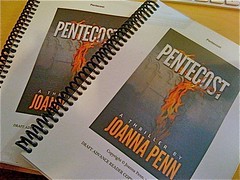
After some major rewrites based on my Editorial Review from the Steve Parolini, the Novel Doctor, I gave my thriller novel ‘Pentecost’ to seven beta readers and asked for their feedback.

This is one of my honest, personal posts! I hope it helps you on your writing journey.

Who are beta readers anyway?


Review copies printed locally for beta readers

Beta readers read your book prior to it going to the printer. You could also use them before submission to an agent or publisher. They read the manuscript for comment on the structure, characters, plot as well as grammar/spelling or anything else they notice that may need revision.Their comments will generally result in another rewrite although of course you don’t need to action everything. Beta readers should be people who like the genre you write in, and also need to be able to give honest feedback. There is no point in just hearing praise at this stage. Criticism only makes our work better!

The practicalities of working with beta readers

I selected five of my friends who read in similar genres as me i.e. fans of thrillers, crime, mystery and fast paced novels. I also asked a writer friend I respect, the lovely Alan Baxter and also my copy editor (who just happens to be my Mum – lucky me!)

I gave them a hard copy A5 version of the book I had printed locally (above) so it was easier to review and make comments on. I also included a letter indicating the comments required i.e. grammar and spelling would be done by my copy editor but I wanted feedback on character, plot, any parts they skipped over or found jarring as well as general comparative notes on other books vs mine.They had three weeks to read it and provide feedback.

I received feedback in the form of marked up A5 books, an interview style discussion and brainstorming as well as phone calls, during which I took copious notes with page references. The most heavily marked up version was from my copy-editor (to be expected).

For the next step, I took my own hard copy of the novel and added comments and notes from all the beta readers. Blue writing is for word changes, tense issues and grammar. Red is for more rewriting needed. Finally, I went through another full rewrite fixing everything from that master draft.

Feedback and lessons learned

Hard copy with edits

I had a few depressed days as I considered the extent of the feedback! I had thought I was 95% complete but it was actually more like 85%. Going through another full rewrite was not on my schedule and by this stage, I was pretty sick of the manuscript! BUT/ the whole point of the beta reader review and copy edit was to ensure that a quality product is released in Feb 2010.

Some of the good feedback included:

  • Great idea for the plot, believable and unsure what was real and what wasn’t
  • Fast paced with no time to rest for the reader (this was also given as a criticism but it’s how I like my thrillers to be)
  • Good settings, vivid descriptions made it cinematic in scope
  • Learned a lot about the Apostles and also Carl Jung which made it interesting
  • Good beginning and good ending (with obvious potential for a sequel)

In the spirit of full disclosure and learning for us all, here is some of the constructive criticism received:

  • Overuse of particular words e.g. now, just, was, then as well as using the same word in consecutive sentences
  • Wrong tense often used
  • Dialogue stilted in places
  • Point of view moves into third person omniscient when it shouldn’t, especially when settings are described as if from a travel book instead of character’s POV
  • Protagonist name change was needed. Morgan Stone as a character came to me when the book was called “Mandala” back in Nov last year. Then the plot morphed to be about the Pentecost stones and her name was too much repetition. I chose Morgan Sierra and rewrote some back story to explain the history of her family so it makes sense.

Not a page was untouched in the edit

One of my beta readers also came up with some brilliant additions to the plot which I’m adding in with his consent. It made me think that I need to give the book to readers earlier so I can expand on the plot at an earlier stage.

From this I learned a few very important points:

  • I need to study the craft in 2011 so I can fix all the basic stuff myself next time. I’m happy with the story but upset at how much blue is all over the book. Thankfully my copy-editor is brilliant and will go over it again now it has been rewritten so you can expect all this to be fixed in the finished product!
  • I understand why editors, agents and publishers hate to read the slush pile. If people don’t use editors, copy-editors and proof-readers before submission, the work could be definitely be improved.
  • To all indie and self-publishers, we MUST use editors, copy-editors and proof-readers. Quality in our publishing is especially important as the most annoying criticism of self-publishing is the lack of quality. Yes, it costs money but it definitely improves the finished product!

Have you used beta readers and copy editors? What have you learned from the process?


This is a reprint from Joanna Penn‘s The Creative Penn.

Tim Roux of Taylor Street Publishing, on “The Publishing Market”

This post, from Winston Emerson, originally appeared on The Object on 7/22/12.

Recently, The Object interviewed author J. Eric Laing, who told us he had placed his novel Cicada with Night Publishing, owned by Tim Roux, but several months ago withdrew it from Night and self-published instead.

A disagreement between the author and publisher unveiled itself during the interview and subsequent commenting, which has led to Tim offering us an article entitled “The Publishing Market” that details his perspective on the subject, along with how his company operates in today’s publishing world.

____________________

The Publishing Market

by Tim Roux, Taylor Street Publishing

I have been a professional international marketer, brand manager and business strategist for 30 years but, like many a closet (or at least bookcase) bookworm, I always felt I had a book inside me.

Then, in 2004, after throwing away a few chapters of an effort that embarrassed even me twenty years earlier, I went for it and wrote ‘Blood & Marriage’ in 3 months, mostly 35,000 feet in the air.

It was, and is, a totally self-indulgent book that nobody should ever be asked to read, but it led to nine other books, some of which have been kindly reviewed, and I have had something like 20,000 sales / downloads of my books since, so I can declare with false modesty to anyone who will listen – and many who won’t – ‘Yeah, I have sold a few books’.

However, where I have really begun to sell books has been as a publisher. When I started out in January 2010, I simply knew that I wanted to get some books I loved into print. I knew how to publish books on the cheap into paperback – I had self-published my own – but I certainly didn’t know how to promote or sell them. Nevertheless, I was friendly with several authors and managed to persuade a few of them to let me publish them (as I still do).

I started with a target of publishing 5-6 books a month. Nine months later, our first book really took off – 3 sales in 6 months, then 11,000 the next day. The company got into its true sales rhythm about a year ago. It has certainly had its ups and downs since, and the original company was driven into the sidings during a particularly vicious divorce process, but the phoenix companies are up and fighting all over again, with a specific view of publishing which I would like to share here, whether it is useful to you or not, or even true or not.

I think the first thing, as authors, we have to decide is what we want from writing. Do we want to hold our own book in our hand; do we want people to read it; do we want to make money out of it?

If all you want is your own book, then you can self-publish your book in a day, and nothing can stop you. If you want people to read your book, you have Kindle Select and Smashwords to offer free downloads in their tens of thousands, if your book is attractive enough. If you want to make money, well, as Mark Twain said, “Any idiot can write a book, but it takes a genius to sell it.”

The book market is a market, and all markets have segments, eventually. As far as we are concerned, there are four topline segments for fiction – literary, genre, life and weird.


Read the rest of the post on The Object.

Bloggers Beware: You CAN Get Sued For Using Pics on Your Blog – My Story

This post, by Roni Loren, originally appeared on her blog on 7/20/12.

So today I’m forgoing the usual Fill-Me-In Friday post to talk about something that I’ve been wanting to blog about for a while but couldn’t until the situation was wrapped up.

For those of you who are super observant, you may have noticed some changes on my blog over the last few months. Tumblr posts went away. Fiction Groupie disappeared. I deleted most of my Pinterest boards. The Boyfriend of the Week has changed format. And all my previous posts from the past three years–all 700 of them–now have new photos on them.

Why is that? What happened?

Well, you’ve probably figured it out from the title, but it’s because I’ve been involved in a case regarding a photo I used on my blog. Like most of you, I’m a casual blogger and learned my way into blogging by watching others. And one of the things I learned early on was that a post with a photo always looked nicer than one with just text. So I looked at what other people were doing for pictures. And mostly it seemed that everyone was grabbing pics from Google Images and pasting them on their sites. Sometimes with attribution, most of the time without. And when I asked others (or looked at disclaimers on websites and Tumblrs), it seemed that everyone agreed using pics that way was okay under Fair Use standards. 

Here is an example of a disclaimer I found on a bigger site (name of blog removed):

THIS BLOG claims no credit for any images posted on this site unless otherwise noted. Images on this blog are copyright to its respectful owners. If there is an image appearing on this blog that belongs to you and do not wish for it appear on this site, please E-mail with a link to said image and it will be promptly removed.

And site after site had the same kind of thing. Just look on Tumblr, that same type of disclaimer is on a ton of them. And I’m thinking–well, that must mean it’s okay because if that weren’t true, sites like Tumblr and Pinterest couldn’t even exist because reposting pics is the whole POINT of those sites. So off I went doing what everyone else does–using pics from Google Images, putting a disclaimer on my site, etc. 

Well on one random post, I grabbed one random picture off of google and then a few weeks later I got contacted by the photographer who owned that photo. He sent me a takedown notice, which I responded to immediately because I felt awful that I had unknowingly used a copyrighted pic. The pic was down within minutes. But that wasn’t going to cut it. He wanted compensation for the pic. A significant chunk of money that I couldn’t afford. I’m not going to go into the details but know that it was a lot of stress, lawyers had to get involved, and I had to pay money that I didn’t have for a use of a photo I didn’t need.


Read the rest of the post, which contains more information about limitations on using images on your blog and how to avoid getting into trouble, on Roni Loren’s blog.

Splurge & Save: How To Be A Thrifty Indie!

If you’ll allow me, I’d like to take just a second to clarify an important point before we resume our regularly scheduled blogging…

Last week, our post on Self-Publishing Costs was added to Reddit.com by a well intentioned reader who felt we were projecting way too much overhead cost for indie authors (a sentiment that was echoed by many other readers on that website).

Holy misinterpretation Batman, that’s definitely not what we meant.

Judging from the comments we received here on Duolit from our wonderful readers, you guys seemed to have no problem picking up on the point of the guide – it was an overview of the possible costs associated with self-publishing.


But just in case that wasn’t clear, we want everyone to know that it was never our intention to say that self-publishing required the purchase of every service, product, tool, and coaching session we mentioned in the post.

Just like the example we used at the beginning about going to Wal-Mart – it’s possible to spend thousands of dollars in Wal-Mart (especially if you like camo and beef jerky) but it’s also possible to spend $5.

It all depends on your wants, needs and budget.

The same goes for self-publishing.

*Phew! Glad we got that straightened out!*

Moving right along, we thought that this week we could delve a little deeper into the possible costs of self-publishing by giving some advice about where you’ll get the most bang for your buck and where it’s okay to scrape and save a little.

To simplify things, we’re going to use the same breakdown from last week.

The Costs of Writing

¢ Save ¢

  • Organizational Materials: The dollar store sells post-its, pens, highlighters, thumbtacks and a variety of other office supplies that we love (!) but don’t need to spend big bucks on.
  • Coaching: Find a friend or family member who can be your sounding board/motivational coach through the writing process. You can also buddy up with a fellow author to keep each other on the straight and narrow for free!

$ Spend $

  • Books and Courses: Research is valuable. The more information you have at the outset of your project, the more you will save down the road by avoiding costly mistakes. Don’t go overboard by any means, but find a few resources that you trust and invest in your author education.
  • Software: If you’re planning to do your own formatting (see below for more on that) Microsoft Office is a better bet than any of its open source counterparts. There are more features, it’s user-friendly, and you can easily find support for it online if you have questions. It’s worth the extra cost for less headaches!

The Costs of Editing/Revision

¢ Save ¢

  • Beta Readers: This is a no-brainer my friends. If you start your marketing early on in your writing process (like we recommend!) you should have some fans in your corner prior to publishing who would be happy to test drive your novel. You’ll get valuable feedback, earn new fans, and not have to spend a dime. That’s the definition of a win-win!
  • Proofreader: When it comes to copyediting (finding those pesky typos, misspellings, inconsistencies and general word flow) you can probably find a friend, family member, or former teacher who can read over your manuscript for the cost of a nice dinner (or maybe a gift card). It’s so cheap we’d recommend getting at least two people to proofread for you.
  • One other quick savings note for editing: Do the less expensive editing options above before you dive into the professional editing below – you’ll take care of all the basic fixes before you put your manuscript in a pro’s hands and start incurring some pro costs by the hour.

$ Spend $

  • Professional Editor: A good editor is worth Fat Albert’s weight in gold, if you know what I mean. This is not the place to cut corners – find someone good, with good references, who has experience in your genre. Get this domino positioned perfectly and all the rest will fall into place behind it. [Check out our Indie Resource Directory if you don’t know where to find someone!]

The Costs of Professional Design/Layout

¢ Save ¢

  • Layout Design: If you really need to save money, you can DIY your interior formatting with the right software (see the discussion about software above).  To avoid piling up your set-up/submission fees with your publisher, you should do your research on margins, bleeds, fonts, letting, etc. (see the discussion about courses and books above). Believe it or not, eBook formatting is actually more complicated in a lot of ways than print formatting, so be sure you know what your publisher requires before you dive into this one and if you don’t feel comfortable doing this yourself, you can hire a professional without breaking the bank.

$ Spend $

  • Cover Design: We all know this by now, but you absolutely do judge a book by its cover. There are simply too many books in the marketplace not to make snap judgments based on a book’s immediate visual appeal. To compete in this market your book design *must* hold its own against traditionally published titles. Still, you can sometimes college art students or online designers who can give you a good deal without sacrificing quality.

The Costs of DIY Design/Layout

¢ Save ¢

  • Software, Stock Images/Photography & Fonts: Toni gave pretty good details on how/where to save here, so I’ll just offer one other tidbit for you – if you are a college student (with a valid college email account), you can get major awesome discounts on design software like the Adobe Creative Suite through AcademicSuperstore.com. If you are not a college student, I would NOT ever tell you to find a college student in the family and use his credentials to get your discount. I would NOT tell you to do that. NOT.

The Costs of Publishing

¢ Save ¢

  • ISBN: If you plan to write multiple books, it’s well worth it to buy ISBNs in bulk (lots of 10) directly from Bowker (keep in mind that your eBook has to have a different ISBN than the paperback version, so that’s two separate numbers right there). If you’re just getting started, it’s totally okay to use the provided ISBNs from publishers like CreateSpace and Lulu. You absolutely maintain the rights to your work, they just get listed as your publisher in the files and on your title page. Not a big deal, yo.
  • Setup Fees & Distribution: Do your research on publishers before hand to find out who has the loweset fees for set-up and distribution (but be sure you’re comparing apples to apples – what you get for the money is as important as the money itself).

$ Spend $

  • Proof: Once your book is approved and sent out to the distribution lists, releasing a new edition becomes time consuming and often requires you to pony up those set-up fees all over again. It’s MUCH better to get the proof copy and clear up any issues from the outset than to try and fix those mistakes down the road.
  • Review Copies: Like Toni said, where possible you’ll want to provide eBook copies to reviewers, but some will require paperbacks so it’s worth it to have a stash of printed copies on hand to mail out.

The Costs of Promotion/Marketing

¢ Save ¢

  • Website Design: I recently put on my big girl pants and redesigned my website all by myself (even though I have a world class designer for a best friend and business partner). With the newest Twenty Eleven WordPress template (free) it was easy peasy to add a custom header and background. You can also add navigation tabs and set-up pages with one click, it really couldn’t be any easier. (Also, take a look at Suzanne Collins’ website and you’ll feel much better about anything you can design yourself.)

  • Domain Name & Hosting: I hate their commercials, but Go Daddy is cheap and easy when it comes to domains and hosting. You can choose to pay monthly or quarterly (for less commitment and smaller upfront cost) or get long term savings by paying for a year in advance. Either way, it’s a bargain.
  • Mailing List: We seriously love Mail Chimp like whoa. We are unfortunately in the process of leaving them for AWeber (only because we’re planning some more advanced marketing stuff coming up in the near future) and it’s breaking our hearts. But for your indie author purposes MailChimp is a dream come true!

$ Spend $

  • Book Trailer: You don’t have to do a book trailer, but they are becoming pretty popular and give a three-dimensional feel to your book. If you do decide to get one, it’s worth it to spend the extra bucks and get a quality one versus using something that looks like it belongs in a bad corporate media presentation.
  • Author Branding: If you’re really serious about making a career out of this author business and you are clueless when it comes to design, it’s worth it to get with a designer and plan out a logo, colors and general brand aesthetic you can carry through everything you do (website, book designs, business cards, etc.). It will help readers begin to recognize your books from the very beginning and I think it has a lasting impact!

Don’t smash the piggy bank just yet!

That’s our two cents (get it???) on where you can save and where you should splurge when self-publishing your book.

We have one other tip that’s worth mentioning – and it’s you! If you’ve already been down the self-publishing path, you probably learned where you could save in the future and where you were glad you spent some extra money.

Help your fellow authors out and share some of those tips, you’ll probably learn a few secrets as well!


This is a reprint from Duolit.

To Be (authentic online) Or Not To Be (authentic online): That Is The Question

Writers are supposed to be passionate, communicative, and have some strong opinions. Like all artists, it’s their job to speak truth to power when others will not or cannot. In other words, they’re supposed to have something to say, and they’re supposed to say it, and they’re not supposed to give a damn what anybody thinks. It is in this that the purity of their art is grounded. 

Authors are supposed to establish an online presence that’s open, welcoming, inclusive, and entirely inoffensive. Like all marketers, it’s their job to appeal to the widest demographic possible. In other words, they’re not supposed to have anything negative or controversial to say, and if they do, they’re not supposed to post it, and they’re supposed to care a great deal about what everyone thinks of anything they do post. It is in this that their online reputations are kept untarnished. 

Do you see the disconnect here, the fundamental opposition of these two sets of requirements? 

[palm-forehead] What were we thinking?!

For years now, I’ve been proferring the same author platform advice: carefully cultivate and maintain your image, always be nice, don’t say or do anything that could be construed as negative or controversial, and strive to avoid turning off your readers (and potential readers) at all times and at all costs. I’m beginning to think this advice is wrong. 

How can one possibly spend half or more of the time wearing his Author hat and being a totally benign milquetoast, and the rest of it wearing his Writer hat and churning out impassioned, moving prose? Assuming it’s possible to make a habit of pretending not to care too much, or be bothered too much, by anything, is it a good idea for any artist to do so? 

I’ve noticed that after about five years of doing the benign milquetoast thing, the seams on my carefully cultivated, totally benign, online effigy are starting to show sometimes. And rip open in a few places. However hard I try, when I come up against something or someone with which/whom I disagree very strongly, there are only so many times I can avert my eyes, either say nothing or just mumble something vague, and keep moving. Increasingly, I can’t seem to help going off on the things and people that bother me lately. 

Maybe it’s just because election years always bring out the ignorant yahoos and smug twits in droves, and I’ve had just about enough of their nonsense. Maybe it’s that the collapsing economies all around the world have us all on edge. Maybe it’s because I haven’t felt I’ve had a well-developed enough concept to channel all that writerly angst and passion into a new novel. Maybe it’s because I’ve been (figuratively) beaten down and bloodied by a few simultaneous life crises over the past two years. 

Maybe I’m just a cranky bitch. 

Or maybe, just maybe…it’s because behind my carefully tended online persona, I’m a human being who’s alive, with an active mind, who has thoughts and experiences and feelings, who is imperfect, and sometimes gets angry at the wrong people or for the wrong reasons, who feels guilty or insecure every now and then, and every so often runs out of patience at precisely the wrong time. 

As a writer, I’m supposed to believe—no, I NEED to believe—that all the mistakes I make, all the wrongs I either inflict or endure, inform my work. As an artist, if my art is to have any impact at all, I am supposed to wring meaning and insight from these experiences and channel it into my work. 

Remember when part of the charm of celebrated authors was their other-ness? They were legendarily prickly, snarky, bohemian, drunks, or brawlers who seemed to spend their days in bed (often with multiple partners), and their nights about equally divided between scandalizing the bourgeoisie and pouring out Important Literature. Above all, they didn’t give a toss what the general public thought about them. How could they? In much the same way an actor must be totally un-self-conscious in order to really disappear into a role and be true to the material he’s been given, a writer must be totally un-self-conscious in order to disappear into the world of his stories and characters and be true to the material he’s creating. 

When you’ve developed the habit of turning off your authentic self to the point that it feels effortless, how can you be sure you’re really capable of turning it back on again? If you spend so much of your time worrying about how you’re being publicly perceived, how can you prevent that insecurity from creeping into your work? If you care so much about being perceived negatively online that you’ve made it a practice to avoid posting anything that could possibly cause you to be perceived negatively, how can you be sure you’re not sanding off all the rough edges of your ideas, plots and characters as well? 

Now, don’t misunderstand me. I’m not saying writers should all immediately pick up some self-destructive habits and start purposely offending everyone within virtual earshot. No, no, no. But I am saying that maybe it’s not so bad to take a stand every now and then, and maybe it’s not the end of your career if it’s a poorly informed and badly executed stand. Maybe it’s not such a bad thing to expose your human-ness and your passions once in a while. 

Being a good little Author Platformer means putting the Ego in charge: the reasoning, detached part of the self that suppresses baser urges and animal instincts. The Id is where all base urges and instincts originate, but it’s also where insight and creativity live; chaining the Id to a post in the basement of one’s day to day life may be the worst mistake any artist can make. My Id has been locked up for too long, and it’s acting out. I’m beginning to wonder if I should’ve been letting it come out to play, and make its mistakes and messes, a little more often than I have these past five years. 

Case in point: a post of mine was picked up by The Passive Voice blog, and there were a number of comments. One commenter zeroed in on one specific line in the post, and took up a real battleflag against it. And this irked me, a great deal. Straw man arguments are a pet peeve for me, but not without good reason… 

I have read and personally experienced far too many cherry-picking arguments when the indie author movement was just getting off the ground, where some naysayer or other would attempt to discredit the entire notion of indie authorship by attacking or attempting to disprove one specific statement in an essay or blog post—an essay or blog post with which they could find no other particular fault. Time and again, the trolls would come forward to hold up this or that one, specific example of a failed or poor-quality indie book, and use it as the foundation for their thesis that, "therefore, all indie books are bad and virtually no one buys indie books." So I’m pretty touchy about cherry-picking arguments. 

I do not believe this commenter is a troll, nor do I think he necessarily deserved the chilly and irritated responses he got from me. I’m sure many people have seen the exchange, and some of them thought worse of me for it. Three years ago, I would’ve been frantically working damage control and obsessing about the potential fallout. Two years ago, I wouldn’t have responded to the commenter at all. One year ago, I would’ve responded with some bland bit of mild disagreement, sure to include at least one qualifier that would welcome anyone reading my response to dismiss it completely. 

Now, I’m doing nothing. I overreacted because this commenter unintentionally hit a raw nerve, but while I did go so far as to wonder "aloud" what his motivations might be for so tenaciously clinging to this one line of argument, I don’t believe I stepped over the line into being rude or hurtful. A display of poor judgment on my part? Absolutely. Obnoxious? Fine, I’ll give you that. A total meltdown? No, I think that’s going too far. 

Above all else, what it was, was proof positive that I’m not just a bland…um, I mean brand. It was a demonstration that I can and do get bothered and passionate about things sometimes, even if this Author Platform lifestyle of stuffing those tendencies down for the past five years is now resulting in me getting a little too bothered and being a little too passionate about relatively unimportant things. 

I’m not advocating for authors to start shooting their mouths off about anything they want to in any setting. There are such things as decorum, respect, and ‘reading the room’, after all. I’m just saying that maybe it’s not such a bad idea to be your authentic, opinionated, imperfect self now and then, at least when the stakes are low, even in the context of author platform. Some will respond well, others won’t. But those who don’t like your authentic self probably never would’ve liked your work anyway. And if constantly stifling your authentic self may also result in stifling the authenticity of your work, it’s a price that’s too high to pay. 

Maybe letting your Id peek through the veil every once in a while serves to vent bile that would otherwise build up until you do have a public meltdown when some minor irritation tips the scale. I can’t say for certain. All I can say is that whatever I’ve been doing up until now ain’t working anymore.


This is a cross-posting from Publetariat founder and Editor in Chief April L. Hamilton’s Indie Author blog.