Simple Math: Fewer Editors = More Mistakes

This post, from Craig Lancaster, originally appeared on his blog on 1/19/10 and is reprinted here in its entirety with his permission.

Here’s an interesting story from the Washington Post. It seems that more and more simple errors are sneaking into print, and readers are noticing. It’s not hard to figure out why. The story notes that the newspaper’s stable of copy editors has been whittled from 75 to 43 in the past few years, even as the duties beyond pure copy-editing have increased.

In my day (er, night) job — you know, the one that pays the preponderance of my bills — I work as a newspaper copy editor. I’ve long considered it a sound policy not to discuss one’s employer on a personal blog, and I’m not about to abandon that wise course now. Instead, I’d like to discuss editing in the big picture, across all forms of publishing. I guarantee you, what’s happening at the Washington Post is not an isolated case.

When I originally self-published my first novel nearly a year ago, I was — outside of my wife — the only person who had laid eyes on the words, and I’m afraid that deficiency was easy to spot. When the first book landed in my hands, I immediately spotted dozens of errors — dropped words, backward quote marks, dangling modifiers, etc. Because the book was print-on-demand, I was able to upload a new interior file and fix those. Then came the new book and a new round of errors. I must have done this five or six times.

By the time I turned the manuscript over to Riverbend Publishing for the book’s re-emergence as 600 Hours of Edward, I had read it innumerable times and rooted out every possible error, or so I thought. But the publisher found a few, and then I found a few more in the proofing stage, and finally we had a completed book.

The first time I opened it, I found another error.

Do you see what I’m getting at? It’s damned hard to come up with a pristine manuscript. Harder still when editors are removed from the equation.

Unfortunately, that’s what is happening across a broad swath of the publishing world. Houses, even the biggest ones, have cut deeply into their editing ranks, for reasons of expedience and expense. Maxwell Perkins, were he alive today, would probably be an acquisition editor, focused chiefly on getting the books into the publishing house and not so much on honing them into word-perfect shape. Many of the traditional editing chores now fall to literary agents, and while they’re often fully capable of doing that work, they already other vital and time-consuming chores, such as persuading the acquisition editors to bring the work aboard. So, then, the onus falls to the writer to get it right in the first place, and while there are many ways in which we can improve our craft and our self-editing, we can’t possibly give ourselves the same benefit we would get from an intensive edit by a professional.

So how do we bridge the gap? A few ideas:

1. Be damned good in the first place.

2. Failing No. 1, become a better self-editor. Read well-edited material and take note of what it does well (precise word choice, economy, structure, etc.). Take advantage of the myriad (and free) editing tips that can be mined on the Web. Our friends at The Blood-Red Pencil regularly offer excellent editing advice.

3. Join a writing group. Even if your colleagues can’t offer detailed copy editing, they can give you big-picture reactions to your stories and essays.

4. Trade sweat equity with a buddy. He reads and edits your stuff. You read and edit his.

5. If you can afford it and think you’ll benefit from it, engage the services of a professional editor. I’m happy to recommend one: My friend Leon Unruh at Birchbark Press does unfailingly excellent work at a competitive price.

We owe it to readers to give them the best experience we can with our books. That’s our bond: In exchange for their money and their time, we offer the best story we could write, with as few flaws as possible.


Craig Lancaster is the author of 600 Hours of Edward.


Do You Really Know The Author

When we buy a book, we think we’re going to like it because the title, synopsis or cover attracts our interest. I’d be the first to admit that I don’t often read a book that makes me stop to wonder about what the author is like. Questions like what does the author look like, where does the author live and did life experiences give the author ideas for the book. An author’s brief biography is in the back of the book and sometimes a picture, but that short paragraph is not nearly enough to get to know the author.

The more famous authors becomes, the more we learn about them, because of the publicity they generate. Lesser known authors just starting out, especially self published ones like me, are strangers and will pretty much stay that way unless the author reaches out to them. I don’t hire publicity, but I do use the internet, my local newspapers and book signing. I have the idea that if I make myself known to my readers, providing they like me and my books, the more books I might sell. So far this reasoning seems to be working.

Some readers get to know about me through my blogs where I tell about my rural upbringing. If I didn’t tell the readers, would they know that westerns were the books of choice in my house. How I grew up is reflected in my writing. Living near a small, Iowa town helps me use characters and stories that are true to life in my mystery series.

The Dark Wind Howls Over Mary – a western – ISBN 1438221576

Amazing Gracie Mystery Series – Neighbor Watchers- Book One – ISBN 148246072

I often talk about my personal experiences that I have turned into books such as being a caregiver for my parents. I volunteer for the Alzheimer’s Association and for eight years was facilitator of an Alzheimer’s support group. Because of that experience, three of my books deal with Alzheimer’s disease. People who are working their way through that dreadful disease need to know that I went through it before I wrote the books. I want the readers to understand I know how they feel so they can identify with me and my family.

Open A Window – ISBN 14382444991

Hello Alzheimers Good Bye Dad – ISBN 1438278276

Floating Feathers Of Yesterdays – a three act play – ISBN 1438250932

For the readers that haven’t found my websites or read my biography, I put my bio and contact information in with the books I sell along with a business card. If they are curious enough to check my information out on my bookstore website, they will learn about me in my bio, blog and book event pictures as well as the titles and prices of my books.

I advertise my bookstore website as much as possible and sell my books on other sites like Amazon. When I sell my books, I send an email to the buyers right after I mail the books to alert them to watch for their books. The mail system has lost some of my books. I do replace them at my expense. Knowing that media mail takes 2 – 9 days, I try to mail a book in a day or two so that the wait doesn’t seem so long for the buyer. I want that speedy delivery to please them. If the book does get lost, I replace it. I have developed a trust with the buyers. They find they can depend on my honesty to replace a lost or damaged book. They need to know I will do the right things to work up my customer base and show them I have an honest business. Maybe the books won’t turn out to be to their liking, but it will be everything it has been advertised to be.

In my email I always say if the buyers have time, I’d liked to hear what they think of the book. Those reviews come in handy to put on sites where I sell books. Giving my email replies a personal touch has made me friends with people from around the United States and lately in other countries. They continued to keep in touch. These buyers wait for word from me that my next book is ready to buy. Some of the anxious ones email several times to ask how long until my next book is finished. I always reply with a response about how the book is coming and reassure them that I’ll let them know as soon as I have the book for sale. Right now, I have a long list of emails to send a notice once I’ve published the book which should be ready this summer. What I have done so far may not have made me a household word yet, but what I’m doing works for me. Maybe some day.


ใ€€

ใ€€

ใ€€

ใ€€

Chapbooks: The Personal Side of Self-Publishing

 I recently came across a blog by Betty Ming Liu, an award-winning teacher of writing and journalism at NYU, The New School, Media Bistro, and Sarah Lawrence College’s Writing Institute. She recently learned a lot about chapbooks at a panel discussion devoted to the topic. Check her blog post for a great introduction to chapbooks and how to make them.

Chapbooks can be a lot of fun.

My father, Roy Friedlander, was a printer who apprenticed in the Compositor’s union in 1933, and I grew up around books. Later, he would bring home chapbooks like these and other ephemeral printed pieces.

He worked his entire life in commercial printing, business forms printing, briefly at the New York Times and later as a teacher at the New York School of Printing. I think these books, almost exclusively by poets, short story writers and graphic artists, really appealed to him because they were so different than what printing usually meant for him.

(Photo credit: Betty Ming Liu)

Now that the holiday season is here, I started thinking how wonderful a gift a chapbook can be for a writer who wants to share her work with friends and family. It’s a way of bringing publication into your own hands, and of seeing at least some of your work in print. A well-designed chapbook, neatly produced and sewn up, would be valued by whoever received it. 

What Is A Chapbook? 

17th Century Chapbook PeddlerAccording to The Chapbook Review, they are “slim, soft-cover books, usually inexpensively produced and independently published.” In fact, the form of a chapbook is largely undefined. Today, many poets use chapbooks to issue poems, assembling them by hand from pages they’ve printed themselves.

Although small presses may issue chapbooks that have been printed with engravings, lino cuts, or letterpress printing, none of these are required. In its simplest form, a chapbook might be a cover printed on slightly heavier, or colored, paper, with several folded sheets sewn inside the cover. 

This simple and easy to produce “booklet” can easily become a vehicle for your creative prowess. Adding an illustration to the cover will make it more attractive. Look at line drawings, where there are no gray tones, for the best and most traditional match for your content.

What will you put inside your chapbook? The choices are pretty unlimited. I’ve seen lovely chapbooks with poem sequences, a single short story or essay, or a combination of poems, stories, and drawings. Sometimes the chapbooks have limitation statements inside the back cover which add an exclusivity to the production. This is a good place to sign the chapbook, if you want to add another personal touch.

Yes, It’s a Business, But There’s More To It Than That

We are usually very focused on publishing as a business, how to make good decisions about publishing, controlling costs, meeting schedules, and all the other necessities that enter into self-publishing as a business. Sometimes it’s refreshing to remind ourselves of the beauty and power of writing in its most unadorned form; the essence of writing as communication.

I particularly like the artisanal quality of these chapbooks. A writer becomes something of a self-publisher, and also a craftsman, as she chooses her work, arranges the pieces, prints her sheets and assembles the chapbooks. Many parts of her being come together to create these very personal creations, and the results speak of the individual attention that goes into them.

There is no more personal expression of the desire of a writer to self-publish than a chapbook, and no more direct way for the writer to bring their work to a small circle of intimates.

Resources

You can explore the intriguing and personal world of chapbooks, both those from small presses and ones created by individuals, as well as learn some of the history of chapbooks, and see another set of step-by-step instructions. Here are some links:


This is a cross-posting from Joel Friedlander‘s The Book Designer site.

Kindle Store Pricing Trends: Is Amazon Backing Away From Big Deals?

Kindle Store prices, discounts, and promotions are moving in so many different directions that we should resist concluding that there are many real identifiable trends, but here are a few things I have noticed lately:


  • Amazon’s own Big Deals on Kindle page, which tended to go unchanged and stagnant for months at a time after being launched last year, still exists but its link has been removed from the "Special Features" section of the Kindle Store’s left-sidebar Browse link list. This could mean nothing in particular, or it could mean either than Amazon is backing away from the free promotional book offers from mainstream publishers that have tended to populate the page or — and this is the more interesting of these possibilities — that the page is being overhauled and might be rolled out anew with information not only on free promotional books but also on over a million other free books available to Kindle owners, including Amazon’s own listing of nearly 20,000 free public domain titles and other free-content channels via Project Gutenberg, the Project Gutenberg Magic Catalog, the Internet Archive, ManyBooks, Feedbooks, and others.
     
  • The number of free promotional titles in the Kindle Store has been trending down lately, and may have become more of an annoyance for Amazon (in terms of customer service and its impact on the Kindle Store bestseller list) than it is a benefit for customers, although total abandonment of the listings might be a risky move in the context of Amazon’s "customer experience" business principle. Although the Kindle Store listings seem to suggest 56 free promotional titles at present, there are actually fewer than 40 after one subtracts free sample chapters and one title that is actually not available for order or pre-order.
     
  • An alarming number of the forthcoming likely bestsellers in the Kindle Store — especially among those slated for Kindle release between March and May 2010 — show Kindle prices in the $14-to-$15 range. Generally (but not always!) such prices are the result of listing issues and tend to sort themselves out (and be lowered to the range of the $9.99 bestseller price point) within a few days of a title’s release in the Kindle Store.

This is a cross-posting from Stephen Windwalker’s Kindle Nation Daily blog.

Mentoring – Paying Forward

This will be a short one but an important one. How many of us were ever positively influenced by an authority figure when we were younger? Perhaps it was a teacher or professor. Maybe it was a cop or an adult big brother or sister volunteer. Maybe it was an established professional in our career field or a higher level executive in our corporation or a higher ranked officer/NCO in a military unit. In any case, did that person take you under his or her wing and provide guidance and help?

Oft times, it’s not possible or convenient to pay back those persons of influence other than to acknowledge their help. Since we can’t pay it back, we have the alternative of paying it forward. Do unto someone else as someone did for you when you were younger. Become a mentor. There are worthy new guys out there who could use a boost up. Look around for talent in the raw. Is there someone who could be helped by your hard-earned knowledge and experience? Consider taking that person on as a work in progress. You can make a huge difference in that person’s life. No, you’ll never be paid back directly by that person, other than perhaps his acknowledgment. But maybe he’ll pass that help forward to someone else who comes after he does. It’s like a chain letter in which everybody wins and no one loses.

Look around. If you’re an experienced person with something to teach, find someone worthy of your help. If you’re someone in need of assistance, look around for a mentor who can provide what you need. Paying forward is a very altruistic concept and has been with mankind forever. Recognize when it’s your turn to either ask for help or to give it.


This is a cross-posting from
Bob Spear‘s Book Trends Blog.

Kindle Rush Results

This post, from Seth Harwood, originally appeared on the Author Bootcamp blog  and is reprinted here in its entirety with his permission.

Click here to Listen to this post as Audio. (Right-click to download.)

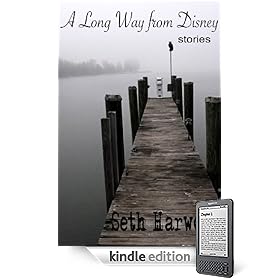
As some of you already know, back on December 27th, I released a sample of my first short story collection A Long Way from Disney on Amazon’s Kindle store and used social media strategies to market it. I did this for various reasons, but mainly because, as I said here on OC before, I believe authors need to take on the role of scientists and experiment with what’s possible in today’s publishing world. (If you’re interested in how I publicized this, see my recent posts at AuthorBootCamp.com.)

A Long Way From DisneyFrom a scientific point of view, the experiment was a great success. I learned a great deal, which I’ll discuss below. I sold a lot of books (at $.99 each): around 350 in the first week, and I got my name and stories in front of a lot of new people. I also heard from a number of them who read the book right away and really loved it! For you authors out there, I hope you can relate: Getting positive feedback on your work from total strangers is about the best feedback there is.
[For those of you keeping score at home, those sales put $260 into Amazon’s pockets and $140 into mine. Not too shabby, I don’t think, but also not the split an author might hope for.]

Okay, without any further delay: Here are the Results (What I’ve learned) from Experiment 1:

1) Timing can be essential. I positioned myself to hit the Kindle store just after Xmas, thinking that with many newly gifted Kindles out there, a lot more Kindle ebooks would be selling and that I could cash in on this rush. I was correct in this prediction (Amazon sold more ebooks than paper copies over Christmas), but what I didn’t predict was how much harder this made it to reach the Top 100 Kindle bestseller list, a goal I had set for myself. I wanted to hit the top 100 because it would give the book additional exposure and stimulate more buying from newbie Kindle owners looking for quick, cheap content.
 

Ultimately, I think choosing this time right after Xmas might have helped me sell a few more books. But by not hitting the top 100 list, I missed a critical chance to attract more attention on the Kindle store. As author Rob Kroese posted on an Amazon Kindle Discussion board, he was able to hit 300 in books on the Kindle bestseller list prior to the holidays by selling 30 copies a day. During the holidays, he sold 60 copies per day and couldn’t crack the top 500. I should mention that the highest ranking I got on Kindle Bestsellers was #250, which in retrospect was a great achievement, even if it came short of my goal.

On that note, I also hit #4 in Short Stories, #16 in Literary Fiction and #40 overall in Fiction.

Would I have been able to reach my goal of the top 100 at another time? I’m not so sure.
 

2) Making the Kindle Top 100 list is actually pretty hard for an independent author. Initially I figured, how many copies of these books can they be selling? Well, I learned that in actuality the answer can be quite high. A lot of the books on the Top 100 list are actually FREE! The Kindle store includes many classics in the public domain—for example, Sherlock Holmes, Pride and Prejudice, Treasure Island, Little Women, etc. And whenever someone downloads these free texts, Amazon counts it as a sale. It’s hard to compete against FREE. And, for this reason, the bestselling ebooks list can be harder climb than the paper version. (Back in March 08, I made #45 overall in books on Amazon when I tried a similar experiment with a print on demand publisher and my first novel, Jack Wakes Up.)
 

3) Free isn’t for Everyone. So why shouldn’t I set the price of my book at FREE—the web’s new magic price, according to Chris Anderson—as I’ve done with audio podcast versions of all my fiction at my site and on iTunes? Well, because Amazon’s Digital Text Platform (how you put your book up on Kindle) won’t let me. That’s right, as an independent posting content to the Kindle store, the lowest I can go in price is $.99. It’s true. So who’s posting these freebies on the Kindle store? Publishers. Including, you guessed it, "Public Domain Books."

There’s no sour grapes here. I hope no one will misread any of these statements as that. But there are some interesting lessons learned. Would I have made the top 100 if I had put my book up at a less busy book-selling time? Who knows. But if Rob Kroese can hit #300 by selling 30 books in a day, I probably would’ve had a good shot when I sold close to 200 copies on just the first day. I’ll just have to try another experiment at some point to find out.

When I do, I’ll also capitalize on one more thing I learned in this experiment about actual buying on the Kindle platform:
 

4) Non-Kindle-owners need education if you want them to buy. Not too many people have a Kindle out there, but any Kindle book can be purchased on a PC or an Phone/Touch. This means that a great many people can actually buy a Kindle book, but many of them will need to be educated about how they can do this—something that I tried to enable, but could’ve done far better with in retrospect.

So how did I do? As a writer, the biggest success of this experiment was getting my fiction into more people’s hands and hearing strong feedback from them. As for my writing career and how to proceed with publishing experiments going forward, I really learned a great deal. I hope you found it helpful. To talk more about this with me, please comment on either of my writing/publishing websites: sethharwood.com or authorbootcamp.com, or hit me up on Twitter (@sethharwood) or Facebook.

What am I doing next? Going cross-platform with this experiment—taking the Kindle version of A Long Way from Disney and bringing it to Smashwords (Sony reader and others), Mobipocket (Blackberry) and the iTunes store as an App to enable the content to be read on even more devices! I’ll be back to talk about how that all goes soon!

Terms of Use

Copyright for all content contributed to Publetariat is held by the respective contributor. While site design constraints mean that “Publetariat” is listed as the post creator of every post on the site, author / contributor names are included in the text of each individual post.

Site design copyright Publetariat 2008 – 2015.

Creative Commons LicenseAll Publetariat site graphics are licensed under a Creative Commons Attribution-Noncommercial-No Derivative Works 3.0 United States License (click for more information).
Content on Publetariat reflects the views, experiences and opinions of the individual authors and site Contributors.

Nothing on this site is represented, nor should be construed, as professional legal or financial advice.

Data mining is strictly prohibited. Collection of site content or data for any purpose, whether manually or through any automated process, will result in IP blockage.


Contact

If you have any questions or comments about the site in general, you can use the form on the Contact Page or email Editor in Chief Paula Reichwald directly at paula@publetariat.com. I would love to hear from you.

About Publetariat

Publetariat was founded by April L. Hamilton, and its mission is to share articles, editorials and advice from experts in writing, journalism, editing, book design, publishing in both hardcopy and electronic formats, book marketing and promotion, web design, podcasting, video trailer creation, author services and social media – all topics of great interest and grave importance to indie authors and imprints.

Publetariat trawls the internet daily to bring the most valuable content in books, publishing, craft, book promotion, authorship and related topics to your attention.


#fridayflash: Snow Ball Excerpt

This week, I present an excerpt from my other novel, Snow Ball. Snow Ball is not at all like Adelaide Einstein, it’s a dark comic mystery. And when I say dark, I mean it — as this excerpt will demonstrate.


“Shine on, shine on harvest moon, up in the sky…” Velma crooned, bouncing one hip as she worked.  She spun to open the refrigerator door, briefly eyed its numerous contenders for lunchtime beverages, then closed it again and stepped over to the basement door.  She gave it a little push to open it wider, calling, “Do ya want pop or milk with your lunch?”  Her accent made the word “pop” sound like “pap”.

She heard a grinding sound, a muffled cry and a thud.  “Ah…milk is great, hon,” Walter responded from somewhere out of view.  “With a little chocolate syrup?”

She smiled and closed the door, turning back to get the milk.  “He’s as bad as the kids,” she chuckled to herself.  She put the toast on the plate and the chipped beef on the toast, then set the table with a placemat, flatware and Walter’s glass of chocolate milk.  She flung the basement door open again and had to yell to be heard over the buzzing power tools.  “Walter, soup’s on!” she called.  “Now can ya turn that thing off and get your hiney up here before it gets cold?”

The buzzing stopped and Walter appeared at the foot of the stairs, wearing a yellow, blood-sprayed, disposable surgical suit with matching mask and booties, his glasses speckled with red and his gloved hands smeared with the same.  He lowered his mask.  “Before what gets cold,” he jokingly asked, “my hiney or the chipped beef?”

Velma giggled.  “Oh, you!” she chided him.  “Get all that stuff off and come on up now.”

When Walter reappeared, stripped of his disposable garb, glasses washed, he took his place at the table and said, “Oh, this looks great, just great Vel.”  Anyone seeing him on the street would’ve assumed he was an accountant or maybe a junior college math teacher.  He took a bite and hummed appreciatively. 

After he’d swallowed and had a slug of chocolate milk, he smiled at Velma and, pointing at his plate with his fork, asked, “Do ya know what they used ta call this when I was in the service, Vel?”

Velma’s eyes rolled and she smiled back indulgently.  “Yah, I do.  Jesus, Mary and Joseph, Walter.  Do ya have ta tell that story every time I make ya chipped beef?”

Walter chuckled.  “Oh, I was a different man then, Velma.  If you’da seen me then, ya woulda thought I was like John Wayne.”  He looked a little distant as he reminisced.  “We hadda be ready for anything.”  He looked at Velma and smiled again.  “But ta tell ya the truth, I’m glad I never got the call.  Truth is, I don’t know if I’da had the stomach for it.”

Velma turned off the radio and took the chair next to Walter’s.  “Yah, I know whatcha mean,” she said, squeezing his hand.  “Gunning folks down, left an’ right.  It’s all so impersonal, ya know?  I mean, those other boys never did anything ta you, they’re just fighting for their country same as we are.”

“Yah,” Walter sighed.  “War is a terrible business, ya got that right Velma.  If there’s a war going when our boys get ta be old enough, I’ll have ‘em up at Peter’s faster than you can say Jack Robinson.”  He dug back into his lunch. 

To change the subject, Velma cocked her head toward the basement door and brightly asked, “So didja get anything yet?”

Walter tucked his napkin in at his throat and grumbled, “Not much.”  He took another bite and smiled as he chewed and swallowed.  “He’s a toughie, all right,” he said with admiration.  “Golly, I don’t know what else ta try.”

Velma patted Walter’s left hand as he continued eating with his right.  “Are ya sure it’s really worth all this work, Walter?  I mean, couldn’t ya just finish it and move on ahead?  We’re all set ta go with the pharmaceuticals business now, andโ€•”

“No, no,” Walt gently protested, wiping his mouth and shaking his head.  “Now that’s just the problem nowadays, is folks lettin’ other folks take advantage.  That last kilo wasn’t stolen from this turkey, he took it and he sold it himself.  He stole it from us, Velma.”

Velma shook her head and clucked, “I know I shouldn’t be surprised anymore, with all I’ve seen, but jeez louise, doesn’t that young man have a mother?”

“I know, I know what you’re sayin’.” Walt nodded.  “It’s like the parents today don’t even bother ta teach their kids common courtesy, let alone how ta behave like proper citizens.”  He tapped the table with his index finger for emphasis.  “And it’s just that kinda thing that’s ruining this country, Vel.  First there’s no respect for the elders, then it’s a lack of manners, and next thing ya know ya can’t even leave your fence alone with your merchandise for ten minutes.”

Velma clasped her coffee cup.  “Yah, I s’pose you’re right, Walt.  It’s just that it’s taking so long, and the kids’ll be home in a coupla hours.  Dickie’s hockey playoff starts at three, and ya promised him you’d be there.” 

“I know, hon,” Walter whined, “but I gotta finish this thing.”  He polished off his chocolate milk and snickered, “I can’t leave ‘im in there all night, ya know.”

Velma studied her cup.  “But there must be a way ta speed it up…”  She paused to think a moment, then snapped her fingers and stood up, saying, “I’ve got just the thing!”  She trotted out of the room and reappeared a few minutes later, holding a seam ripper. 

“A lotta times it’s a mistake ta go right ta the heavy machinery, Walt.  A lotta times it’s attention ta detail that gets results.”

Walter took the small, sharp, hooked blade and beamed, “Ah, you’re a peach, Vel.  This is super.”  He turned it over to look at it from all angles.  “How does it work?”

“Oh Walter,” she sighed, shaking her head patiently.  She took the implement back and pantomimed in the air as she explained, “Ya stick it in an opening, any opening, and then pull it along in the direction ya want ta cut.”

Walter took it back.  “Wow, that’s really somethin’,” he grinned.  “I bet this’ll do the trick all right.”

“Well all right then, but ya gotta buy me a new one,” Velma replied, giving Walter an affectionate pat on the shoulder.  “I’m not done with that quilt I’m making for your mother, ya know.”


If you liked this and would like to check out more of Snow Ball, it’s available in Kindle format on Amazon, various other ebook formats on Smashwords, and in a print edition on Amazon.


5 Reasons Writers Need to Embrace Technology

Many people I meet say “I don’t like computers” or “It’s too hard to use all these sites” when I mention words like ebooks, social networking, online author platform and blogs.

But if you are serious about your career as a writer/author, think about these 5 reasons you need to embrace technology (by which I primarily mean the internet!).

  • People are online. Those people could buy your book. Even if you don’t like consuming ebooks or on mobile devices, millions of other people do and more join the fun every day. You want to reach them so you need to be online or at least have your information available to be found. If you are engaging on social network sites, providing information on your blog or producing your work in podcast audio format, you are more likely to get readers of your work than if you just wait for a publisher to find you, or bookstores to stock your book.
  • It is the best way to build an author platform. The author platform is now critical for everyone except the top authors and famous celebrities. It means people will find you, hopefully engage with you and then be interested in your writing/books or business. The old way of building a platform was through traditional media and PR (which costs money), or through 1:1 contact/networking as well as speaking. All of this is still relevant, but if you also have an online presence you will reach people globally when they are searching or browsing. You can also utilize word of mouth online which can boost your platform much faster and much further.
  • The tools have never been easier and they are free. You don’t need to know how to program to have a website or blog now. You don’t need $20,000 to have a website. You can have one for free. You don’t need to know much except how to drive a mouse. Point and click is all you need for most of these tools plus the confidence to try them out. The recent list of the most influential websites in the world included Facebook, Twitter and Flickr, all of which are great tools for platform building and all very easy to use. For more ideas, check out my free Author 2.0 Blueprint which contains other free sites you can use.
  • Mobile devices are exploding and the internet is going mobile. You may not know people with an ebook reader, but how many of your friends and family have a mobile device? Most of them? All of them? In fact, 1 billion mobile web users are predicted in 2010. Some of these people absolutely love what you do. They want to know you, connect with you and read what you produce. You need to be online to connect with them. The exciting thing is that this opens up the market to millions of people in countries who can’t afford a computer but who can surf the web on a mobile device. Wow! A whole new world of readers.

Check out this video if you need convincing, it’s a brilliant look at this mobile, connected world.

How can you embrace technology and not go mad?

Pick a site and start somewhere. Grow from there. That’s it! Here are the most influential websites online – they include some great sites to start playing with technology including Facebook, Twitter and YouTube.

If you are overwhelmed, start with these 3 : Decide on your goals. Set up a blog. Start on Twitter. [Read the whole article here].

Yes, you will get frustrated. You will find it a bit hard to get started. You will have to play around, spend some time with it, and you may get it wrong. But the rewards are endless!

Please do let me know any questions you have on this. I’d like to help you!

Personal note: I am an IT consultant, but not a programmer. I am Gen X and was not brought up with the web or computers in general. I got my first email account at 21. My degrees are in theology and psychology, not IT. I am a geek but I have learnt this stuff, it doesn’t come naturally. So this is something I am still learning myself! Come and join me!

This is a cross-posting from Joanna Penn‘s site, The Creative Penn. See this page on her site for more information about the various ways to contact and connect with Joanna.

Press Release: New Publishing Strategy

FOR IMMEDIATE RELEASE

Startup Publisher Offers Ebook First
Major publishers hesitate to give customers what they want

North Andover Massachusetts, January 11, 2010—New children’s book publisher, Stick Raven Press, is bucking convention by publishing its first title, NOT JUST FOR BREAKFAST ANYMORE, as an ebook two months before the print release.

Announcing this new strategy, publisher Pär South said, "Unprecedented amounts of ebooks are being sold, along with ereaders. Clearly customers are showing us what they want. " Yet major publishers continue to ‘window’, or delay ebook editions or avoid producing them altogether.

To further support this trend, Stick Raven is offering its initial release for an introductory rate of $1.99—70% off the print list price.  Says the founder, "Ebooks are the new dimestore novel: affordable for everyone."

NOT JUST FOR BREAKFAST ANYMORE, by PV Lundqvist, is about a twelve-year-old boy who receives a pig as a surprise pet. This causes problems with the town and in his life, but offers an opportunity for him to learn to stand on his own.

CONTACT: Pär South
Publisher/Stick Raven Press   

Website: stickraven.com

###

30 Days to a Stronger Novel

This post, from Darcy Pattison, originally appeared on her website and is reprinted here in its entirety with her permission.

Write a Stronger Novel

You’re writing a novel, a fictional story, that runs a rather long length. What’s the difference between a novel manuscript that sells and one that doesn’t? Details.

[Publetariat Editor’s Note: indie authors, feel free to substitute the word "sings" for "sells" in the above sentence.]

Here are 30 fast and easy Novel Revision tips:

30 ONE-MINUTE Tips for strengthening your novel

Titles
Subtitles
Chapter Divisions
Character Names
Stronger Settings
Stronger Setting Details
Characters That Count
Take Your Character’s Pulse
Connecting Emotional and Narrative Arcs
Unique Character Dialogue
Character Description
Begin at the Beginning
Scene Cuts
Take a Break
Power Abs for Novels
Angel Moments in Your Novel
Powerful Endings
Tie Up Loose Ends
Find Your Theme
Theme Affects Setting
Theme Affects Characters and Actions
Choosing Subplots
Knitting Subplots Together
Feedback
Stay the Course
Revise Again
The End
The New Beginning

MORE tips on Stronger Novels


Darcy Pattison, an author of both picture books and novels, has been published in eight languages. Her books have been recognized for excellence by starred reviews and other awards. As a writing teacher, Darcy is in demand nationwide to teach her Novel Revision Retreat which is designed to help intermediate to advanced writers break through to publication. The workbook for the retreat, Novel Metamorphosis: Uncommon Ways to Revise (Mims House), is available on Amazon.com. For information on hosting a retreat in your area, see
http://www.darcypattison.com/speaking/.


The Thorny Issue of Ebook Royalties

This post, from Sharon Blackie, originally appeared on the Two Ravens Press blog on 1/8/10 and is reprinted here in its entirety with her permission.

In a recent blog, the Society of Authors has been railing against publishers again, and calling for higher e-book royalty rates than the 15-25% that currently prevails in the market:

 …it is unconscionable that publishers should be attempting to strong­arm authors into accepting fixed royalty rates on e-books for the entire duration of copyright—and setting them, what is more, at a miserly 15% to 25% of their receipts. That may still be fair enough back in the Cretaceous world of dead tree publishing, but it is hard to see what it is about the selling of an e-book that entitles the publisher to cream off such an exorbitant share of the revenue.

I should say that, as a published author, I am a member of the Society of Authors, and I think they do many fine things. However, this whole e-book royalty question is NOT as simple an issue as it appears, and I find myself wishing that they would do a little more research before they simply assume that all publishers are out to fleece all authors for every last penny that they can. I’ve read a number of statements from the SOA recently (including in the recent issue of their magazine, The Author) on this issue and they are often filled with misconceptions about the practicalities of running a publishing business when it comes to independent publishers, who publish rather a lot of their members.

For example, one piece (irritatingly, I can’t locate it any longer) stated outright that there were no big distribution/wholesaler costs for e-books as there are for print books, because there is no need for warehousing/storage. WRONG! – Absolutely, utterly, 100% wrong. The distribution and warehousing charges for e-books are absolutely as high as they are for print books. For example, the biggest book warehouser in the country, Gardners, who distribute our e-books, charge exactly the same as they do for print books – an average whopping 50% of retail price. Why? Because they argue that there are still large costs associated with the production and maintenance of e-books: they’re just different ones. They relate to building, managing and keeping secure e-warehouses, among other things.

At Two Ravens Press we price our e-books as low as we possibly can, but the ultimate price of an e-book is driven by a desire to ensure that the author will get as much royalty from the sale of an e-book as from the sale of a print book – to the extent that that is feasible in the marketplace. With 25% royalties, we can usually achieve this. In fact, for e-book sales through our website, we can usually do better. According to the SOA, we must therefore be making vast amounts of money! Well, the truth is that on the average e-book, after we’ve taken off file conversion costs and everything else, we don’t make any more than we do on the sale of an average print book. And we still have to produce, market, cover our overheads etc etc – just as we do with print books. It is true that if your anticipated e-book sales for a given title are in the thousands and thousands for a bestselling title, you might be making a very large amount of money indeed for a relatively small amount of work. But in order to make back the conversion costs alone of an average TRP e-book, we’d have to sell over 100 copies. That’s without taking into account time, overheads and the vague desire that one of these days we might make a profit. Right now, I think our bestselling e-book has shifted around 6 copies.

The moral of the tale? Well, there are many, but I’m not going to go into them all here. At a minimum, please don’t tar all publishers with the same brush. Independent publishers with low volumes simply cannot operate, let alone make a living, on the kinds of royalties and terms that the SOA is beginning to insist on for all its members, regardless of who the publisher is. At TRP our publishing contracts are among some of the most generous around – certainly compared with other small indie publishers. But they’re right at the limit of what we can do and still operate. And whereas our authors always make money from their books, we often don’t.

Sharon


In 2006 Sharon Blackie, a former neuroscientist and practicing psychologist, decided to throw in all forms of gainful employment and set up a small independent publishing house at her 5-acre croft on the shores on a sea-loch in the north-west Highlands of Scotland. Her husband, David Knowles, a former Royal Air Force fast-jet pilot, became infected with the same insanity and gave up flying to join her. Both are successful writers and are firmly committed to their writer/publisher model; Sharon is a novelist and David is a poet.

Two Ravens Press specialises in contemporary literature – fiction, nonfiction and poetry – with a penchant for books that take risks with form and language. Described as ‘a quiet publishing revolution’, Two Ravens Press has also developed a reputation for being unafraid to tell it like it is on their blog at http://tworavenspress.wordpress.com.

The Year in Self-Publishing

This post, from V.J. Chambers, originally appeared on her In The Gray Twilight blog on 12/23/09 and is reprinted here in its entirety with her permission.

It’s been a little over sixth months since I decided to give this indie publishing model a go. What have I learned?

A-When people tell you that self-publishing fiction doesn’t make you any money, BELIEVE THEM. Seriously. ๐Ÿ™‚

B-Writing for an audience is about seventy zillion times more rewarding than writing stuff to send to agents and then shelve indefinitely. Rejection letters don’t prompt you to get words on a page. Myspace comments exclaiming that your novel is better than best-selling novels do. ๐Ÿ™‚

C-Serial fiction may be the current model that everybody and his brother is going for, but it doesn’t work for me.

A (expanded)–Here’s my money earned from my books this year. Okay, first, the expenses: $275 for a block of ten ISBNs from Bowker. $40 for the Pro Plan from Creatspace x 4 = $160. $20 for registering my domain name and for web hosting service for the year. For a total of: $455. Darned cheap, if I do say so myself. ๐Ÿ™‚

Earnings: Createspace & Amazon (print books): $273.62. Kindle earnings: $56.54. Smashwords earnings: $307.32. For a total of: $637.48.

Meaning that my total net profit is…. $182.48.

Do I have to mention the $1.50 I’ve earned in ad revenue from Project Wonderful?

There you have it kids. Writing doesn’t pay bills. ๐Ÿ˜›

C (expanded)–I’ve decided not to post my books as serials anymore. There are two reason for this. The first is that my books are not serials. I never wrote them to be broken up into chapters and posted piecemeal on the internet. I wrote them to be read all at once. (In one sitting, if you’ve got the time. I certainly aim to make them as page-turny as possible.) Breaking them up into episodes, I think, only serves to stunt the forward motion of the plot, and does next to nothing for the experience of the book.

The second reason is that posting serials is a little tiring. Updating twice a week may not seem like a big deal, and honestly, most of the time, it isn’t, but it does mean that I’m constantly trying to think about the book that I’m updating. It divides my mind between the book that I’m marketing and the one that I’m writing. (Well, okay, I haven’t written a book since Tortured, but, still, theoretically…) Anyway, I feel like if I weren’t constantly trying to update my website, I could spend more time writing, which is important, because that’s the whole reason I have a website in the first place.

So…what to do? I’m going to play with some ideas, but what I’d like to be able to do is this: Keep all the J&A books up for free on the site. Post 50% previews of Mischief, Death Girl, and Brighter. Leave the website like that for…months. So, if you like the new books, you can buy them. If someone new stumbles across the site, they’ve got three free books to read. As I get some new stuff written, I’ll transition the preview books to free books.

I’ll be starting an email list for those people who’d like to receive updates from me. That way, once you’ve read everything I’ve posted, you can go on your merry way until I send you an email, telling you that a new book is up.

On the marketing front, I’m toying with the idea of allowing my readers to help me market. Some people, I understand, don’t have the money to buy new fiction. So, if you’ll instead plug my stuff–write blogs, facebook notes, reviews on Amazon and smashwords, etc–then I’ll send you free ebooks. I haven’t worked out the details on that yet, but it will be coming soon.

So, that’s it. The year in self-pubbing. It’s been an adventure guys. 2010 is going to be even cooler.

V. J. Chambers decided to chuck the mainstream sometime the spring of 2009. Since she’s an indie author, she makes a living teaching high school. She is also fond of snakes, cheesecake, her boyfriend Aaron, Stephen King books, Buffy, and corduroy pants (although not exactly in that order). She lives in Shepherdstown, WV. You can learn more about V.J. and her work on her website.