Squabble flares for Shakespeare's birthday

WITH Shakespeare’s birthday celebrations April 23, Sony has a timely ebook mystery, “The killing of Hamlet”. It is both amazing and amusing that 400 years after his death the world still debates whether the Bard of Avon ever existed.

Read and quoted by everybody, William Shakespeare remains an enigma. Oh yes the plays exist, the poems enthral but who really wrote them? This year the argument is fiercer than ever after a Declaration of  Reasonable Doubt by experts. Other experts leap to defend the smalltown hick from Stratford who is reputed to have created England’s richest literature.

In the midst of this storm, author Ann Morven has crafted a modern whodunit novel around the Shakespeare authorship debate. Her fiction could be closer to the truth than all the learned assertions! Sony gives a free sample. To read the novel on other devices, simply google the title.

Always a puzzle to me is why the bloke from Stratford apparently wrote nothing before the age of 29, after which he was instantly brilliant and prolific. There is a lot more troubling the doubters however. Insults fly, historical papers are flourished like battle flags, poets sigh, actors denounce, language gurus gag and lawyers gabble from either fort. No matter which camp you believe, it all adds up to a sturdy noise for readers to enjoy on the Web.

Here are just a few of the claims debunking the playwright’s traditional identity:

1. If a man from Stratford was widely known as William "Shakespeare", why spell his name Shakspere in his will?

2. Nobody, including literary contemporaries, ever recognised Mr Shakspere of Stratford as a writer during his lifetime. When he died in 1616, no one seemed to notice.

3. There is no contemporaneous evidence that William Shakspere of Stratford was even a professional writer, much less that he was the great William Shakespeare.

4. Mr Shakspere of Stratford grew up in an illiterate rural household. Both his parents witnessed documents with a mark.

5. Books were expensive and difficult to obtain. No book that Mr Shakspere owned, or that is known to have been in his possession, has ever been found.

6. Not one play, not one poem, not one letter in Mr Shakspere’s own hand has ever been found. And yet, he divided his time between London and Stratford, a situation conducive to correspondence.

7. His detailed will, in which he famously left his wife "my second best bed”, contains no clearly Shakespearean turn of phrase and mentions no books, plays, poems, or literary effects.

8. Almost uniquely among Elizabethan poets, Shakespeare remained silent following the death of Queen Elizabeth.

9. There is no record he ever staged a play in Stratford, or that any of its residents viewed him as a poet.

10. While pouring out his heart in the Sonnets, why did he not once mention the death of his 11-year-old son?

Over the years, for diverse reasons, names suggested as the real Shakespeare include Christopher Marlowe, Francis Bacon, the Earl of Oxford, Sir Walter Raleigh, the Earl of Derby, Ben Jonson; Thomas Middleton and even Queen Elizabeth herself!

Whoever created the literary magic, I simply say Happy Birthday mate, and thanks for all the entertainment.


The Killing of Hamlet, by Ann Morven (Sony ebooks $6.99).

http://sony-ebook-samples.com/sample/7014/the-killing-of-hamlet


The Successful Publisher

I’ve been thinking about the previous post, and it seems to me the same advice holds for anyone looking to get into publishing — whether as a self-published author, or as a publisher of other people’s works on any scale. If you don’t define success yourself, the miserable soulless scorekeepers are going to define it by how much money you’re making, or whether or not you’re still in business.

The recent dissolution of HarperStudio is not simply a case in point, it’s a case that demonstrates the utterly bankrupt way the miserable soulless scorekeepers go about their business. What happened at HarperStudio, as far as I can tell, is that the guy who ran the place — Bob Miller — decided to go do something else. In a corporate context that’s the equivalent of leaving your wallet on the street, because there are always other factions in a corporation that want to play with the money in your budget. But is that the same thing as failing?
 
Seriously: how many people inside HarperCollins were rooting for HarperStudio, and how many were hoping it would fail? If you worked for the mothership, did you really want someone proving that a stripped-down version of what you were doing could actually work? Or did you want it to blow up, with or without your own finger on the trigger? I have no idea if Bob Miller was a hampered visionary or bumbling idiot, but that’s really the point. Does anyone know what was happening behind the scenes? Does anyone know what the money flow was like, and how HarperStudio’s subsidiary status with HarperCollins affected its ability to be successful?
 
What if Bob Miller had not decided to leave HarperStudio? What if he was still there, doing his job, but the company was badly in the red? Would that be a success story? Better yet, what if he was still doing his job, but he was embezzling money from the company and cheating authors at the same time? From the outside it would look like he was still in business, and thus not a failure — at least until he got caught. Is HarperStudio a failure because it tried to play fair? Are vanity presses that prey on naive customers demonstrating a better business model? (I’ll leave you to guess what the miserable soulless scorekeepers think.)
 
And what about the absurdity in all this? Anyone who thinks that HarperStudio failed in an objective sense has to reconcile that view with a larger context in which publishing is a wounded, dying animal that has little chance of continuing in its current form. If you really want to say that HarperStudio failed, isn’t the entire industry failing by that score? How many other companies are being held together by their leadership, while the bottom line bleeds out through an artery shredded by the internet? Isn’t there general agreement even now that the big publishers are playing for time in their dealings with Apple and Amazon, and their imposition of the agency model? Is there anyone who can point to a model that’s going to be an unbridled success a year from now? Five years? Ten? Are you shaking your head?
 
Publishers at every level need to define why they’re doing what they’re doing. Leaving that task to the miserable soulless scorekeepers will always result in the inevitable charge that you’re a failure, because that’s the point of keeping score. If you care about books or writers or publishing, defining that passion will prevent others from defining it for you. You won’t ever be able to get them to admit it, of course, but that’s not the goal. The goal is saving your sanity, if not your soul.

This is a reprint from Mark Barrett‘s Ditchwalk.

Preferred Shelving: Trotskyite Traitor v. Capitalist Pig

This is going to be short, because I hope to generate a dialogue here (as always).

Trotskyite Traitor: Selling preferred space in bookstores to the highest bidder is disingenuous. Readers are not made aware that what they are looking at is a paid advertisement, and so they are led to believe that the most prominently displayed books are "bestsellers," and therefore have a legitimate high ranking by critics and readers alike.

Capitalist Pig: Are you kidding? It’s been like that for ages, and it’s not just bookstores. You think Cocoa Puffs just happen to be stacked at kids’ eye level in the grocery store? It’s all planned and paid for. Don’t be so naive. When you have money and you’ve made an investment, you must protect that investment and give it the best shot in the marketplace.

Trotskyite Traitor: Aside from fundamentally disagreeing with your worldview, I find it amazing that you sidestepped the issue of honestly to the consumer. Where in the store–grocery, bookstore, or otherwise–is it disclosed that they are viewing advertisements? That’s the fulcrum issue here, I believe.

Capitalist Pig: How much handholding do you need for consumers? They are sophisticated enough to do their own homework. And moreover, not every advertisement is disclosed to consumers, so why should bookstores?

Trotskyite Traitor:  Because there is an assumption of trust between the literary world and consumers. It is above the fray.

Capitalist Pig: You can’t honestly say that and keep a straight face. This conversation is getting increasingly ridiculous.

Trotskyite Traitor: I am saying what people truly believe.

Capitalist Pig: Then if book buyers are so sophisticated, why the need to beat them over the head with the obvious?

Trotskyite Traitor: Because it is NOT obvious, that’s the problem. Mainstream publications like the New York Times use the term "bestseller" and it’s bullshit. Mainstream retailers put books on visual displays according to these rankings. It’s a betrayal of trust. It’s a lie.

Capitalist Pig: It is not a lie when everyone knows the truth.

Trotskyite Traitor: First, that’s a philosophical debate that we just don’t have time for. And it’s also a political debate that isn’t appropriate for this forum. So don’t get inflammatory. People do not know that bestseller lists are bullshit. People do not know that the preferred bookstore shelving is orchestrated by publishers and retailers. It’s not common knowledge. The industry is colluding against the consumer–

Capitalist Pig: No one is colluding against any consumer. The industry needs the consumer, and the consumer needs industry. Sometimes truth isn’t the nicest way to perpetuate this relationship.

Trotskyite Traitor: You can’t be saying what I think you’re saying?

Capitalist Pig: It’s not that complicated.

Trotskyite Traitor: So you admit that it’s a lie. You’re admitting that it’s disingenuous.

Capitalist Pig: I’m not admitting anything and I am not going to justify the ages-old tradition of capitalism right now. But I will say that publishers and authors and retailers are in business together and you can’t deny that. Authors write books to sell them. If you don’t want to sell your book, publish it yourself and it won’t be in any bookstores, and your problem is solved. Don’t act like this isn’t a good system, because I know you can’t come up with anything better.

This is a reprint from Jenn Topper‘s Don’t Publish Me! blog.

How To Publish Your Book On The iPad

If you own the digital rights to your book, then you can publish your book/s on the iPad. You don’t have to be published through big name publishers to make it into the iBookstore. Exciting!

Here are your options so far (no doubt more are coming!):
 
 
Smashwords. Definitely the most egalitarian distributor out there, Smashwords now has distribution deals with Apple for the iPad as well as Amazon for the Kindle, Sony for the eReader and Barnes & Noble.com. You can load your book for free onto the site but it does need to conform to specific guidelines in order to make the Premium catalogue which includes the iPad, for example, it needs an ISBN.
 
Check this article for how to ensure you get distributed.
Price: FREE (but you will need to spend some time formatting)
 
 
Amazon DTP for Kindle. The Kindle app is available on the iPad so if you publish on the Kindle you can still get onto the iPad.
 
Go to dtp.amazon.com. There are lots of help documents!
Price: FREE (but you will need to spend some time formatting – check out this podcast with Joshua Tallent from EBookArchitects for help.
 
 
Lulu.com. Lulu is one of the top print on demand distributors and they are offering a way to get onto the iPad as well as offering a free iPad with some of their packages. Lulu is aimed at helping authors self publish and has various packages offering services, for example, if you don’t want to DIY formatting you will need some help.
 
Price:$2399 upwards (not for the faint-hearted!). I am mentioning this because I want to include the many ways you can get on the iPad but as I have posted before, self publishing should cost you nothing.
 
 
Create your own iPad app. Most iPhone apps will function on the iPad so if you have one in progress, then it’s still a good option. Check out this podcast on how to create your own iPhone app for more info. The developer’s kit for the iPad is now available and there will be a truckload of new apps coming out for the iPad soon.
 
Price: $$$$ (depends on what kind of app you want, but certainly not free!)
 
Disclaimer: ok, so the iPad isn’t even published in Australia yet and I need to modify my own ebooks on Smashwords before they get on the iPad. I usually only post on what I have done myself, but this is so exciting, I thought you would like to know!
 
Please do leave any other ways to get published on the iPad in the comments.


This is a cross-posting from Joanna Penn‘s The Creative Penn site.

I Think I Just Bypassed What I Would Have Made Traditionally

Okay… so KEPT has been out in novella form for about a year and a half now. It’s a 20,000 word novella, so it’s not that long. Checking out some publishing advance averages through Google, a first romance novel tends to get between a $2600 and $5000 advance from a major publisher.

 
A novella is going to be less. Most novella anthologies contain 3-4 stories. With the length of KEPT, its inclusion in any print anthology would have likely been along with 3 others. In addition to that, almost all novella anthologies include one “name” author. Even if the author isn’t uber-famous they are high on the midlist. So it would be irrational to think that I would get the same exact amount for a first novella as other participants in an anthology with more publishing experience and name recognition would. In fact, I’d probably get the smallest advance of all of them. After all, if a well known author in the genre is a part of a novella anthology, very likely they are driving a lot of the sales, so they SHOULD get more. 
 
I just tabulated the amount of money I’ve made through Amazon Kindle for KEPT. Priced at 99 cents, I’ve made as of this moment: $1, 572.03. I think at this point, it’s safe to say that I have made more self-publishing through Amazon Kindle as a complete unknown, than I would have been given as an advance through a major publisher for participation in an anthology.
 
Also, in addition to my sales at Amazon, the PDF version is floating around free in many places. To date, in the places I can track, I’ve had close to 25,000 total downloads including paid downloads of KEPT. In addition to making more money than I would have made the traditional way for this particular novella. I’ve likely gotten more exposure for my work than I would have gotten the trad [traditional] way as well. Since novella anthologies don’t tend to sell as well as novels. They’re kind of a niche market.
 
Given that a book is considered “Successful” if it sells 5,000 to 10,000 copies… I’m going to go out on a limb and say the likelihood that 25,000 people would have been exposed to my work the trad way, is fairly slim.
So while many will still quibble over whether or not self-publishing was the fiscally responsible choice for me (let alone for most people. Let’s not open that can of worms.), I know at the very least, that it was the better financial and exposure choice for me for KEPT.
 
Most books never earn out their advances and so many authors never see royalties. The advance is all they get. Forgetting the fact that I have probably bypassed the amount of money I would have gotten from a print publisher for KEPT, I’m STILL making money from it. Steadily. I know at some point KEPT sales will slow down. However, with ebooks growing and more and more people buying e-readers, and KEPT finally getting into other places like B&N for the nook, the ibookstore, Sony, Kobo (some of these places haven’t shipped yet and I don’t think any of them have officially listed), that’s even more small income streams trickling in.
 
While I understand trad publishing is preferable to many people… I personally can’t see the appeal. 

This is a cross-posting from The Weblog of Zoe Winters.

Are Hardbacks Necessary?

At the risk of goring some sacred cows, I’m going to say no and here’s why. In the past, major publishers followed this model: Initially produce advanced reading copies as plain paperbacks. Then the official release came as a hardback. Six months later, the trade paperback version was released, assuming the hardback had been selling well enough. At some later point, they might bundle it as a mass market version, or they might go directly to mass market if the book was a genre directed toward the grocery store market.

As booksellers, my wife and I dislike hardbacks because:

  • They’re expensive—maybe $10 more expensive than the trade paperback
  • They’re heavier—our military customers have to move often and need to keep their household weight allowances light
  • They’re bulkier—again a concern for people who must live in smaller quarters

So why do publishers produce hardbacks? Primarily for the library market. Hardbacks are sturdier—better to survive the ins and outs of library patrons. They are also produced for the book clubs. Why are hardbacks necessary for book clubs? In the 90s, Doubleday’s Military Book Club took on two of my books where they became bestsellers. Mine were trade paperbacks and sold well despite that. There is also a very small market of folks who just prefer hardbacks—almost an elitist thing.

In this past, producing hardbacks must have been worth it, but I don’t think that is the case anymore. Libraries have services that can coat paperbacks with a heavy plastic coating that protects them as well if not better than hardbacks for less cost. I know one mystery publisher that initially only produced hardback versions. Although they had good mysteries, we could not sell them because of their cost. They are now producing trade paperback versions, which is encouraging us to offer them in their own section in our bookstore now that they are more affordable.

If you are a self-publisher or a small press, you might want to consider either not producing a hardback version or accompany it with a trade paperback version at the same time. The library market just isn’t that large, and they have other choices to harden their books. Adding the stiff cardboard and fabric covering and a fly cover with panels, which increases cover design costs, just isn’t worth it.

As I said, I’m goring sacred cows here, and I know many may have other viewpoints. Please feel free to wade in on this issue. But, remember the necessity of also producing ebooks and audio books is greatly increasing the complexity of book production for publishers.

This is a cross-posting from Bob Spear‘s Book Trends blog.

Your Author Photo – How To Project The Right Image

Some authors write for personal fulfillment or to share with friends and family, but if you want to make money from your book you need to treat it like a business. That means (among other things) that you need to project a professional image.

Your author photo is part of your image and brand. A fuzzy shot of you cropped out of a group photo, with someone’s arm draped over your shoulder, just isn’t the right image if you want people to take you seriously as a professional author.

An author photo doesn’t necessarily have to be shot by a professional photographer in a studio. In fact, some studio portraits tend to look overly formal. In deciding on the setting, pose and clothing for your author photo, think about your personality, the type of books you write, and the brand or image that you’re trying to project.

If you write gardening books, an outdoor shot with plants in the background is appropriate. If you write about business topics, you might want a studio portrait in business attire. Some authors take a photo in front of a bookshelf or holding their book, while others just use a plain white background. You can get ideas by looking at photos on author websites or on book covers in the bookstore. See what others who write the same type of books you write are doing.

If you hire a photographer, explain that you are using the photos for business and you will need to receive digital files. If you would rather do it yourself, find a good location and ask a friend to shoot photos with a digital camera. Take lots of shots so you can choose the best one. Just make sure the photo is in focus and free of distracting things in the background. Solid colored clothing usually looks best.

You will need several versions of your photo for promotional purposes. For printed materials like book covers, sell sheets, and magazine features, you need a high-resolution image (300dpi). For online use, it’s best to use a low-resolution image (usually 72dpi). Low resolution files are much smaller, so they are faster to upload, open faster as pages load, and take up less space on servers. In your online media room, I recommend offering both high-res and low-res versions of your photo and your book cover.

It’s a good idea to use the same photo everywhere – people will begin to recognize you. You may need to experiment a bit to get the best version of your photo for use on social networks. For example, on Twitter it’s best to upload a square headshot, cropped fairly tightly around your face. On Facebook, you want to upload a photo that’s not cropped so tightly. Facebook will display your original photo on your profile, but reduce it to a square thumbnail to display in other places on the site. See this example:

FBphoto 
Most computers come with simple photo editing software. To crop a photo in Windows, open your standard author photo with Windows Photo Viewer, then open Microsoft Office Picture Manager, click on Edit Pictures, click on the Crop tool, then drag the black lines inward until you’ve captured the portion of the photo you want. Try the Auto Correct button to improve the color and lighting. Click on the Compress tool to create a low-resolution file for use online. Be sure to save each version with a new file name.
 

Some authors use their book cover or logo as their image on social networks, but people are there to network with people, not with a book. I recommend using your author photo most of the time, but you might want to use your book cover on certain occasions, such as during your book launch.

You may want to update your look every couple of years to keep it fresh. I introduced a new photo in January with the redesign of my website, and it took me several hours to change out the photo on every website where I’m listed online! My photographer took several studio poses, but I liked the outdoor shots better because they were less formal and more colorful. I even wore a blue blouse to coordinate with the blue on my website.

Whatever setting or look you choose, just make sure it projects the right image of you as a professional author.


This is a reprint from Dana Lynn Smith‘s The Savvy Book Marketer.

AmazonEncore Announce Six Summer Titles

Amazon announced six more new titles to be published this summer under their AmazonEncore imprint. The six books will be published in print and Kindle editions. I have stated here before that while Amazon may at times give us reason to question their influence on the publishing industry and dominance and tactics as a retailer, AmazonEncore has proved to a tremendous PR success for them and a worthy channel for the lesser known voices in fiction. This batch of six soon-to-be published titles and one just-published title are particularly eclectic.

 
Lyla Blake Ward’s How to Succeed at Aging Without Really Dying is a collection of essays on (in the 82-year-old author’s words) "living in a world of bubble packs you can’t open, electronics you can’t turn on, and expiration dates you can only hope don’t apply to you." Lyla Blake Ward is a former newspaper and magazine columnist who lives in Connecticut. How to Succeed at Aging Without Really Dying was published April 6.
 
Laurie Fabiano’s Elizabeth Street is a novel based on the true-life story of the abduction of Fabiano’s grandmother by the Black Hand, the precursor to the mafia, and her great-grandmother’s fight to get her daughter back. Tom Brokaw calls the book "a fascinating account of the Italian immigrant experience at the turn of the century that is at once inspiring and terrifying." Fabiano lives in Hoboken, N.J., where she is the president of Fab Tool, a marketing and events company that advises non-profits. Elizabeth Street will be published on May 4.
 
Originally published in 1988, Eric Kraft’s Herb ‘n’ Lorna is a novel about a young man who discovers after his grandparents’ death that they had a bawdy love affair predicated on their founding of the erotic jewelry industry. In a front page review in the New York Times Book Review, reviewer Cathleen Schine writes: "The novel is all about sex, and sex, in Herb ‘n’ Lorna, means everything in life that is good–craft and art and imagination and hard work and humor and friendship and skill and curiosity and loyalty and love." Kraft lives in New Rochelle, N.Y. and is the author of over 10 books, including his most recent novel Flying. Herb ‘n’ Lorna will be published on May 11.
 
AmazonEncore published Nick Nolan’s first novel Strings Attached in March 2010. In the sequel, Double Bound, protagonist Jeremy and his boyfriend Carlo are sent to Jeremy’s wealthy aunt to oversee the family business in Brazil, where they are accompanied by Arthur, the family’s butler. Double Bound is Arthur’s story: his heartbreaking youth, his days as a gay U.S. Marine, and his journey of self-discovery while in Brazil. Nolan lives in Los Angeles. Double Bound will be published on June 1.
 
In The Berry Bible, James Beard award-winning cookbook author Janie Hibler gets to the heart of berries, from their health benefits to how they are best put to use in the kitchen. In her research, Hibler traveled the world, visiting the Canadian prairie to search out Saskatoon berries; Alaska to pick wild blueberries; and Europe to peruse the markets for the best strawberries. The Berry Bible contains 175 recipes, as well as instructions on how to properly wash berries, freeze them, measure them correctly, and more. Hibler is a contributing writer to Food & Wine and Bon Appétit magazines and was a contributing writer to Gourmet. She lives in Portland, Ore.. The Berry Bible will be published on June 22.
 
A King of Infinite Space, a mystery novel by Tyler Dilts, follows detective Danny Beckett as he hunts for the murderer of a local high school teacher. The son of a policeman, Dilts grew up fascinated with the work of homicide detectives. Currently an instructor at California State University in Long Beach, Dilts’ writing has appeared in publications such as the Los Angeles Times, the Chronicle of Higher Education, and The Best American Mystery Stories. A King of Infinite Space will be published on June 29.
 
The Last Block in Harlem by Christopher Herz is a novel about a young man trying to fight the gentrification of his Harlem neighborhood. A former copywriter, Herz left his job upon finishing the manuscript of his book and began hand selling it in New York City. He walked the streets until he sold 10 copies a day, and his hand selling caught the eye of Publishers Weekly, which featured him in an August 2009 article. Herz still lives in New York City. The Last Block in Harlem will be published on July 13.

I am particularly delighted to see Christopher Herz getting well-deserved attention and this wider opportunity. Last year we ran one of our Self-Publishing Success features on Herz and Canal Publishing, the self-publishing imprint he used to publish The Last Block in Harlem.


This is a cross-posting from Mick Rooney’s POD, Self-Publishing and Independent Publishing blog.

Apple iPad First Look: The Future Has Arrived

In the later 1980s or early 1990s Citibank in New York, where we were living at the time, redid all their Manhattan branches, ripped out the old ATMs and installed new ones with full color, touchscreen interfaces. They were very easy to use. Every other ATM used a green or gray character-mode interface with buttons and keypads. The difference was startling. Here you could just point at what you wanted to do.

Over the years I was surprised that no one else followed Citibank’s lead. Even Bank of America, the largest bank in the country, and where we banked after coming to California, used the old character mode screens. Eventually they pasted a color JPG on top, but it was still 1985 when you logged in.

Despite the efforts that Tom Cruise had made in Minority Report, it wasn’t until the iPhone and iPod Touch arrived that the touchscreen really caught on. But wait, I want to go back even further, and I promise it’s worth it.
 

The Primitive and The Promise

When you look at really elegant user interfaces, the kind where the technology behind the interface is almost completely invisible, subsumed into the device itself, you understand which devices are far away from that ideal. Compared to the Citibank touchscreen ATM, every other ATM was primitive. To watch TV, you turn it on, tune to the station you want to watch. It’s so simple and direct there doesn’t seem to be an interface at all. But we just don’t see it.

This is why I’ve been complaining for many years that no matter how wonderful our computers, no matter how big the hard drives, how precise the monitors, that computing itself was still in a primitive phase, and that computer manufacturers had turned us all into hobbyists. Why else on earth would anyone who doesn’t work in technology need to know about things like USB, RAM, Ethernet cables, refresh rates, bus speeds, serial ports and MODEMs? Why has the underside of every desk I’ve sat at for the last 20 years looked like a spaghetti factory running off power strips?

Configuring ports, formatting hard drives, stepping through series of dialog boxes filling in SMTP server specifications are things that hobbyists do. Nobody else wants to do this stuff, but we’ve had no choice if we want to enjoy the fruits of the digital age.

All along there’s been a dream that we would eventually combine all the major computing and communication functions in one, convergent device, that each citizen of the new digital world would have one of these devices, and that they would have reached the level of technical sophistication where the device served the wishes of the owner, and not the other way around.

Back to the Future, Once Again

Yesterday was iPad launch day, and it was impossible to ignore. Everyone is prognosticating, reviews started to appear, “breakdown” photos bubbled up and I’m sure Mashable had some record traffic.

We headed down to the Apple Store in the afternoon, just in time to see the mall security guards loading up the rope barriers used to contain the eager crowd at the beginning of the day. Although it was crowded, busy and heady with euphoria, you could move around, and I only had to wait about 5 minutes to get my hands on one of the demo machines on the iPad table near the front window.

thebookdesigner.com at the apple ipad launch
Here you can see the photo Jill snapped while a fellow in a blue t-shirt was informing her photos were NOT ALLOWED.

The iPad was completely unsurprising. It seemed like a cross between my iPhone and the iMac I work on every day. It had the glossy black sleek and polished look of the iMac, with the iPhone’s app pages, flick-ability, and touchscreen interface. It’s heavy for its size, but not unpleasantly so. With my hand on the underside I could feel the fans kick in, with a little vibration, giving it a feeling of being animated.

The screen of the iPad is brilliant and clear just like an iMac, and the responsiveness of the computer is noticeable. The thing is fast. Since I didn’t have much time I decided to focus on the iBookstore and iBook reader and the word processing/layout program, Pages.

The iBookstore was every bit as colorful and smooth to operate as the video tour had promised. Tap, and a book opens up though a quick animation. Flick, and the pages turn quickly in the dimensional book graphic. Turn the iPad sideways and the “page” becomes a “spread,” although the iPad typography fails at this task, since it doesn’t resize the type, leaving huge spaces in the lines. But the full page book reader is very servicable for reading, and far more interesting to look at than the eInk screens used by Kindle and other eReaders. The iBook reader still had the same fonts we saw in the launch videos back in January.

What About those iPad Fonts?

I tried out Pages, Apple’s word precessing and page layout program. Here you can get acess to a much larger set of iPad fonts. According to developer Michael Critz, the iPad fonts include:
Academy Engraved
American Typewriter
Apple Gothic
Arial
Arial Hebrew
Arial Rounded
Baskerville
Bodoni 72
Bodoni 72 Oldstyle
Bodoni 72 smallcaps
Bodoni Ornaments
Bradley Hand
Chalkduster
Cochin
Copperplate
Courier
Courier New
DB LCD Temp
Didot
Futura
Geeza Pro
Georgia
Gill Sans
Heiti J
Heiti K
Heiti SC
Heiti TC
Helvetica
Helvetica Neue
Hiragino Mincho Pro
HiraKaku Pro
Hoefler Text
Marker Felt
Optima
Palatino
Papyrus
Party
Snell Roundhand
Thonburyi
Times New Roman
Trebuchet
Verdana
Zapf Dingbats
Zapfino

This is not a very exciting, or even competent list of fonts and, I’m afraid, it’s obvious that no one at Apple read my post about the Apple iPad fonts we want. Oh well.

Pages, however, is a slick and user-friendly program. Obviously, I wasn’t able to see many of its features, but I went into the page setup screen and experimented with the settings offered. One thing I was quite impressed with was the way the program used the touchscreen interface for tasks we would usually do through typing into dialog boxes.

Setting the margins, for example, only required me to put a finger on the margin line and drag it one way or the other. A helpful box popped up showing the size of the margins as I adjusted them in real time.

What’s the Verdict?

I can’t pretend my few minutes with the iPad amounts to enough experience to say anything very meaningful about the device, and I plan to return to the store to spend more time with it. Although Jill encouraged me to buy one for TheBookDesigner.com, I think I’ll wait. I have a natural resistance to early versions of radically new hardware, and a patient nature.

But the iPad seemed to draw a bright line between what has come before and what computers will eventually be. It fulfills—to some extent—the promise of portability, convergence, and transparency in the user interface that computing has long held out as an ideal. The experience of holding and using the iPad “hits a pleasure spot you didn’t know you had,” in the words of an editor from BoingBoing who showed the device on the Rachel Maddow show.

Even more, it represents the first clear example of a device that works for you rather than making you into a technical hobbyist. It seems so natural to reach out and manipulate pages, guides, photos, music files and media controls you wonder why we need all the other interface aids. When you need to type something, it pops up a keyboard, then puts it away when you’re finished. When you flip it over, it reorients to you. In every sense that I can see, it’s a computer for you to use and enjoy, not a device that makes you into its servant.

This is the most radical thing about the iPad. I was unprepared for just how mesmerizing, how magnetic the tablet is, how touching the screen to control it made it into a tactile experience, drawing you into the interaction in a more personal, almost intimate way, than ever before. People will become very attached to the iPad. It fulfills the promise of the touchscreen interface, showing a clear direction for digital devices of the future.

We can’t say whether the iPad will succeed commercially or not, although I bet it will. But I think we can say we’ve seen the future of computing, and that future will look a lot like the iPad does today.

Takeaway: In person the Apple iPad breaks entirely new ground in the experience of computing, and has the potential to radically change the technology we use everyday. It is an epochal change that marks a clear division between the past and the future of computing.

This is a cross-posting from Joel Friedlander‘s The Book Designer.
The Successful Author

When it comes to publishing in the modern age, I don’t think people care much about anything other than sales. As an author you can write something great, but if it doesn’t sell like hotcakes the miserable soulless scorekeepers in the publishing industry will say what the miserable soulless scorekeepers in every industry say: that you failed.

Because primacy of sales is not implicit in the word author, however, qualifiers become necessary. You can only be a successful author if you sell lots of books, or otherwise generate serious revenue in the form of t-shirt sales, film rights, speech-circuit fees, etc. It doesn’t matter if you generate all these sales by lying about yourself or duping your readers. The only thing that matters is the money.

If you write a book that is only read by world leaders, who take your words and change the planet with them, you will not be called successful. You might be described as influential, and the fact of your influence might drive future sales or offers to speak in front of go-go executives, but until the money rolls in you will never be described as a success. Not even if you save a million lives.

If you do not sell a lot of books but you receive critical acclaim then you can call yourself a critically-acclaimed author, or an award-winning author, but you cannot call yourself a successful author. Unless of course you were aiming for critical success all along, in which case you can pull a fast one and present yourself as a successful, critically-acclaimed author, thereby implying that you sold more books than you actually did.

If you are neither critically-acclaimed nor generating sales, then you can call yourself an author as long as you A) have written at least one book, and B) are working on another book, even if it’s only in your head. If you stop at any point, however, you become a failed author because you failed to achieve critical acclaim or financial success. In the writing business there is nothing worse than being a failed author. Except being a miserable soulless scorekeeper.

The antidote to all this, of course, is defining success for yourself. And I don’t mean that as a trite observation. Rather, I mean you should have an actual conversation with yourself about this issue and define why you’re writing and what it is you hope to give and gain by linking words together.

You don’t have to tell anyone what your definition is, and you can change it any time you want. What’s critical is simply that you know the answer yourself. Because if you don’t, the miserable soulless scorekeepers will gladly define success for you.

This is a cross-posting from Mark Barrett‘s Ditchwalk.

Kindles In China: An Amazing Story

I met an old friend for a couple of beers at the Legal Test Kitchen in Boston’s Seaport on the edge of Southie last night, and we spent some time talking about the Kindle.

Jim received a Kindle DX with Global Wireless for Christmas and he was a bit skeptical at first, but he says he’s a believer now. Not only did it help get him through his recent knee rehab, but it came up big on the two-week trip that he took with his family to China recently. He read two entire books on the flight over and arrived in the land of 1.3 billion people far more knowledgeable about his destination than when he left Boston.

He brought some reading with him on the Kindle, of course, but he didn’t mind paying the extra wireless download fee of $1.99 each time to add other books along the way. And even though Amazon is not shipping Kindles to China at the current time, Jim found that the Whispernet worked like a charm in numerous locations across China.

You might expect that in Shanghai or Beijing, but here’s the piece that I found astonishing.

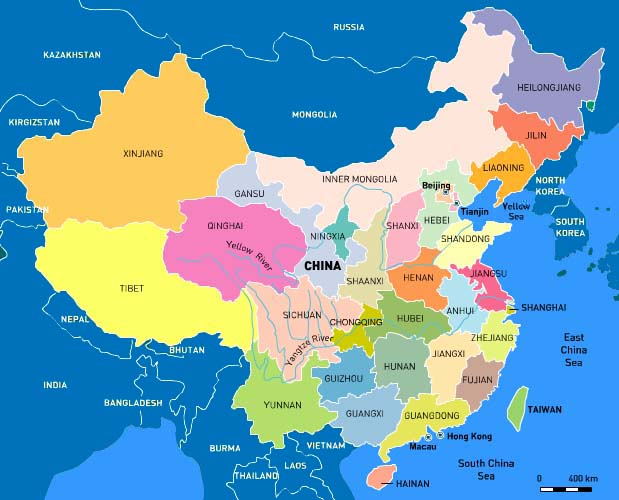
At some point during the trip Jim and his family were in the mountains in a rural area along the Tibetan border, and he was engaged in a conversation with his 20-something Chinese guide about reading and censorship. The guide was telling him about a book that he wanted to read, Wild Swans: Three Daughters of China, but the Chinese government had banned it, which is not a total shocker given Amazon’s review:
In Wild Swans Jung Chang recounts the evocative, unsettling, and insistently gripping story of how three generations of women in her family fared in the political maelstrom of China during the 20th century. Chang’s grandmother was a warlord’s concubine. Her gently raised mother struggled with hardships in the early days of Mao’s revolution and rose, like her husband, to a prominent position in the Communist Party before being denounced during the Cultural Revolution. Chang herself marched, worked, and breathed for Mao until doubt crept in over the excesses of his policies and purges. Born just a few decades apart, their lives overlap with the end of the warlords’ regime and overthrow of the Japanese occupation, violent struggles between the Kuomintang and the Communists to carve up China, and, most poignant for the author, the vicious cycle of purges orchestrated by Chairman Mao that discredited and crushed millions of people, including her parents.

Most people in China can’t get that book any more than they can do a Google search for information about Tienanmen Square.  But Jim decided to put his Kindle DX to the test.

He typed the title of the book onto his Kindle keyboard, used the 5-way to select "search store" to the right of the search field, clicked on the "buy" button, and Wild Swans: Three Daughters of China was on his Kindle in, you guessed it, less than 60 seconds.

I will leave you to draw your own conclusions about the potential power that the Kindle could have in China, or about forces may have conspired to make the Kindle unavailable in China. It’s available in Taiwan and Hong Kong and Viet Nam, and apparently it is not a problem for a U.S. citizen to carry a Kindle into China. At other times during our conversation Jim spoke vividly about how the economic changes fostered by the Chinese government have helped to lift 400 million people out of poverty during the past couple of decades, and it seems at least a bit ironic that some of this economic power now and in the future is or will be tied to the development and production of new technologies like the Kindle and the iPad. I learned this week from UPS worldwide tracking information that my iPad, like thousands of other iPads, is in fact on the way here from Shenzen, China, and of course there were stories this week about a "gray market" for Kindles in some Chinese cities.

So Kindles are traveling to China, Kindles are being sold in China, Kindles are connecting to the Whispernet in China, and Kindle Killers are being shipped here from China. It was clear to Jim that for the vast majority of Chinese people, the human rights issues for which Westerners point fingers at the Chinese government are far, far less important than the sweep of economic change and its effect on the quality of life for hundreds of millions of Chinese.

But the Kindles? They may have minds of their own.

This is a reprint from Stephen Windwalker’s Kindle Nation Daily blog.

How To Be Your Own Best Editor: Part III

This is the third and final post in a series of posts about what I did to ensure that the historical mystery I just published, Maids of Misfortune, was professionally edited. Part I detailed how I worked to develop the skills to be my own best editor. (A necessity for an indie author, but as discussed in numerous blogs, increasingly a necessity for traditionally published authors as well.) Part II described the actual process I went through as my own developmental editor.

This third post enumerates what steps I followed to substitute for the copy editing that traditional publishing houses provide. Again, I want to thank Alan Rinzler for his definitions that distinguished between the job of developmental editors and copy editors, “who take a manuscript that has already been developed and correct the spelling, grammar, punctuation, and in some cases fact-checking.” Choosing a freelance editor
 
In order to ensure I had a clean, well copy-edited final manuscript I followed these steps:
  1. Read my manuscript through, focusing on grammar and punctuation.
  2. Read my manuscript out loud to someone else.
  3. Assembled a team of readers with different strengths to copy-edit for me
  4. Corrected the manuscript after first printing-when new errors were found
Step One
When I was doing my developmental editing I had looked for basic grammatical errors, but I knew that I was missing things, particularly in those sections I was rewriting extensively or writing for the first time. So, after all the rewriting was done, I went through the manuscript word by word, checking every comma, looking for misplaced modifiers, scrutinizing the rhythm of every string of dialog, and making sure that every rule of good writing was followed consistently.
 
In this process I used Microsoft Word’s little squiggly red and green lines that indicated that there were misspelled words or grammar problems to double-check my own editing.  I also used the useful search and replace abilities of Word to make sure that I had caught all the places where I still had two spaces instead of one between sentences. This function was additionally useful to check that the name changes I had made from previous drafts had been applied.
 
Step Two
Last year I attended the 2009 California Crime Writers Conference, and one of the most frequently offered pieces of advice at that conference, by writers, agents, and editors, was to read your manuscript out loud. I had never done this before, but who was I to ignore the one point every professional in the business actually agreed on.
Serendipitously, soon after I returned from that conference, a friend asked if I would like to read my manuscript to her. Years earlier she had been part of a writers group that read their work aloud and she had enjoyed the process. As a result, over 4-5 lovely sessions lasting several hours each, I read Maids of Misfortune to her. This was a wonderful experience.
 
First of all, I got immediate unfiltered feedback. She was able to tell me at the end of each chapter if she felt confused or if the story dragged. Even better, I could see when the writing was working. When she laughed at the right places, shivered over a tense scene, professed to be unable to tell who the murderer was, and even delayed leaving so I could read “just one more” chapter before she had to go, I got the kind of positive feedback a writer seldom gets. This alone was worth the sore throat from hours of reading aloud!
 
I also discovered a number of bad writing habits. I found little repetitive phrases and words that I had never noticed. Yet, when you say a word or phrase out loud, over and over, they come right out and hit you in the face. I also found sentences that were grammatically correct, but still too long or awkward. I found missing words and punctuation that my mind had simply filled in when I read to my self. It was a humbling but very useful process-and one I will never forgo in the future.
 
At the end of this process I had the manuscript as clean as I could make it. Nevertheless, I realized that to be my own best editor, I also needed to turn to others for help at this stage. No one, even a professional copy editor, can catch every error on their own.
 
Step Three
My next task was to assemble a team of readers. While I had asked members of my writers group and friends to read my manuscript before, this was the first time I was asking them to copy edit. In the past I had actually asked them not to do so–since I was most interested in hearing their opinions about characterization, plot development, and voice. I had been able to do this in part because I had confidence that my basic writing skills were good and that I wasn’t asking them to read a hopelessly messy draft.
 
If you are a beginning writer, you might want to ask someone whose writing skills are superior to yours to read and closely edit at least a portion of your work. This will tell you how much cleaning up you should do before asking anyone else to read the manuscript.
 
I think that a writer has to be careful not to abuse the friends, family, and other writers that they turn to for help. This means making sure you have solved the problems you do recognize before asking anyone else to read your work. It also means being careful not to over use readers. Reading another person’s manuscript and writing up thoughtful comments is hard work. While friends and family usually love the idea of being part of the process–if you ask too much of them, there will be diminishing returns. Each time they read a draft, the less they will see wrong with it–or conversely–the more frustrated they will become if they didn’t see improvement.
 
I was fortunate because my writers group hadn’t seen a copy of my manuscript in over four years, and some of the other friends I turned to hadn’t seen a copy in over ten years. As a result, I knew that they would be coming fresh to the work. I was also confident that the draft they were reading was so improved from the previous drafts that I wasn’t asking them to do anything very painful.
 
However, again, if you are just starting this process–you might think about keeping some people who have expressed interest in reading your work in reserve for subsequent readings.
I was also fortunate in having potential readers with different strengths–a kind of editorial board with multifaceted skills and experiences. I would recommend that all writers think about developing this sort of support group.
I gave my manuscript to people:
  • Who are published writers (and this can mean non-fiction articles and books, short stories, fiction)
  • Who edit other people’s work (teachers, editors, administrative and research assistants)
  • Who teach writing (high school, college, private workshops)
  • Who read extensively in my subgenres (mystery, romance, and historical fiction)
  • Who are knowledgeable about my subject material (Nineteenth century and Women’s history)
  • Who are good with detail
In all, I had six people read my manuscript. Many of them had overlapping areas of expertise. For example, all three of the members of my writer’s group are published authors, teach, and read mysteries. Did I need all six? I think so. While all of my readers caught small typos (interestingly about half of the errors were caught by more than one reader–the rest of the errors were caught by single readers–and therefore wouldn’t have been caught without their input.) More importantly, my reader who loves light romantic fiction was able to point out the few places where I undercut the hero–something the rest of my readers wouldn’t have noticed, while those readers who were historians were important resources to ensure I didn’t get the facts wrong.
 
After going through the responses from all these readers, and making all the needed corrections and changes, I had a polished, well-edited manuscript that was ready to publish. However, it turned out there was one final step.
 
Step Four
After I published my book (as an ebook and print on demand paperback), and the first few friends began to read it, one of those readers found typos. Twenty-two to be exact. I felt terrible. How could I or my selected board of editors not have found them?
 
But, being an indie author who has self-published. I was in a vastly superior position to an author who had gone the traditional route. I didn’t have to wait for a reprinting (which might never come) to make corrections. I could take my self-published work back, make the corrections, and reissue a corrected copy (or electronic files), with only the loss of about 2 weeks. And in the future, I will make sure that reader–the one who turns out to be very good with detail—gets to read the paper proof copy of any book I write, before I publish, so in the future I may get to skip step four.
 
In conclusion
As I look back at these three posts, I confess there really isn’t much original material, since most of what I did has already been discussed in the numerous blogs that give advice about writing and publishing. However, I hope readers have found some benefit in a detailed description how one author has tried to follow that advice. I also hope that the message has been clear that those of us who are independent authors and publishers must take responsibility for the professional level of our work, but that this can be done without expending a great deal of money.

This is a reprint from M. Louisa Locke‘s The Front Parlor blog.

Can You Succinctly Pitch?

suc·cinct
–adjective
1. expressed in few words; concise; terse.
2. characterized by conciseness or verbal brevity.
3. compressed into a small area, scope, or compass.

As writers we always try to be as brief and succinct in our writing as possible, while maintaining a clear voice and interesting, beautiful prose. It’s the eternal difficulty of not writing in too flowery a way, or using “purple prose”, yet still making our stories more than just a technical, clinical telling of a yarn. We want to be recognised for our writing style, for our ability as wordsmiths as much as for our ability as storytellers. The ultimate aim is to create a fantastic story, brilliantly told. Brevity in delivery, while waxing lyrical in the right places, is something of an elusive holy grail in writing. It’s something I constantly struggle with and constantly try to improve.
 
Then today I saw this post at Nathan Bransford’s blog. In the little video clip he talks about how important it is to know how to pitch your book. As an agent, he needs you to be able to explain the essence of your book to him thoroughly and succinctly; he says in 200 words or less. The thing he said that rang out loud for me was, “What are you gonna to tell people at parties that your book is about.”
 
Whenever I meet new people and we get to the inevitable What Do You Do? part of the conversation, I always end up talking about martial arts and writing – that’s what I do for a living. With the writing it always comes down to the fact that I have a couple of novels out and people always ask, “Really? What are they about?” I want to tell people. I want them to understand and stay interested, who knows, they may even go out and buy a copy later if I talk it up well. But even if it’s not their thing, that doesn’t matter. It’s part of a conversation, part of what I do and what I am and I want people to be interested. Folk’s eyes glaze over really quickly when you start um-ing and ah-ing, trying to nail the story.
 
Of course, it’s hard. For me to describe a 120,000 word novel in a few lines is quite an ask. But that’s what a pitch is. I’m lucky right now, as I have two novels out and don’t need to pitch them. But I’m working on a third. I’ll have to pitch that eventually. I have to be able to nail a short summary of every book I write. If I can get the one or two sentence “party description” down, then a 200 word pitch summary should be a piece of cake, right?
It’s a bit like the back cover blurb, which is always an arse to write. But that’s different, as it’s directly selling the book to an interested person that’s picked it up for a look. Here’s the back cover blurb for RealmShift, for example:
Isiah is having a tough time. The Devil is making his job very difficult.
 
Samuel Harrigan is a murdering lowlife. He used ancient blood magic to escape a deal with the Devil and now he’s on the trail of a crystal skull that he believes will complete his efforts to evade Lucifer. But Lucifer wants Samuel’s soul for eternity and refuses to wait a second longer for it. Isiah needs Samuel to keep looking for the crystal skull, so he has to protect Sam and keep the Devil at bay. Not for Samuel’s sake, but for all of humanity.
 
RealmShift is an engrossing Dark Fantasy thriller; a fascinating exploration of the nature of people’s beliefs and their effect on the world around them. Magic, action and intrigue, from dank city streets to the depths of Hell and beyond.
Here’s the MageSign back cover blurb:
Three years have passed since Isiah’s run in with Samuel Harrigan and the Devil. He has some time on his hands – a perfect opportunity to track down the evil Sorcerer, Harrigan’s mentor. It should have been a simple enough task, but the Sorcerer has more followers than Isiah ever imagined, and a plan bigger than anyone could have dreamed.
 
With the help of some powerful new friends Isiah desperately tries to track down the Sorcerer and his cult of blood before they manage to change the world forever.
 
In this long-awaited sequel to the highly acclaimed RealmShift, Baxter once again keeps a breathless pace and blistering intensity with gods, demons and humans entangled in magic and conflict. This is dark fantasy at its best.
Now sure, those paragraphs do a good job of describing the book from a back cover point of view, but can you imagine me suddenly blurting that out when someone says, “Oh, really, you’ve got a couple of novels out? What are they about?” I’d be sectioned.
 
I could potentially use them as a pitch, with a little tweaking, if I was trying to sell the books to an agent or publisher now. Thankfully that’s not necessary with these ones. But it got me thinking about that party description. I always feel like a dickhead trying to answer those questions, saying things like, “Well, it’s a bit hard to describe, but there’s this immortal dude that has to keep a balance among all the world’s gods… you see, this blood mage… well, the Devil, right, he’s a bit pissed off…” and so on. And that got me thinking, What if I could describe my book on Twitter? The 140 character or less description. So I’m working on fine-tuning my skills in describing both my current novels as an exercise in succinct pitching.
 
Here’s what I’ve got so far for the short, succinct party description. Or the Oprah’s couch description. Fuck it, aim high, I say.
RealmShift is the story of a powerful human called Isiah that has to shepherd an evil blood mage around the world to meet his destiny. If the blood mage doesn’t fulfil his destiny, humanity will suffer. The trouble is, the Devil is after the blood mage, so Isiah has his work cut out. There’s lots of magic, mayhem and fighting. It’s a dark fantasy thriller.
That’s just 65 words. Just like the back cover blurb would make me sound mad if I came out with it at a party, the description above would be weird on a back cover. It’s too conversational, but that makes it perfect for casual company.
 
For MageSign I have this:
MageSign is the sequel to RealmShift – they make a duology. In MageSign, Isiah decides to track down the teacher of the nasty blood mage from RealmShift and prevent him teaching any more evil prodigies. Only Isiah discovers that this teacher has a powerful cult of blood mages under his command and they’re planning something massive. Again, lots of magic and action, it’s a dark fantasy thriller like RealmShift.
That’s 69 words, again, conversational, relaxed, not too long. If people are still interested and asking questions after that then I can spend time going into as much detail as necessary. If, as is often the case, they’re “not really into all that sci-fi stuff” then fine. I’ve said enough and don’t look like a tool that has trouble describing books he wrote himself.
 
The Twitter description is much harder. Trying to distill those two paragraphs above into two 140 character bites is tough. The RealmShift one is currently 358 characters, and that was as brief as I could make it. The MageSign one is 425 characters.
 
So far, I have this for RealmShift:
It’s about a powerful human that has to shepherd an evil blood mage to meet his destiny, or humanity suffers. It’s a dark fantasy thriller.
139 characters. But it doesn’t mention the key aspect of the Devil chasing them around and it cheats by say “it’s” instead of “RealmShift is”, so without a question like, “What’s your first book about?” it falls down.
For MageSign there’s this:
Isiah tracks down the teacher of the blood mage from RealmShift and discovers that he has a cult of blood mages planning something massive.
139 characters.
Again, it presumes a question has been asked, which is kind of cheating. Another option would be working it like this:
RealmShift: A powerful human has to shepherd an evil blood mage to meet his destiny, or humanity suffers. A dark fantasy thriller.
130 characters.
MageSign: Isiah tracks down the teacher of the blood mage from RealmShift and discovers that he leads a cult planning something massive.
136 characters.
These sound more like ads and less conversational, but they do get the very basic essence of the books they’re describing. There’s so much missing, so much else I want to say about these 120,000 word things I sweated and agonised over, but in the first instance I need brevity.
 
I’ll revisit this subject periodically with these and all future books and try to refine these things. After all, it is fairly important for me to be able to accurately describe books I’ve written without sounding like an idiot. Plus, this exercise is very useful in developing my skills at pitching, which I’ll certainly need throughout my career as a writer.
What do you think? Have I nailed the descriptions well? If you’ve read them, how would you describe RealmShift and MageSign in 140 characters or less? And if you’ve written, are writing or are planning to write a book, do you know the essence of it well enough to describe it to someone at a party? Leave your own examples in the comments if you like and practice your pitching skills.
 
 
This is a cross-posting from Alan Baxter‘s alanbaxteronline blog.

The Art of Critiquing

It’s come to my attention that there are a lot of us who don’t have a clue how to honestly critique. We can tell you we like your story (or hate it), but we leave out the most important part — the why.

Critiquing isn’t just about misspellings and bad punctuation. It’s about understandability, what makes a story something you just can’t put down. Or, as Kelly Hart put it in her post Critiquing, “[I]t is about trying to help the story creator reach the full potential for that story.” She goes on to remind us that each story is the writer’s “baby” and “[f]or this reason you should try to be as diplomatic as possible, nobody likes to be told bad things about their baby.” (And I can say that’s true from both the mother’s and writer’s POV)

One way to bone up on the hows of critiquing is to just do it. Receiving critiques and critiquing others’ works makes a writer a better writer because  it “improves your own editing eye,” according to blogger Penny in her post 
The Art of Critiquing, Pt. 1. I have to agree with that. As I’ve read and edited others’ works, I’ve noticed problems in my own writing.

Of course, getting critiques (honest ones, especially) can be difficult. I’ve mentioned Critters as a place to find other authors willing to give good criticism, but I recently read about another called Absolute Write. After reading the Newbie section I think it sounds like a great place, so long as you can handle a little heat. Apparently there have been some, as the moderator put it, knock-down-drag-out arguments on things as silly as the appropriate use of serial commas.

Of course, my suggestion before putting your work out there for criticism, is to edit it at least once yourself. Track down as many of those niggly little misspellings and punctuation errors as you can. And don’t forget about grammar. While in some cases grammar rules can be bent, it’s best not to break them without at least knowing them. For that I would recommend a fantastic little book called Grammar Girl’s Quick and Dirty Tips for Better Writing.

Regardless of where you find your critics (or where they find you ;) ) try to keep in mind what you need to improve your writing, then reach out to your fellow traveler to give the same in return on The Road to Writing.

This is a reprint from Virginia Ripple‘s The Road To Writing blog.

Catching Up With My Publishing Progress

It’s been a while since I’ve documented my publishing journey, so this post is to catch up. I’ve put the 3rd mystery, Border Wars, up on Smashwords. The title refers to two time frames: just before & during the Civil War along the Kansas and Missouri border and during modern times between India and Pakistan. Cliff has done a magnificent ebook cover shown below:

Border Wars Cover The book features the murder of an officer from India by a Pakistani bayonet while attending the US Army’s Command and General Staff College (CGSC) at Ft. Leavenworth. The Pakistani officer is arrested for the murder and Enos is hired to prove his innocence. The 4th mystery, Dog Days of Summer, will be going up as soon as Cliff has a chance to work on its cover.

In the meantime, I had 50 copies of Quad Delta printed by my local POD digital printer source while I worked through Lightning Source’s rather complex registration and application process. BTW, remember to get a sales tax certificate to sell direct to customers if you live in a sales tax state. If that number isn’t provided to Lightning Source, they will have to charge you sales tax. I ordered a proof of one book, which arrived yesterday for $30 including shipping. In addition, I ordered a minimum order of 38 (the number that will fit into one of their packing boxes) just to get the ball rolling. My local printer uses while paper and does not coat the cover with plastic. Lightning Source does coat. In addition, I asked for a cream colored paper stock, which is easier on the eyes. In polling customers with a comparison of the two book versions, all much preferred the Lightning Source version.

In all, it was more expensive to go through Lightning Source initially because of a $75 setup fee and the $30 proof; however, once those charges are paid, their per book price is cheaper than my local source, even with shipping charges. Their books are also better looking. The biggest advantage of them, however, is getting your books into Ingram’s distribution system and into their monthly catalog.

Marketing

That’s it on the production side. Now let me address marketing. This Saturday from 11am to 1pm, I will be conducting a book chat and signing at my bookstore, The Book Barn. I’ve sent out an announcement email to 1,500+ of our active customers. I’ve started handselling at our store and sales have been steady. After this weekend, I will be placing my mystery in gift shops and museums around the area. Like my history of Leavenworth book, these mysteries will have long legs because of the large number of visitors and families moving in and out of our military community. I will also be seeking to gain distribution through Big River Distribution of St. Louis, who distribute books regionally.

As I gain a toe hold in our region with signings in Kansas City and other communities, I will then branch out nationally with emails, bookmarks, and postcards to independent bookstores throughout America. I will also expand to the military officer market with display and classified ads in the Army Times. Unlike many works of fiction, mine will have validity for much longer than the average novels, so I have the freedom of time.

If my mysteries begin selling steadily, I will then be encouraged to take on other authors who are willing to write to my specific standards that will create a recognizable model of entertaining books written for readers who don’t have enough time to read as much as they would like. I will consider a number of genres.

This is a cross-posting from Bob Spear‘s Book Trends blog.