I Like Customer Reviews

In a previous post I wrote about a review I requested from Charlie Courtland for A Promise Is A Promise from my Nurse Hal series. Charlie is the author of Dandelions In The Garden and has a book review website: http://www.bitsybling.wordpress.com. I appreciated her good review and the fact that she put it on Amazon and www.goodreads.com, where it could be seen by [many] people.

According to Steve Weber in his book Plug Your Book, Amazon has some regular customers who offer reviews on every book they read. One negative review can hurt sales. He says keep asking for reviews. The more often your book is reviewed, the less likely a minority opinion can dominate. Numerous authentic reviews lessen the chance that a single review can overtake and monopolize the Spotlight position.

Think about it. Reviewers have likes and dislikes when they pick a book to read. That may play a factor in their reviews. Plus, their intention is to review the book, so they’re naturally watching as they read for what they want to say. What would be great is to see more positive customer reviews on Amazon, but how do we go about getting buyers to respond? I want to know what people who buy my books think of them. Most book readers aren’t reading a book to find mistakes, but to be entertained. Those are the buyers most likely to leave a good review. Anyone who has bought an item from Amazon knows if you don’t leave a review in a certain amount of time, you get an emailed reminder. That means the book buyers don’t just forget. It’s always possible they didn’t like some of the books well enough to write a positive review so they decided not to write one at all.

As far as my books are concerned, I’ve gotten good reviews from ebay buyers and private sales. These are the buyers I was referring to who read my books for the entertainment value. I always make a point to ask buyers for a review so I’ll know how they liked my books. Most of them are glad to comply and all the reviews have been good. I know they aren’t just saying that. They like my books well enough that they want to buy another one.

I thought about how well my ebay buyers respond, and I had to wonder what was the difference between ebay and Amazon buyers. Maybe it has something to do with the reviews left by the experienced reviewers. Most book buyers couldn’t measure up to those detailed critique reviews with one of their own. Maybe buyers don’t know how to write a review they think would be all right. I can tell you from firsthand experience, I’m not good at giving a constructive review. When I was active on http://www.authonony.com I submitted Christmas Traditions and A Promise Is A Promise to get the opinion of other authors. Their reviews and thoughts were very complimentary and detailed, but I found it hard to review their books as well as they did mine. What I know for sure is I either like the books or don’t, and that’s based on the genre and the story in the books I like to read.

I write books I hope are stories people will like to read. These books make you laugh out loud sometimes, describe characters that remind you of someone, and you miss them when the story ends. Those are not my words, but words my customers have used to describe my books. So why is it so much easier to get ebay and private customers to give me positive reviews than it is to get them on Amazon?

Perhaps, there is another simple answer besides knowing how to write a review. On Amazon, customers don’t have contact with the author of the books. Sales are impersonal business transactions. On ebay and private sales I can reach out to customers to add the personal touches to my sales so they get to know me. I sign my books for buyers. I have their email addresses so I can let them know the book had been sent so they can watch for it, and I tell them I appreciate their business. I ask for a review, if they have time to contact me, after they read the books. I think they respond back, because I reached out to them. Many of these buyers have become my email pen pals. They email me to find out how soon another book will be published. I have email addresses on a mailing list so I can notify buyers when a book is for sale. I’ve never been a fan of mass emails. That to me is very impersonal. I know the process takes time, but I email each buyer one at a time. Besides, that way I can visit with many of them. Some of these buyers email me once in awhile to just to say hi. Makes me feel blessed to get to know so many wonderful people in the United States.

With this all in mind, I started two new discussions under Christmas Traditions in the Kindle bookstore on Amazon. The first one explains that I have decided to put my books on Kindle and that I hope the buyers like this book. There’s a short explanation about the use of Old English pronouns, because my book is a historical fiction. The second discussion is Reviews Needed For Christmas Traditions. Since I have sold many of these books on Amazon, I asked if the buyers could give my book a review. I explained I didn’t want or need a detailed review like the experienced reviewers give. It would be great if they could click one to five on the stars and just say they liked the book. That would be enough to encourage other buyers to give my books a try. Now I’m hoping that the customers find the discussion and read it.

I added three sample reviews for Christmas Traditions-An Amish Love Story from other buyers to give them an idea what I’m hoping for:

I had a hard time putting the story down. It has some interesting twists and turns as we follow the customs and false pride of the characters.

You are so descriptive. I felt the little thread of hope Margaret felt, but she didn’t see.

I enjoyed this book very much. You sure made the characters come to life and what a sweet love story you have told. I wondered if you may be thinking about writing a sequel to this book.

What more could any author ask for when the book is already published and in the bookstores? By then it’s too late for a detailed, constructive review if it’s not positive. Reviews as simple as the reviews above show other buyers the books are worth reading for the entertainment value of each one. So book customers on Amazon or other sites: speak up and let your favorite authors know how you feel about their work. Your opinion not only counts with other consumers, but it matters to the author.


This is a cross-posting from Fay Risner‘s Booksbyfay blog.

The New & Improved The Creative Penn: Resources Galore, Now Easier to Find!

New Resource Pages: Writing, Publishing, Book Marketing

Amazingly, [The Creative Penn] now has nearly 400 posts and nearly 3000 comments and I get emails every day with questions, so I thought it was time to add some better navigation options. I want this to be a really useful site for all who visit!

So, I have added a new Resources page that has links to my main content. It includes:

Writing – including FAQ like ‘How do I find the time to write?’ as well as creativity ideas, tips on how to write your book if you are just starting out, the psychology of writing and genres.

If you are writing a novel, you might like the page I have done tracking my own progress through my first novel, Pentecost.

Publishing – includes the publishing quadrant of traditional publishing, self-publishing, print-on-demand and digital publishing with ebooks.

Book Marketing and Promotion – includes author branding and platform building, blogging, social networking, podcasting, video, speaking, and other strategies including press releases, TV, radio and more.

Basically, I have found the best posts from the blog including top podcasts and included them on one easy page for reference per topic. I appreciate any comments on other questions you might have that are not answered there, and I will keep adding more info for you.

If you do enjoy the articles and podcasts on this site, please click here to sign up for free updates by email whenever a new post is published.

This is a cross-posting from Joanna Penn‘s The Creative Penn.

The Secret to Getting Great Book Reviews on Amazon

When consumers shop for books on Amazon.com and other online bookstores, many of them read the book reviews before they make a purchase. Even if they came to the site to buy a particular book, they may read the reviews to verify that they are making a good selection.


Positive reviews are a great selling point for all types of books, but they are especially important for nonfiction books, where consumers often compare several books on the same topic. Amazon actually encourages this, by displaying other similar books on your book’s sales page.

So, what’s the secret to getting great book reviews on Amazon (besides writing a great book)? ASK people to post reviews and make it EASY for them by providing a link to your book page on Amazon.com. 

Amazon is by far the largest online bookseller. Anyone who has an Amazon user name and password and has purchased any product on Amazon.com can review your book there, even if they purchased your book elsewhere or got a free review copy.

Here are several easy ways to invite people to post reviews for you: 

  • When you send out review copies to colleagues and influencers seeking testimonial quotes, ask them if they will also post the testimonial or a brief review on Amazon.
  • Any time someone writes a positive review of your book, ask them to post it on Amazon. Before contacting the reviewer, check to see if they have already posted the review.
  • When you receive an email or other correspondence praising your book, reply with a request to post a book review on Amazon. If someone has taken the time to write to you about your book, they are obviously a fan and will probably be happy to post a book review for you. Here’s a sample message:

Thanks so much for your note. I love getting feedback from readers and I’m glad that you enjoyed the book.

I would really appreciate you taking a few minutes to post your comments or a brief review on my Amazon page at www.Amazon.com/mybookpage. Look for the "customer reviews" section about halfway down the page and click on the "create your own review" button to the right. Or, use this link to go directly to the review form: http://yourshortlink.com.

If you’re a Barnes & Noble customer, click the "write a review" button at www.BarnesAndNoble.com/mybookpage.

You can create a link directly to the book review form by clicking on the "create your own review" button and then using a URL shortening service to create a short link to the form. To save time, save your review request in a Word document and copy and paste it as needed or set up an alternate signature in your email program containing this text. 

AmazonReviewer

  • You can ask family members and friends to post a review (or they may offer to do so), but be careful. Anyone who shares your last name (unless it’s a really common name) will look like a relative. Also, you don’t want the reviews to sound contrived. For example, posting something like "My friend Susan has written a great book and everyone should read it" is not a good idea. And of course you want these folks to post an honest opinion – you might ask them to write a couple of sentences stating what they liked best about the book.

Should you write a review of your own book? Maybe, but think very carefully about what to say. I don’t recommend writing a review talking about how great your book is or making a sales pitch. Doing so may turn people off or cause them to question the validity of your other reviews.

However, you might want to consider writing a "review" as a way to provide some information that’s not included in the book description listed on Amazon.com. For example, you could mention your inspiration for writing the book or mention resources available on your website, such as a free sample chapter or book club discussion guide. I suggest keeping it low key and avoiding blatant sales pitches.

Positive book reviews on Amazon and other online bookstores can boost your sales – take the initiative to ask for reviews and you’ll be rewarded. 

Savvy Tip: You may also want to use this email to ask for permission to use a portion of the customer’s message to you as a testimonial quote on your own website. In your request, I suggest pulling out the portion you want to use and formatting it as a quote so the customer can see exactly what it will look like.

  • Another possibility is to seek out reviewers who have reviewed books on similar or related topics or in your genre on Amazon and ask them if they are interested in reviewing your book. You may be able to get the reviewer’s contact information by clicking on their name and looking for their website or blog address on their Amazon profile. Below is an example of how reviewer information is listed on Amazon.com. Anyone who has "Top 500 Reviewer" beneath their listing is an especially active reviewer.


This is a reprint from Dana Lynn Smith‘s The Savvy Book Marketer.

It Isn't Wise to Draw Lines in the Sand That Ultimately Can't Be Defended

This post, from Mike Shatzkin, originally appeared on the Idea Logical Blog on 7/25/10.

Apologies in advance for a much-longer-than-usual post.

It is not like the publishers haven’t seen the ebook royalty fight coming. On a panel he and I were on together in March of 2009, John Sargent, the Chairman and CEO of Macmillan, identified ebook margins as the critical issue for publishers going forward. Even though ebook sales at that point were financially insignificant and the growth surge that we’ve seen in the past 15 months wasn’t yet evident, Sargent expressed the belief that ebooks would be the future and that publishers had to be diligent to preserve their margins in the digital environment.

There are three moving parts to the publishers’ margin equation for ebooks.

The one that I think Sargent was thinking most of at that time is ebook pricing. If “misguided” publishers or market forces drive down prices a great deal, that could threaten publishers as sales migrate to digital.

The second one, which was then and remains today a focus of publishers, is the potential consolidation of sales channels so that power moves from a multitude of publishers to a small number of, or perhaps a single dominant, point of contact with the customer. Until the Nook came along from B&N last winter and the iPad from Apple in the spring, Amazon and Kindle looked dangerously close to being able to dictate both pricing and margin in the ebook supply chain.

And third, of course, is the amount of the consumer spend that is taken by the authors: the royalty.

The ebook pricing and channel consolidation issues have been front and center for the past year, ever since Dominique Raccah of Sourcebooks put “windowing”, which had been tried before for ebooks, in the spotlight as her solution to the perceived damage deeply discounted ebooks could do to print book sales, particularly of the hardcover edition. After she announced that she was holding back the ebook for Bran Hambric, similar announcements came from other publishing houses. At that time, only a year ago, Amazon was the dominant ebook vendor with Kindle sales amounting to 80% or more of the ebook sales for narrative trade books.

But the introduction of Barnes & Noble’s Nook device began to eat into Amazon’s hegemony last winter as 700 B&N stores started pushing a Kindle-type experience on their millions of customers. Then, in April, Apple introduced the iPad and changed the game two ways.

First of all, their tablet computing device, which can serve as a larger-than-a-cellphone screen for an ebook reader, started adding tens of thousands of new device-equipped potential book customers every day!

But along with the device competition, the iPad and its iBooks platform added a new business model called Agency. And, under Agency, the pricing of ebooks at retail theoretically becomes standardized across the web, not subject to discounting by individual retailers. This visibly upset Amazon, which appeared to pick a fight with Macmillan over the terms. It looked to those of us with no inside knowledge of their conversations to be an attempt to bully publishers to give up the Agency idea. In retrospect, this was perhaps a bad fight to have picked. Amazon’s threat was to stop selling the print editions of titles from those publishers who sold ebooks on Agency terms. Since five of the top six publishers were moving in that direction, and none of them blinked, Amazon had to, in their own words, “capitulate.” (On the other hand, we are not aware of any other publisher, beyond the Big Five, to whom they also capitulated, so the final score on this fight isn’t in yet.)

So it would seem that the big publishers have solidified two of the major components of their ebook margin. With their help, consolidation in the ebook channel has been reversed and they’ve taken critical steps to control prices to the consumer, while ebook sales have continued to rise at an accelerating pace.

But there remains this tricky question of royalties.

Read the rest of the post on the Idea Logical Blog.

I Like Customer Reviews

In a previous post I wrote about a review I requested from Charlie Courtland for A Promise Is A Promise from my Nurse Hal series. Charlie is the author of Dandelions In The Garden and has a book review website http://www.bitsybling.wordpress.com. I appreciated her good review and the fact that she put it on Amazon and www.goodreads.com where it could be seen by people.

According to Steve Weber in his book Plug Your Book, Amazon has some regular customers that offer reviews on every book they read. One negative view can hurt sales. He says keep asking for reviews. The more often your book is reviewed, the likely a minority opinion can dominate. Numerous authentic reviews lessen the chance that a single review can overtake and monopolize the Spotlight position.

Think about it. Reviewers have likes and dislikes when they pick a book to read. That may play a factor in their review. Plus, their intention is to review the book so they’re naturally watching as they read for what they want to say. What would be great is to see more positive customer reviews on Amazon, but how do we go about getting buyers to respond. I want to know what people who buy my books think of them. Most book readers aren’t reading a book to find mistakes but to be entertained. Those are the buyers most likely to leave a good review. Anyone that has bought an item from Amazon knows if you don’t leave a review in a certain amount of time, you get an emailed reminder. That means the book buyers don’t just forget. It’s always possible they didn’t like some of the books well enough to make a positive review so they decided not to make one at all.

As far as my books are concerned, I’ve gotten good reviews from ebay buyers and private sales. These are the buyers I was referring to that read my books for the entertainment value. I always make a point to ask buyers for a review so I’d know how they liked my books. Most of them are glad to comply and all the reviews have been good. I know they aren’t just saying that. They like my books well enough that they want to buy another one.

I thought about how well my ebay buyers respond, and I had to wonder what was the difference between ebay and Amazon buyers. Maybe it has something to do with the reviews left by the experienced reviewers. Most book buyers couldn’t measure up to those detailed critiqued reviews with one of their own. Maybe buyers don’t know how to write a review they think would be all right. I can tell you from first hand experience I’m not good at giving a constructive review. When I was active on http://www.authonony.com I submitted Christmas Traditions and A Promise Is A Promise to get the opinion of other authors. Their reviews and thoughts were very complimentary and detailed, but I found it hard to review their books as well as they did mine. What I know for sure is I either like the books or don’t, and that’s based on the genre and the story in the books I like to read.

I write books that I hope are stories people will like to read. These books make you laugh out loud sometimes, describe characters that remind you of someone, and you miss them when the story ends. Those are not my words but words my customers have used to describe my books. So why is it so much easier to get ebay and private customers to give me positive reviews than it is to get them on Amazon?

Perhaps, there is another simple answer besides knowing how to write a review. On Amazon, customers don’t have contact with the author of the books. Sales are impersonal business transactions. On ebay and private sales I can reach out to customers to add the personal touches to my sales so they get to know me. I sign my books for buyers. I have their email addresses so I can let them know the book had been sent so they can watch for it, and I tell them I appreciate their business. I ask for a review, if they have time to contact me, after they read the books. I think they respond back, because I reached out to them. Many of these buyers have become my email pen pals. They email me to find out how soon another book will be published. I have email addresses on a mailing list so I can notify buyers when a book is for sale. I’ve never been a fan of mass emails. That to me is very impersonal. I know the process takes time, but I email each buyer one at a time. Besides, that way I can visit with many of them. Some of these buyers email me once in awhile to just to say hi. Makes me feel blessed to get to know so many wonderful people in the United States.

With this all in mind, I started two new discussions under Christmas Traditions in Kindle. The first one explains that I have decided to put my books on Kindle and hope the buyers like this book. There’s a short explanation about the use of Old English pronouns, because my book is a historical fiction. The second discussion is Reviews Needed For Christmas Traditions. Since I have sold many of these books on Amazon, I asked if the buyers could give my book a review. I explained I didn’t want or need a detailed review like the experienced reviewers give. It would be great if they could click one to five on the stars and just say they liked the book. That would be enough to encourage other buyers to give my books a try. Now I’m hoping that the customers find the discussion and read it.

I added three sample reviews for Christmas Traditions-An Amish Love Story from other buyers to give them an idea what I’m looking for.

I had a hard time putting the story down. It has some interesting twists and turns as we follow the customs and false pride of the characters.

You are so descriptive. I felt the little thread of hope Margaret felt, but she didn’t see.

I enjoyed this book very much. You sure made the characters come to life and what a sweet love story you have told. I wondered if you may be thinking about writing a sequel to this book.

What more could any author ask for when the book is already published and in the bookstores. By then it’s too late for a detailed, constructive review if it’s not positive. Reviews as simple as the reviews above show other buyers the books are worth reading for the entertainment value of each one. So book customers on Amazon or other sites speak up and let your favorite authors know how you feel about their work. Your opinion not only counts with other consumers, but it matters to the author.

Secrets to Fix Your Novel's Plot

Listen to a PODCAST of this article. 

Of all the necessary components to a well-received NOVEL, plot is among the top three. Should your PLOT sag at any point, you’ll find the entire novel lacks the intensity needed to make it onto the best-seller lists.

 
There are three major areas that tend to drag down your plot. They are:
 
1. The Beginning is Too Slow
2. The Middle Drags
3. The Ending is Predictable
 
Let’s look at solutions to each of these common problems.

The Beginning is Slow 

If your plot, those events that happen to your major characters, stutters from the outset of your novel, it’s probably because you’ve set too low a standard for your characters. There’s nothing to hook your readers.
 
To fix this, think of how you can make things worse for the major character. What will cause him the most angst? Try a bit of mind-mapping or, as they called it in my day, brainstorming. Just allow those nefarious ideas to ramble around into your mind and see if anything jumps to the fore. The more ideas you conjure, the better the odds the best idea will appear.

Keep this first section simple. Incorporate lots of conflict but not too many people. One character is good, two are ample.

Make this situation self-explanatory. If you spend a lot of your word count to bring people up to speed as to what’s happening, it’ll make your opening drag. That is, consider a great deal of action and dialogue. Descriptions aren’t necessary and don’t add much here.

Another method by which to pump up the start of your novel is to begin with or create a new motivation for your hero. What causes him to do the things he does? That might get your reader’s [interest] to flow. 

The Middle Drags

Should your novel suffer the dreaded sagging middle, the general secret is to inject additional conflict, more confrontation. Just be sure you add conflict and not just action. (Conflict is your character’s emotional response to action.) 

You might also add a plot twist. Take the story in a new and unexpected direction.
 
You can also introduce a major, yet unexpected, character. Just make sure he’s logical and necessary to the story.

Another technique to prop up your sagging middle is to introduce additional motivation. For example, if at the start of your novel your hero hates women, in your sagging middle your reader may find he actually hates women with tattoos. They also need to find out why he hates this "brand" of woman.

The Ending is Predictable

The third typical problem is when everyone sees the trees long before they come upon the forest.

You can fix this issue in a number of ways. First, like the method with which we fixed the sagging middle, add a new twist. Brainstorm a number of potential endings then pick the one that feels best to you. Be sure to insert this twist far enough back in your novel so it works into your plot with ease. If you just plug it in at the end, it’ll look contrived.

You might also survey your ending to see if you’ve spent too much time explaining loose ends and the like. This often leads to too much narrative and not enough excitement.

You may wish to ensure there are no coincidences at this part of your novel. Your ending must follow that trail of crumbs you left in the preceding parts of your novel.

With a little planning, most plot errors can be corrected. Spend some time with an outline and see what happens.


Did any of you have plot issues with your novel? How did you fix them?

Until we speak again, know I wish for you only best-sellers.


This is a reprint from C. Patrick Shulze‘s Author of Born to Be Brothers blog.

Around the Kindlesphere: Two Very Smart People Weigh in on the Idea of Literary Agents Bypassing Publishers

I’ve already had my say in the three posts linked [at the end of this post] on last week’s big news, but there are plenty of other intelligent points of view to choose from. Two of the smartest people with fresh things to say about changes in the world of books and publishing are author J.A. Konrath and publishing industry consultant Mike Shatzkin. I don’t agree with them on every word, but their most recent posts on this topic are well worth the time it takes to read them if you have an interest in these matters.

My only real quarrel with Joe Konrath’s post is his concern that a literary agent who becomes a publisher is engaged in conflict of interest:
Wylie is an agent. His job is to sell his clients’ work. If he is also the publisher of his clients, there is a HUGE conflict of interest there, as well as some ethical considerations. 
My take there is just that all the lines are changing and blurring so quickly that I don’t see this as any more significant a conflict than, say, booksellers becoming publishers, publishers become booksellers, or authors becoming booksellers and publishers, all of which is happening. It is all part of the process of experimenting with different kinds of, excuse me for the 75-cent word, disintermediation, as we all try to become more efficient and effective and making better, stronger connections between authors and readers.
 
The biggest flaw that jumped out at me right from the start of Shatzkin’s post is an error of omission. He says that the "three moving parts to the publishers’ margin equation for ebooks" are (1) ebook prices, (2) the potential consolidation of sales channels that could occur through Kindle domination of ebook content market share and, presumably, the failure of brick-and-mortar bookstores, and (3) author royalties. I think that he — and many who are looking at these issues from the Big Six publishers’ point of view — have structured their viewpoints so that they are failing to recognize the importance of another significant moving part, which is the potential decline of Big Six content sales relative to the content provided by other authors and publishers.
 

But once you get beyond that problem, Shatzkin provides the brilliant if obvious solution to the whole mess.
 

There’s a very simple, clear policy they could declare that would make this whole issue go away. Maybe there are one or two already acting this way, but it would be nice if even one publisher would just say this:

“Our policy for all new titles we sign up in the context of all our other standard terms is that we pay 25% royalty on ebooks. But for those books on our backlist which a) have earned out their advance and b) have ambiguity in their original contracts making it unclear what the royalty rate for an ebook should be, we will negotiate a higher royalty in recognition that a contractual element is being negotiated after the value of the copyright has been demonstrated in the marketplace and the risk profile has changed.”

Life is very complicated here. Every deal is different. There are costs and risks for authors and publishers trying to set up these separate ebook deals while a print backlist remains with a legacy publisher. The publisher might sue (although that opens up, for them, the danger that they’d lose, and the consequences of that could be dire.) At the very least, the author annoys the guys with the big checkbooks who are still the custodians of their print sales.

Although it is certainly possible that some authors or estates would want a publisher as talented as Jane Friedman remarketing their backlist, I still believe that if Open Road and others are offering 50%, publishers would find many authors receptive to avoiding the conflict if the publishers were offering 40%. But even if they had to pay 50% to some authors, the publishers would be doing themselves a favor by stating the position articulated above.
It may not be a total solution, but it could well put off the ultimate death of the Big Six publishers at least a few more years.

Related Posts:


This is a cross-posting from Stephen Windwalker’s Kindle Nation Daily.

Screenplay Writing Interview I

Because Shannon made such an informative comment on my last post, I asked her to please allow me to interview her. The result was so filled with great info, that I am going to split it into 2 or 3 posts. Shannon can be reached at http://www.shannonlarrant.com/ .

Should a writer convert a novel they’ve written into a screenplay?
That really depends on the novel and the writer. A novel written in the first person where much of the plot is explored inside the main character’s mind might not translate well to the screen without some serious rewrites.

Also, if you’re the type of writer who cannot look at your work objectively and rip it to pieces, then you’re probably not the best choice to write the screenplay for it. Being an author myself, I know that a little piece of my heart and soul gets put into everything I write. It can be difficult to look past that but you have to when you’re writing a screenplay. You have a very limited amount of time to convey your entire novel in. If you’re not prepared to cut out chunks of it, you’re not prepared to turn it into a screenplay.

What is the absolute first thing a writer should do when converting a novel into a screenplay?

Make sure you have the film rights for it. This is an absolute must. No legitimate production company will even think about looking at your screenplay without them.

Even if you’re converting one of your own novels, don’t automatically assume you have the rights. If you’ve published your story through a publishing company instead of going the self-publishing route, odds are you no longer have the right to film it without their permission.


There are thousands of novels out there where their copyrights have expired and they are now in the public domain. Anything in the public domain can be turned into a movie without written consent.

How would a screenwriter go about securing the rights to a novel?

There’s a couple different ways you can do this. Which one you choose is really dependent on your personal preference and budget. They both begin with contacting whoever presently holds the rights to the novel in question. If it’s a print novel you can buy off the shelves of a major bookstore, odds are the publisher listed on the inside front cover holds the rights. If it’s a self-published print or eBook, generally the author still has all of the rights to it.

 
There are two ways you can contact them; yourself or with the help of a lawyer. Personally, I think it’s more professional if you use a lawyer. Getting a lawyer might be a bit of an investment but you’ll show that you’re serious as a screenwriter and should be taken seriously in return.
Once you contact the rights’ holder of the novel, the next step is to see if they’re even willing to let you write a screenplay based upon it. If they’re interested, you then get to hammer out the details of the contract: how much the film rights will cost, how much say the original author has in the screenplay, how long you have the film rights for, etc …
If you haven’t consulted a lawyer before now, I highly recommend that you do so for this step. While you can create any sort of contract you want with the rights’ holder, a lawyer will be able to help you plan for any potential complications you might encounter down the road and ultimately protect you and your screenplay in the process.
There is nothing worse than pouring your heart and soul into converting a novel into a screenplay that you can’t use because you didn’t take the time to properly secure the film rights first.
 
Where can a screenwriter find works that are in the public domain?
Project Gutenberg (www.gutenberg.org) has thousands of books written before 1933 whose copyrights have expired in the United States. Creative Commons (www.creativecommons.org) also has a search feature that will allow you to find works you might be able to use, depending on the Creative Commons license assigned to the novel by the author.
Please note, this information is good for residents of the United States only. Laws vary in other countries. If you live outside of the US, be sure to check with the proper authorities in your country before using any work you find in the public domain to write your screenplay.
 
How would you go about converting a novel into a screenplay?
The first place I would start is by reading the novel. It should go without saying that a screenwriter would read the novel first but it’s amazing how many don’t. Even if it’s one I’ve written, I would take the time to read it from start to finish. I would try to get it read with as few interruptions as possible. You don’t want to rush through it but you don’t want to take weeks to get it finished, either.
 
 
After finishing the novel, I would set it aside for a few days. During that time, I would try not to think too much about it or the screenplay I plan on writing.
 
Once several days have passed, then I would sit down and think over what I read; jotting down any scenes, plot points, and characters that immediately come to mind. Odds are good if it’s something I remembered several days after I finished reading the novel, it’s something that’s integral to the overall plot and should be included in the finished screenplay.
 
With that list in hand, I would go back to the novel to fine tune the scenes, plots, and characters that need to be in the screenplay and flesh out anything else I had forgotten about but feel should be included.
 
What are some things writers need to keep in mind when writing a screenplay? Why are these important?
 
The average feature length screenplay is anywhere from 90 to 120 pages long. With one page of a screenplay equating to roughly one minute of film time, that means the average feature length film is anywhere from an hour and a half to two hours long. It’s very important to keep this information in mind while writing your screenplay because most production companies and screenwriting competitions will not accept screenplays that fall outside of the 90 to 120 page range.
 
Some will make exceptions if you are a few pages under or over but that’s it.
Even though your script most likely hasn’t been picked up for production yet, it’s still a good idea to write with some sort of budget in mind. Basically, you want to try to keep the budget small. It’s easier to spend more money if you have any leftover than it is to cut costs later. A smaller budget also means you can pitch your script to more production companies.
 
The absolute cheapest script to shoot is one that can be filmed with one camera, in one location, with a minimal amount of actors, costumes, and special effects. Obviously, these restrictions aren’t always practical for the screenplay you’re writing but it does help explain why adult films and B-horror movies tend to be the biggest money makers in the movie industry.
 
Generally, action sequences are quicker to shoot than dramatic ones, but can be expensive depending on the props and special effects involved. Unless you know the cast ahead of time, dramatic scenes can be a total crapshoot. You can get a shot done in one take or take all day just getting one good take of one shot. There are so many variables that come into play that can make dramatic scenes deceptively expensive and time consuming.
 
The best course of action is to be flexible and to try to keep a good balance between the two. If you have to write drama, keep the number of actors and locations to a minimum. If you need to go the action route, start small with fist fights and foot chases with dreams of going bigger if the budget allows for it later.
 
There will be much more to follow [in this series].


This is a cross-posting from Bob Spear’s Book Trends blog.

The Truth About Typos

They always win.

Always.

Yes, you can catch most of them if you try. If you’re the sporting sort you can hunt them down like the dogs they are and wipe them out with glee.

Sooner or later, however, one of them will survive long enough to make a fool of you.


I was reminded of this yesterday, shortly after I found a typo in an Agatha Christie mystery that was first published in 1926. It’s not clear (at least to me) from the copyright page when that particular paperback edition was produced, but in any case it was by no means a newly-minted story.

Here’s the offending sentence:

Normally she regards them as places where you
you get your feet damp, and where all kinds of un-
pleasant things may drop on your head.


Agatha Christie ~ The Murder of Roger Ackroyd

That kind of typo can be particularly hard to catch, although modern word processors are good at pointing out such redundancies. (Here’s a famous example of the same thing.)

Now, what caused me to remember that typos always win was not the Christie quote itself. No. Finding the Christie quote actually prompted me to feel cocky about my own ability to find such mistakes. An entire authorial empire exists around the Christie name, and yet the powers that be couldn’t catch that brazen error?

Pshaw….

No, what reminded me that typos always win was a tweet I re-posted shortly after finding the Christie typo. Because there was a typo in that tweet. In a written work limited to 140 characters.

Here’s the gaffe in all its glory:

A Fiction Workshop Primer: http://bit.ly/aGZ8AN Including a caution about workshops the require authors to read their stories aloud.

Yes, that’s right. I not only finger-fumbled my way through that short bit of copy, but I posted and re-posted the same mistake twice. That I happened to spot the error at all was due only to chance.

Maybe I was tired. Maybe I was worn out from writing other stuff — and I have been writing a fair amount of other stuff. Maybe something distracted me. Maybe, maybe, maybe.

It doesn’t matter what the reason was. I missed it. And the reason it doesn’t matter is that at some point the whole typo-identifying process becomes a statistical question. How much time and effort do you have to throw at any text in order to be certain there are no mistakes? Yes, I should have caught the blindingly obvious brain cramp in my tweet. But that tweet belongs to a day in which I produced at least 5,000 brand-new words aimed at various disparate objectives.

The real agony of the typo is not that it exists, but that it is a self-inflicted wound. It is the bloody blade in your finger at the cutting board. It is the liberated digit at your circular saw. It is the crumpled bumper of the car in front of you as you fiddle with your cell.

When a typo survives you have only yourself to blame. And yet you cannot win, no matter how many sanctimonious onlookers beg to differ. The best you can hope to do is limit the number of mistakes.

Looking back, I’m not sure I even re-read my tweet before posting. So that’s the first lesson. Re-read everything at least once.

If I did re-read it, I clearly did so in a distracted manner. So that’s the second lesson. Find a proofreading gear in your head and consciously drop into it for that specific task. Don’t allow your mind to wander or your eyes to speed over your words. Slow down.

If I did re-read it, and I did so in a focused manner, the only remaining explanation — short of a medical emergency — is that I was too tired to concentrate. And that’s the third lesson. If you’re tired, give serious, serious consideration to holding off on publication until you’re rested — even if what you’re writing is a single sentence.

Do your best. Just know that it will never be perfect. You may manage to put out a clean novel, or short story, or tweet, but sooner or later a typo will survive.

Make peace with that now.

And by the way. If you run across a typo in another writer’s content, feel free to drop them a line. I’ve done it plenty, and no one has had anything to say in reply but thanks.


This is a reprint from Mark Barrett‘s Ditchwalk.

Wylie Agency Circumvent Publishers on e-Books with Odyssey Editions (Updated)

The Wylie Agency has launched an e-book imprint, Odyssey Editions, which will initially publish twenty titles of literature’s most influential authors exclusively through Amazon’s Kindle Store. This is potentially one of the most significant pieces of news this year in the publishing world, and perhaps for some time to come if Wylie continues to expand and utilize the availability of their authors’ e-book rights.

Andrew Wylie pulled no punches last month when he was interviewed by Harvard Magazine. In the interview he said that the time had come to circumvent publishers and monetize unassigned digital book rights.


“We will take our 700 clients, see what rights are not allocated to publishers, and establish a company on their behalf to license those e-book rights directly to someone like Google, Amazon.com, or Apple.”

Today’s announcement by the Wylie Agency and Amazon delivers on that threat to publishers with the launch of Odyssey Editions for the Kindle. (see update from PW on Random House suggestion that the move by Wylie may be illegal)

From some of the press release:
 
 
Amazon.com, Inc. today announced that The Wylie Agency is publishing 20 books from some of literature’s most influential authors through its new Odyssey Editions imprint (http://www.odysseyeditions.com/) and making them available for sale exclusively in the Kindle Store (www.amazon.com/kindlestore). This is the first time any of the titles–which include Norman Mailer’s "The Naked and the Dead," Philip Roth’s "Portnoy’s Complaint" and Ralph Ellison’s "Invisible Man"–have been available electronically, and all of the books are exclusive to the Kindle Store for two years. Starting today, customers can download these books for $9.99 from the Kindle Store and read them everywhere–on their Kindle, Kindle DX, iPhone, iPod touch, BlackBerry, PC, Mac, iPad and Android devices.
"Our goal with Kindle is to make every book, ever published, in print or out of print, available in less than 60 seconds," said Russ Grandinetti, Vice President of Kindle Content. "Having these prominent and important books available through The Wylie Agency’s Odyssey Editions is another great step toward this goal. We’re excited to let our customers read books like ‘Rabbit Run’ for the first time ever electronically."

"As the market for e-books grows, it will be important for readers to have access in e-book format to the best contemporary literature the world has to offer," said Andrew Wylie, President of Odyssey Editions. "This publishing program is designed to address that need, and to help e-book readers build a digital library of classic contemporary literature."

The Wylie Agency operates internationally from offices in New York and London. In business for more than 30 years, it has built a reputation for consistently high standards. The writers and estates it represents include many of the greatest names in 20th and 21st century literature. Odyssey Editions is the first digitally native literary imprint launch of its kind.

Books available in the Kindle Store through Odyssey Editions include modern classics such as Hunter S. Thompson’s "Fear and Loathing in Las Vegas," Salman Rushdie’s "Midnight’s Children," Oliver Sacks’ "The Man Who Mistook His Wife for a Hat," Vladimir Nabokov’s "Lolita," John Cheever’s "The Stories of John Cheever" and four novels from John Updike’s Rabbit series.

The 20 e-books published by Odyssey Editions carry an elegant and unified new look designed in collaboration with Enhanced Editions (http://www.enhanced-editions.com/). Features include:

• Newly-designed jackets

• Interior typography adhering to best conventions of book design and reading on Kindle

• Colophon, book covers and series design optimized for the Kindle screen

The 20 books being published by Odyssey Editions and made available exclusively on Kindle are:

• "London Fields" by Martin Amis

• "The Adventures of Augie March" by Saul Bellow
 
• "Ficciones" (Spanish Edition) by Jorge Luis Borges
 
• "Junky" by William Burroughs
 
• "The Stories of John Cheever" by John Cheever
 
• "Invisible Man" by Ralph Ellison
 
• "Love Medicine" by Louise Erdrich
 
• "The Naked and the Dead" by Norman Mailer
 
• "Lolita" by Vladimir Nabokov
 
• "The Enigma of Arrival" by V.S. Naipaul
 
• "The White Castle" by Orhan Pamuk
 
• "Portnoy’s Complaint" by Philip Roth
 
• "Midnight’s Children" by Salman Rushdie
 
• "The Man Who Mistook His Wife for a Hat" by Oliver Sacks
 
• "Fear and Loathing in Las Vegas" by Hunter S. Thompson
 
• "Rabbit Run" by John Updike
 
• "Rabbit Redux" by John Updike
 
• "Rabbit is Rich" by John Updike
 
• "Rabbit at Rest" by John Updike
 
• "Brideshead Revisited" by Evelyn Waugh

The Kindle editions of these books are now available for sale exclusively in the Kindle Store (www.amazon.com/kindlestore). Kindle offers the largest selection of the most popular books people want to read. The U.S. Kindle Store now has more than 630,000 books, including New Releases and 106 of 110 New York TimesBestsellers. Over 510,000 of these books are $9.99 or less, including 75 New York Times Bestsellers. Over 1.8 million free, out-of-copyright, pre-1923 books are also available to read on Kindle.

For more information about these books, visit www.amazon.com/odyssey or http://www.odysseyeditions.com/. Eleven of these books will be available globally. Kindle is in stock and available for immediate shipment today at www.amazon.com/kindle.


This is a cross-posting from Mick Rooney‘s POD, Self-Publishing and Independent Publishing.

From Glimmers to Guts: 7 Steps to Self-Publishing

I sometimes wonder how other writers develop their books. Do they plan it all out from the beginning so nothing’s a surprise? Do they “fly by the seat of their pants” and just begin writing? Do they write in bits and pieces, then somehow put it all together like a puzzle? There could be as many ways to write a book as there are people who write them. I, myself, have at least two ways I develop my books: the fiction way and the nonfiction way.

Because my nonfiction writing is a whole lot more organic (something between piecing a puzzle together and just sitting down to write from the beginning), I’m going to focus on the seven steps I use to put together a fiction book from the first glimmering of an idea to sending the guts off to the POD (print-on-demand).

  1. Come up with a general idea — I know this seems rather obvious, but it’s really the first place you have to start with any writing project. Sometimes I find that I have to narrow, or even expand upon, the original idea as the process goes along, but I still have to start somewhere.
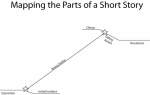
  2. Map the plot line — You can use the same plotting method for short stories and novels, though you do need to remember that the rising action in a novel will be much longer. I like to use a plot line to get me started. By the time I’ve filled out the entire plot line, I’ve pretty much envisioned the entire story in my mind. For me, the process is like watching a favorite movie that I have complete creative control over.
  3. Get started — At this point I feel comfortable enough to actually begin writing. I have an idea where the story is going, but the characters still sometimes do surprising things I hadn’t planned. It’s also the longest and, sometimes, most frustrating part of the process. As I write each scene I do my best to describe it entirely, putting in a lot more detail than it warrants. My reasoning is that it’s a lot easier for me to cut than to add. Along with writing the story, I also format its appearance. It’s easier to catch widows and orphans and know what the ending page count will be if you set up the formatting at the beginning.
  4. The 4 R’s — You’ve heard of the 3 R’s: Reading, wRiting and aRithmetic. Let me introduce you to Reading, Re-working, Re-reading and Re-writing. If writing the first draft seems difficult, the editing process can feel impossible. I have a simple solution. I read through the first draft making only minor editorial marks for spelling, typos, punctuation and quick notes about parts that feel awkward. I don’t do a lot of editing the during the first read because I want to make sure the overall story flows. I then go back chapter by chapter and re-work anything that was awkward. Finally I give it a second, more thorough read, making longer notations about changes and additions that need to be made to give the story more depth. After I complete the needed changes I move on.
  5. Fresh eyes — This is a term I picked up working at NWMSU’s weekly newspaper, but it’s just as important in self-publishing. When you’ve finished the 4 R’s it’s time to let someone else read your work. The more eyes that read it, the more mistakes will be caught before you send it to the printer. I can’t stress this enough. Let an editor, your family, your friends, even the family dog read it. Okay, maybe not the dog, but you get my point.
  6. The 4 R’s — That’s right. Once you’re buddies have read it, it’s back to the computer to fix what they’ve found. But don’t despair. You’re almost finished.
  7. And print — Finally! All you need to do now is send it to the printer. I use Lulu.com, though I’ve heard a lot of good things about CreateSpace. Once your book is ready to upload to the POD of your choice, it’s just a matter of following their instructions.

Self-publishing can seem overwhelming at first, but if you follow these steps I think you’ll find your path just a little smoother on The Road to Writing.


This is a cross-posting from Virginia Ripple’s The Road to Writing.

Top 10 Worst Self-Publishing Mistakes—Explained!

I learn a lot from the comments readers leave on the blog. People have pointed out errors, shown me resources I hadn’t heard of, and made connections that had never occurred to me. It’s a big web out there, and one of the things I enjoy most is this sharing of knowledge, resources and experiences.

Two weeks ago I published Top 10 List of the Worst Self-Publishing Mistakes, a semi-serious look at normal mistakes newcomers to self-publishing might make. But a couple of people asked if there was going to be a follow-up article. They wanted to know the reasons why these were the so-called “worst mistakes” so they could avoid making them.

So here is the follow-up, the explanation for why you wouldn’t want to do any of these things when it comes time to publish your book. I’ve copied the questions from the earlier article and given an explanation for each.

Top 10 Worst Self-Publishing Mistakes—Explained!

“10. You thought you could re-use that ISBN you paid so much for since the novel you put it on last year isn’t selling anyway.”

Explained: You never want to re-use an ISBN, or even use it for another edition of the same book. The ISBN is known as a unique identifier. It’s intended to be assigned to one edition of one book. You book’s information has been entered in book databases everywhere, and you will only create tremendous confusion between the two works, hurting sales for both, if you attempt to re-use an ISBN. Just don’t do it.

“9. Everybody knows the words to the song, so it’s okay to quote lyrics from it throughout your novel, right?”

Explained: Check out this blog post about using bits of songs in your writing. The author here found, after using only snippets of 60s songs in a party scene, that he had a liability of over $6,000. Just like paintings, poems, or any creative expression, people’s lyrics and music are protected by copyright law, and violations of this law can be expensive and very damaging. If you want to use it, get permission first.

“8. The photos looked fine on your screen, and that means they will look fine when they’re printed, it just makes sense.”

Explained: Graphics on screens are all displayed at a resolution of 72 dots per inch (dpi) in Reg-Green-Blue (RGB) colorspace. That’s just the way computers display graphics. However, when you go to print your book, your color photos will need to be 300 dpi in the Cyan-Magenta-Yellow-Black (CMYK) colorspace. So no, the image you see on your screen, no matter how gorgeous, may not have enough resolution to print well.

“7. I picked Arial for my book because the name reminded me of my middle school girlfriend.”

Explained: Many people don’t notice typefaces, typography, design, serifs, ligatures, and the other elements book designers take for granted, and why should they? But that doesn’t mean it doesn’t matter what typeface you use. The classic book typefaces, when used correctly, will produce a book that’s beautiful, readable, and reader-friendly. That’s why they’re classics.

“6. I know they’re charging me $6,000 to publish my book, but I get 10 copies, absolutely free!”

Explained: Well, $6,000 divided by 10 is . . . The point here is that if you want to publish your own book you may be better off using a plain author services company like CreateSpace or Lulu than a subsidy publisher. Why? The subsidy publisher makes its money from sales to authors–that’s you. If you use a service like CreateSpace you are the publisher and you use them as a printer. You pay only for the services you decide you need, and then you make your money from book sales.

“5. I thought it would sound more impressive if I wrote my memoir in the third person. All my sports heroes talk that way.”

Explained: By far the best way for most authors to present their information in nonfiction books is with a clear, active, straightforward style. Attempts to create unusual styles, strange viewpoints, exotic points of view almost always fail since they are incredibly difficult to carry off well. Both you and your readers will be well served by a natural conversational style that follows a normal and expected narrative. This will make your valuable information stand out, not an eccentric of saying it.

“4. I really got the unit price down, but I had to print 10,000 copies. You have any room in your garage?”

Explained: Having a plan on how you intend to market, publicize and sell your book before entering into book production is highly recommended. The unit cost of your book is meaningless if you never sell any. Many self-publishers are using digital printing through print-on-demand distribution to minimize this type of risk. However, you have to plan your book, its retail price, and your method of distribution before going to press.

“3. Sure, I included an invoice with all the books I sent to book reviewers. Hey, they don’t care, it’s just a big company paying the bill.”

Explained: Although reviewers do usually work for larger companies, sending an invoice with a review copy will ensure that while you won’t get paid for the book, you won’t get a review either. The convention is that you are asking for valuable editorial time and space in a publication, and certainly the least you can expect is to provide a book to anyone gracious enough to go to the trouble of reviewing your book.

“2. It was cheaper to print my novel as an 8-1/2″ x 11″ book because I got so many words on each page.”

Explained: Although it’s true that you can save money in digital printing by creating a book with fewer pages, a novel printed full page on letter-size paper with small margins and tight lines to “get so many words” on a page is likely to be read by no one. Making your book difficult to read is a quick way to eliminate many readers. There is no economy in printing books that no one wants to read.

“1. What do you mean, I need a cover designer? Don’t books come with covers?”

Explained: Most author-services companies are only too happy to put a cover on your book for a fee, or to turn you loose on their cover creation programs. But it’s pretty easy to tell most of the books that have been “designed” this way, and it isn’t a pretty picture. If your book is worth publishing, and you want people to buy it, and you understand the cover is the primary way that people will identify the book wherever it appears, don’t you think it might be worthwhile to get a cover designer you can afford to create a cover for you?

Well, there you have it. If there was any doubt, you now know some good things to avoid when it comes time to publish a book.


This is a cross-posting from Joel Friedlander‘s The Book Designer.

Does Social Networking Really Sell Books?

In my recent "Social Networking Success for Authors" teleseminar, someone asked if social networking really sells books.

It can be hard to track the sale of books directly to social networking (especially if your books are sold through retailers) but I strongly believe that social networking, if done effectively, develops relationships that lead to book sales and other opportunities.

Let’s say that one of your Twitter followers re-tweets one of your messages. One of their followers sees the message and starts following you. After enjoying several of your posts on Twitter, they hook up with you on Facebook.  In looking at your Facebook profile or page, this person sees a link to your blog and clicks through to check it out. Then they sign up for your opt-in mailing list and later buy one of your books. Now you have made a sale to someone that you might not have reached in any other way.

Here’s a real-life example. Several days ago I received an order for one of my books and I noticed this comment in the "where did you hear about this book" field on the order form:
 

"Found Dana on Twitter, joined her Facebook, then saw her Facebook links and the rest is history. Job well done, Dana."

Obviously, not everyone that you meet online is going to buy your book – in reality only a small percentage will buy. But the more contacts you make and the more frequently those folks see and hear from you, the more books you are likely to sell.

And don’t forget that social networking opens the door to many other opportunities that can lead to book sales. The folks you meet online may end up reviewing your book, exchanging guest blog posts with you, becoming an affiliate or joint venture partner, hosting your virtual book tour, or inviting you to speak to their group or be on their radio show. In fact, I have personally experienced all of these opportunities with people that I met through social networks. And of course it’s always valuable to make friends with others in the publishing business.

Yes, social networking really does sell books – so make sure that you are doing it effectively.  If you missed the Social Networking Success for Authors teleseminar, the recording of the call is now available as a downloadable audio program. You’ll also get a learning guide with screen shots and resources, and a copy of the special report, 10 Steps to Online Networking Success

Also, check out my Facebook Guide for Authors and Twitter Guide for Authors, as well as The Savvy Book Marketer’s Guide to Successful Social Marketing (which includes the Facebook and Twitter guides).


This is a cross-posting from Dana Lynn Smith‘s The Savvy Book Marketer.

Kindle Post Featured On iFOGO Village & More Author Sites

What a nice surprise to get an email to let me know that my blog post from last week – Kindle Book Sales A Surprise – has been featured on www.iFogovillage.com. Thank you iFogo Village.

I read in an Amazon discussion that another author was surprised at how well his book was selling on Kindle after not getting as good a result for his hardcover book. Made me wonder just how many Kindles have been sold. Maybe sales would dry up soon. Also, on the discussions, I’ve seen it written that Kindle users were running out of their favorite genre to download. They were asking for help in finding electronic books they hadn’t read yet. Maybe that is why Amazon raised the royalty fee for authors, encouraging them to download on Kindle.

This morning I had an answer to my wondering. At the bottom of the screen on Good Morning America, the scroll stated Amazon’s sales of electronic books surpassed sales of hardcover books for the first time.

Looks like I picked the right time to download on Kindle. However, I’m not giving up on my paperback books. So many people stare at computer screens all day. Their eyes need a rest from that glare which means they are more likely to pick up a book. Call me old fashion but trying to relax after a busy day with a electronic device to read just isn’t the same as getting cozy with a book.

This week I want to share sites I promote my books on. This is just a few that I know about. There are many more on the internet to try so I keep looking for the ones that are right for me to join. If you don’t know about the sites in my list, check them out to see if any of them will be helpful to authors looking for places to put portions of their books for readers, agents or publishers to find. Some of the sites have an upgrade which you have to pay for, but I stick to the free plan. I like the sites that have a link to the social sites I belong to, because I can get an added announcement from that each time I add a book. When an author submits to these sites, Google crawler picks up book titles and authors to add to Google search.


Booksie.com

Published.com

1chapterfree.com – displays the first chapter of your book and shows how many hits have been made to read it

Stumbleupon

Authorden.com

Filedbyauthor.com

Goodreads.com

Reader2.com

Biblioscribe.com

Writetobreath.com

Weread.com

Zvents.com

Compulsivereader.com – just found this site. It has 23 book related links to check out. This site does reviews.

One more newsletter – Author Marketing Experts, Inc. – Penny C. Sansevieri, Editor

This free newsletter has some helpful tips for marketing and provides link.


Absolute Write watercooler – Forum topics you can check out. I’ve gotten information on publishers and agents I was curious about by reading authors posts.

Writers Beware – warnings about literary frauds, scams, deceptions and pitfalls listing agents and publishers you might not want to submit your query to. Definitely, a helpful site.


Upcoming E-publishing Revolution, Part 2

Publetariat is pleased to present Part 2 of Upcoming E-publishing revolution, entitled "E-Magination: What’s Now and What’s Next in Ebooks", a podcast, webcast and transcript from Copyright Clearance Center’s Beyond The Book site.

The podcast and transcript originated from a panel discussion for the Independent Book Publishers Association at their annual “Publishing University” program. More information about Part 1, along with links to the Part 1 podcast and transcript, can be found here.

In this episode, featured guests Mark Coker of Smashwords, Jack Sallay of Vook and O Magazine Books Editor Sara Nelson explain the ongoing e-publishing revolution.

The podcast, webcast and transcript (in pdf format) are available now.

Editor’s Note: the webcast link is not available as a permalink, and therefore the webcast to which it points may not be available indefinitely.